

If you’ve ever stood in front of a wall of shiny pots and pans wondering why some of them look almost identical but behave completely differently on the stove, you’re not alone. All Clad stainless steel is one of the most talked-about names in the cookware world, and for good reason. It’s the brand pro chefs reach for, the one that shows up in cooking shows, and the one that tends to outlive the kitchen it was bought for.
But “famous” doesn’t automatically mean “right for you.” So in this all clad cookware review, we’re going to do what we always do here at Kitchen Deets: cook with it, clean it, abuse it a little, and tell you honestly what we found. We’ll walk through each All-Clad stainless steel collection, share what worked and what didn’t, explain how the construction actually changes your cooking, and finish with a buying guide you can use to shop online without second-guessing yourself.
If you want the big-picture look at the whole brand (including the nonstick lines), you can also read our full All-Clad cookware review. This article zooms in on the stainless steel side, because that’s where the brand really earns its reputation.
Quick Verdict: Is All Clad Stainless Steel Worth Buying?
Short answer: yes, if you cook regularly and want pans that you’ll still be using years from now. The bonded construction heats evenly, the surface handles real searing, and the pans go from stovetop to oven to dishwasher without drama.
Here’s the fast version:
- Best overall: The All-Clad D3 stainless steel collection. It’s the one we’d point most home cooks toward.
- Best for easy pouring and everyday use: D3 Everyday.
- Best for heat control and retention: D5 (polished or brushed).
- Best for fast, precise temperature response: Copper Core.
- Best for beginners: A D3 12-inch fry pan, then build from there.
Now let’s talk about why.
Table of Contents
What Makes All Clad Stainless Steel Different?
Most stainless steel pots and pans you’ll see in a big-box store are made one of two ways. Either the whole pan is a single thin sheet of stainless steel (which heats unevenly and scorches easily), or it’s a stainless pan with a small aluminum or copper disc stuck to the bottom. The disc helps a bit, but the sides of the pan stay cooler, which means uneven cooking, especially when you’re making sauces or simmering something for a long time.
All-Clad does it differently. Their signature approach is called fully clad construction. Layers of metal are bonded together under serious pressure, and those layers run from the base all the way up the walls of the pan. That’s why you’ll hear people say All-Clad “heats from the bottom to the rim.” The aluminum core spreads heat quickly and evenly, and the stainless steel layers on the outside and inside give you durability, a non-reactive cooking surface, and compatibility with induction cooktops.
The Stainless Steel Itself: 18/10 and 18/0 Explained
You’ll see numbers like 18/10 and 18/0 in cookware descriptions, and they matter more than they look.
- 18/10 stainless steel (the cooking surface) contains roughly 18% chromium and 10% nickel. That mix resists rust and corrosion, doesn’t react with acidic foods like tomato sauce or wine, and keeps its good looks through years of use.
- 18/0 stainless steel (the exterior on the D3 line) has chromium but no nickel. It’s magnetic, which is what makes the pans work on induction cooktops.
So you get the best of both worlds: a gorgeous, non-reactive cooking surface on the inside and an induction-friendly exterior on the outside. If you’re shopping specifically for induction, it’s worth browsing our guide to induction-ready cookware too.
Made in Pennsylvania
All-Clad has been bonding metal in Canonsburg, Pennsylvania since 1971, and its core stainless lines are still made there. That’s a big selling point for plenty of shoppers, and if “made here” is on your checklist, our roundup of the best stainless steel cookware made in USA and the best cookware made in USA are worth a look as well.
All Clad Stainless Steel Properties at a Glance
Here’s a side-by-side look at the stainless steel collections we cover in this review.
| Property | D3 | D3 Everyday | D5 (Polished) | D5 Brushed | Copper Core |
|---|---|---|---|---|---|
| Layers | 3 (stainless / aluminum / stainless) | 3 (stainless / aluminum / stainless) | 5 (stainless / aluminum / stainless / aluminum / stainless) | 5 (stainless / aluminum / stainless / aluminum / stainless) | 5 (stainless / aluminum / copper / aluminum / stainless) |
| Cooking Surface | 18/10 stainless steel | 18/10 stainless steel | 18/10 stainless steel | 18/10 stainless steel | 18/10 stainless steel |
| Exterior Finish | Polished, mirror-like | Polished | Polished | Matte, brushed | Polished with copper band |
| Heat Distribution | Excellent | Excellent | Excellent, extra forgiving | Excellent, extra forgiving | Excellent, very fast response |
| Heat Retention | Good | Good | Very good | Very good | Very good |
| Weight Feel | Moderate | Moderate | Heavier | Heavier | Heaviest |
| Induction Compatible | Yes | Yes | Yes | Yes | Yes |
| Gas / Electric / Glass Top | Yes | Yes | Yes | Yes | Yes |
| Oven and Broiler Safe | Up to 600°F | Up to 600°F | Up to 600°F | Up to 600°F | Up to 600°F |
| Dishwasher Safe | Yes (hand wash keeps finish nicer) | Yes | Yes (hand wash keeps finish nicer) | Yes | Yes (hand wash recommended for the copper band) |
| Metal Utensils | Safe (may leave surface scratches) | Safe (may leave surface scratches) | Safe (may leave surface scratches) | Safe (may leave surface scratches) | Safe (may leave surface scratches) |
| Best For | All-around daily cooking | Easy pouring and stirring | Slow simmering, steady searing | Same as D5, with a matte look | Precise temperature control |
| Warranty | Limited lifetime | Limited lifetime | Limited lifetime | Limited lifetime | Limited lifetime |
A quick note: always double-check the product page for the exact specs of the piece or set you’re buying, since lids, handles, and specialty pieces can vary slightly.
Our Hands-On Review of Each All-Clad Stainless Steel Collection
1. All-Clad D3 Stainless Steel: The Classic

Image: Daniel P. Craig / Kitchen Deets
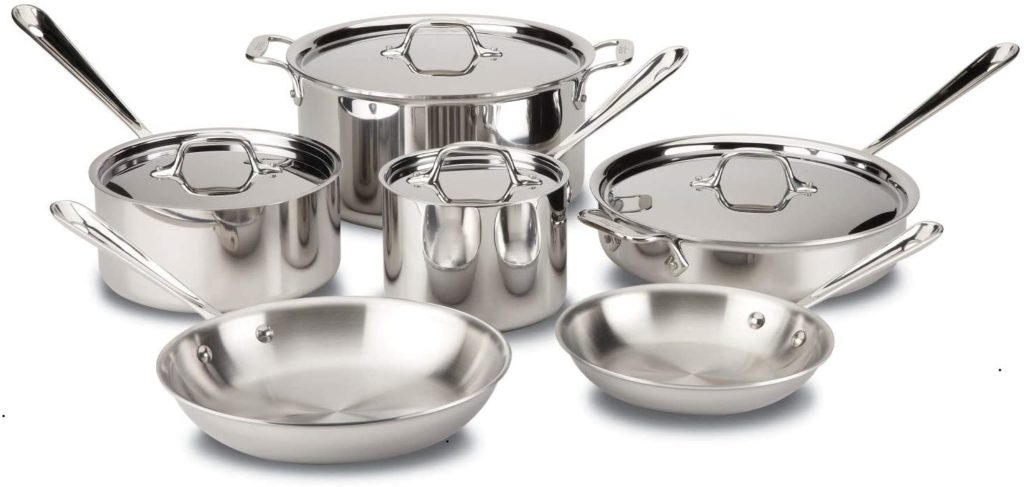
This is the collection that built the brand’s reputation, and it’s still the one we recommend first. The all clad d3 cookware set is built from three bonded layers: an 18/10 stainless steel cooking surface, a thick aluminum core, and a magnetic stainless exterior.
What we liked:
- Even heating that you can feel. We cooked pancakes-in-a-pan style tests, seared chicken thighs, and simmered a tomato sauce for a long stretch. The D3 browned evenly from edge to edge without those scorched patches you get in thin pans.
- It handles real heat. Searing a steak at a properly preheated, medium-high setting gave us deep browning and a solid crust. The stainless surface also built up lovely browned bits (fond) that turned into a pan sauce in about two minutes.
- Stovetop to oven, no fuss. We started pork chops on the stove, then moved the whole pan into a hot oven. The pan didn’t warp, and the handle design stayed secure.
- Clean-up is easier than you’d expect. A short soak and a scrub, and most messes came right off. Bar Keepers Friend brought the shine back whenever we wanted it.
- Huge range of shapes and sizes. From fry pans to saucepans, sauté pans, stockpots, and more, you can build exactly the kit you want.
The one con: Food will stick if you rush the process. If you’re used to nonstick, you’ll need to learn to preheat the pan, add your fat, and give proteins a minute to release on their own. It’s a skill, not a flaw, but it does mean a small learning curve.
Who it’s for: Almost everyone. If you want one collection to anchor your kitchen, this is it.
2. All-Clad D3 Everyday: The Friendlier Version

Image: Daniel P. Craig /Kitchen Deets
D3 Everyday keeps the same tri-ply bonded construction but reshapes the pans for daily convenience. Think flared rims for cleaner pouring, rounded interiors that are easier to stir into, and an overall design that feels a little more forgiving for weeknight cooking.
What we liked:
- Drip-free pouring. Pouring sauces and soups from a flared rim is noticeably tidier. If you’ve ever dribbled gravy down the side of a saucepan, you’ll appreciate this.
- Easy stirring. The curved interior corners made it simple to scrape a spoon around risotto and custard without leaving stuck bits in the corners.
- Same trusted construction. You’re still getting the even heating and stovetop-to-oven versatility that makes All-Clad stainless steel what it is.
- Great for one-pot meals. Soups, braises, and pasta dishes felt right at home here.
The one con: The flared, curved shape can mean a slightly smaller flat cooking area at the base compared with a straight-sided pan, which is something to keep in mind if you love big, edge-to-edge sears.
Who it’s for: Cooks who make lots of sauces, soups, and one-pot dinners and want a bit more convenience in the design.
3. All-Clad D5 Stainless Steel (Polished): The Steady Performer

D5 steps things up with five layers instead of three. The alternating stainless steel and aluminum layers create a pan that heats evenly and holds that heat beautifully.
What we liked:
- Forgiving heat control. The extra layers act like a buffer. When we added cold ingredients, the pan recovered smoothly instead of dropping hard in temperature.
- Beautiful for slow cooking. Long simmers, braises, and reductions felt effortless. We barely had to adjust the flame.
- Strong searing. Burgers, scallops, and chicken skin all crisped up nicely with minimal fuss.
- Excellent build. The pans feel solid in the hand and look every bit the pro-grade piece they are.
The one con: It’s heavier than D3. A full 12-inch skillet or a loaded stockpot takes some muscle, especially if you’re moving it from stove to oven with one hand.
Who it’s for: Cooks who want maximum stability and are happy to trade a little weight for it.
4. All-Clad D5 Brushed: The Matte-Finish Alternative

Brushed D5 uses the same five-layer construction as the polished version, with a soft, matte exterior instead of a mirror-like finish. If you hate fingerprints and water spots, this one is for you.
What we liked:
- Hides everyday wear. Fingerprints and light water marks are far less obvious on the brushed surface. In our kitchen it looked tidier between deep cleans.
- Same cooking performance as D5. Steady heat, strong searing, and excellent simmering.
- A modern look. It’s a lovely match for kitchens with matte fixtures and darker finishes.
- Great for display. If your cookware lives on a pot rack or open shelf, the brushed finish looks quietly upscale.
The one con: The brushed finish needs to be scrubbed along the grain. Scrub in circles with a rough pad and the exterior can look patchy, so gentle cleaning matters more here.
Who it’s for: Anyone who loves the D5 performance and wants a lower-maintenance look.
5. All-Clad Copper Core: The Precision Option


Copper Core is the showpiece. It pairs five layers with a pure copper layer inside the walls, which makes the pan react to heat changes faster than the others. If you want to dig deeper into this specific line, we have a dedicated All-Clad Copper Core review that goes into more detail.
What we liked:
- Fast response. Turn the heat down and the pan follows quickly. That matters for delicate work like caramel, custards, and pan sauces that can go from perfect to broken in seconds.
- Very even surface. We saw consistent browning across the full base.
- That copper band. It’s not just pretty: it’s a visual reminder of what’s inside.
- Professional feel. Using it felt like cooking in a restaurant.
The one con: It’s the heaviest collection in the stainless steel family, and the copper band needs a little extra care to keep looking its best.
Who it’s for: Enthusiast cooks who enjoy fine control and don’t mind a heavier pan. If you’re curious about copper more broadly, see our guides to the best copper cookware brands and best French copper cookware.
How All Clad Stainless Steel Actually Cooks

Specs are nice, but what really matters is what happens when food hits the pan. Here’s how the pans performed across the cooking tasks most of us do all week.
Searing Meat and Fish
This is where stainless steel shines. After a proper preheat, we got a deep golden crust on steaks, chicken thighs, and pork chops. Salmon skin crisped up without sticking once we let it sit long enough to release naturally. The key is patience: when a protein is properly seared, it lets go of the pan on its own. If it’s sticking, give it another 30 to 60 seconds.
Sautéing Vegetables
Even heat means even browning. Mushrooms, onions, and peppers cooked evenly without burnt edges, and a quick splash of water or stock lifted the browned bits right off the surface. If you love sautéing, a larger pan is a great addition, and our guides to the sauteuse pan and the 14-inch frying pan can help you choose size and shape.
Making Pan Sauces
This is one of our favorite things to do in All-Clad. After searing, pour off excess fat, add a splash of wine or stock, scrape up the fond, and let it reduce. Finish with a pat of butter and you’ve got a restaurant-style sauce in minutes. The non-reactive 18/10 surface handles acidic ingredients (wine, lemon, tomatoes) without any metallic taste or discoloration.
Simmering, Soups, and Stocks
Thanks to the bonded sidewalls, the heat reaches up the sides of the pot, so soups and sauces simmer gently without catching on the bottom. If you cook big batches regularly, check out our picks for the best pots for boiling water, as well as our guides to chili pots and gumbo pots if those are on your menu.
Cooking Eggs
Let’s be honest: eggs can be tricky in stainless steel. They’ll work, but you need a hot pan, enough fat, and a little patience. If eggs are a daily breakfast ritual, you may want a dedicated nonstick pan alongside your stainless. We cover this in our guide to the best pan for frying eggs.
Oven Cooking and Finishing
With oven-safe construction up to 600°F, All-Clad stainless steel is perfect for dishes that start on the stove and finish in the oven: frittatas, seared chicken, pan-roasted vegetables, and more. See our roundup of the best oven-safe skillets for more ideas, and our roasting pan guide if you want to expand beyond skillets.
Gas, Electric, Glass Top, and Induction
All of the All-Clad stainless steel collections we reviewed work on every cooktop type. On gas, the heat spreads nicely instead of forming a ring of hot spots. On induction, the magnetic exterior responds quickly. If you’re cooking on gas, our guides to cookware for gas stoves and the best pots and pans for gas stove are good companion reads. For induction, check out the best fry pan for induction cooktop.
All Clad Stainless Steel Pros and Cons
Pros
- Fully clad construction that heats evenly from base to rim
- Non-reactive 18/10 stainless steel cooking surface that’s safe for acidic foods
- Excellent searing and browning, plus great fond for sauces
- Oven and broiler safe up to 600°F
- Works on every cooktop, including induction
- Dishwasher safe for convenience
- Built to last with a limited lifetime warranty
- Made in Pennsylvania
- Wide range of sizes and pieces so you can build exactly the set you need
- No coatings to chip or wear off, so it’s a great fit if you’re building a non-toxic cookware collection
Cons
- A learning curve if you’re switching from nonstick
- Weight, especially in D5 and Copper Core
- Fingerprints and water spots on polished finishes
All Clad Cookware Set vs. Buying Individual Pieces
One of the biggest questions we hear is whether to buy an all clad cookware set or pick pieces one by one. Here’s our take.
When a Set Makes Sense
If you’re starting from scratch or replacing a mismatched, worn-out collection, a set is a smart move. You get matching lids, a consistent look, and a good spread of sizes. A typical D3 set includes a couple of fry pans, a few saucepans, a sauté pan, and a stockpot, with lids. Always check the exact contents of the set you’re considering, since piece counts can include lids and vary between sets.
When Open Stock Makes More Sense
If you already own a few good pieces, or you know exactly what you cook most, buying individual pieces lets you avoid doubles you’ll never use. Start with the workhorses:
- A 10-inch or 12-inch fry pan. This is the pan you’ll reach for constantly.
- A 3-quart saucepan with a lid. Perfect for sauces, grains, and small batches.
- An 8-quart stockpot. For pasta, soup, and big batches.
- A sauté pan. The straight sides make it perfect for one-pan meals.
From there, add pieces as you notice gaps in your routine.
Mixing Collections
You don’t have to stick to one line. Lots of cooks use D3 for most pieces and add a D5 or Copper Core piece for tasks that benefit from the extra heat control. Just keep in mind that handles, lids, and weights will feel a little different from line to line.
The All Clad Stainless Steel Buying Guide
Ready to shop? Here’s what we’d think about before you click “add to cart.”
Step 1: Match the Collection to How You Cook
- Cook a bit of everything? D3 is your best bet.
- Love sauces, soups, and one-pot meals? D3 Everyday is a friendly fit.
- Want steady, forgiving heat? Go with D5.
- Prefer a matte look? D5 Brushed.
- Want the fastest response and love precision cooking? Copper Core.
Step 2: Check Your Cooktop
All the stainless steel collections work on gas, electric, ceramic glass, and induction. If you’re on glass top, remember to lift pans rather than slide them to avoid scratching the surface.
Step 3: Think About Weight
Before you buy, think about how comfortable you are lifting a loaded pan. If you have wrist or hand sensitivity, or you often move pans from stove to oven, the lighter D3 will probably feel better than D5 or Copper Core. Ordering online means you can’t pick it up in the store, so read the product weight on the listing and compare it with a pan you already own.
Step 4: Decide on Lids
Most All-Clad stainless sets come with stainless lids, which are tough and oven safe. They’re great for retaining heat, but you can’t see inside. If you like peeking at your food, plan for that, or look at what lids come with the specific set.
Step 5: Consider the Handles
All-Clad’s stainless steel handles are riveted for durability and have a distinctive shape that many cooks love. They do get hot, so keep a towel or pot holder handy, especially when the pan has been in the oven. If handle comfort is a big deal for you, it’s worth comparing with other brands, including options with detachable handle cookware.
Step 6: A Note on Nickel
The 18/10 cooking surface contains nickel. Most people have no issue at all, but if you have a known nickel sensitivity, check with your doctor before buying and review the specific materials listed on the product page.
Step 7: Buy From a Trusted Seller
Online shopping is convenient, but it pays to be careful. To make sure you receive genuine All-Clad stainless steel:
- Buy from All-Clad directly or from authorized retailers. The brand’s own site and major well-known kitchen retailers are the safest options.
- If you’re buying on a marketplace, check who’s actually selling. Look for the retailer’s own storefront or items “sold and shipped” by the marketplace itself.
- Read the return policy. Cookware is heavy and shipping damage can happen. A good return window gives you peace of mind.
- Inspect on arrival. Genuine pieces have crisp logo stamping, clean rivets, smooth edges, and a solid, balanced feel. Be suspicious of anything that feels unusually light or looks poorly finished.
- Keep your receipt. You’ll need proof of purchase if you ever need to use the warranty.
Step 8: Understand the Warranty
All-Clad backs its stainless steel cookware with a limited lifetime warranty that covers defects in materials and workmanship. It doesn’t cover damage from misuse or normal cosmetic wear, such as scratches or discoloration, so read the fine print on the brand’s site before you buy.
Step 9: Build Over Time
You don’t have to buy everything at once. A great way to begin is with a 12-inch fry pan, a 3-quart saucepan, and a stockpot, then add pieces as you go. It’s easier on your kitchen space, and you get to learn exactly how you like to cook before you commit to a full set.
How to Care for Your All Clad Stainless Steel

Good news: stainless steel is tough. A few smart habits will keep it looking and performing like new.
Before First Use
Wash your new pan with warm, soapy water to remove any manufacturing residue, then dry it.
Always Preheat
Heat the empty pan over medium heat for a couple of minutes. A drop of water should bead up and roll around like a little ball of mercury. Then add your oil, let it shimmer, and add your food.
Use Medium Heat
Because the pans conduct heat so well, you rarely need to crank the dial. Medium to medium-high handles almost everything.
Don’t Shock a Hot Pan
Avoid running cold water into a pan that’s screaming hot. Let it cool for a few minutes first to protect it from warping.
Cleaning Stuck-On Food
Fill the pan with water, add a drop of dish soap, and simmer for a few minutes. The stuck bits will lift much more easily. For stains, rainbow heat tint, or discoloration, a stainless steel cleanser like Bar Keepers Friend works beautifully. Make a paste, rub gently along the grain, and rinse well.
Dishwasher or Hand Wash?
The stainless steel collections are labeled dishwasher safe, which is a great convenience. If you want to keep the exterior shine at its best, hand washing is gentler on the finish over the long run.
Storage
Stack with a paper towel or pan protector between pieces to avoid scratches. A pot rack is a lovely way to store and show off your pans.
All Clad Stainless Steel vs. Other Cookware
If you’re comparing options before you decide, here’s how All-Clad stacks up against some common alternatives. For a broader look, our best cookware brands and best stainless steel cookware guides are helpful companions.
vs. Nonstick Cookware
Nonstick is easier for eggs and delicate fish, and it needs less oil. But coatings wear out, and they can’t handle the same high heat. Stainless steel is better for searing, deglazing, and long-term durability. Many cooks (including us) keep both. If you want to explore nonstick, see our picks for the best nonstick cookware, and read up on hard-anodized cookware safety if that’s on your radar.
vs. Hybrid and Newer Brands
Newer direct-to-consumer brands have popped up with fully clad pans of their own. If you want to see how they compare, our HexClad vs. Made In comparison is a good starting point, and our write-up on Caraway cookware and Our Place cookware covers popular ceramic-style options.
vs. Other Stainless Brands
Plenty of brands make good stainless steel cookware. If you like the idea of tri-ply performance from a different maker, take a look at our Tramontina cookware set guide, our Calphalon Elite vs. Premier comparison, and our look at Henckels cookware. For German-made options, see our guide to cookware made in Germany.
vs. Cast Iron and Carbon Steel
Cast iron and carbon steel are fantastic for searing and for naturally seasoned, nonstick-like surfaces, but they need seasoning and can be reactive with acidic foods. Stainless steel is lower maintenance for everyday cooking. If you’re curious, read our carbon steel pans guide and our rundown of cast iron cookware made in USA.
Who Should Buy All Clad Stainless Steel?
It’s a great fit if you:
- Cook at home several times a week
- Want cookware that can last for many years
- Like to sear, sauté, and make pan sauces
- Use an induction, gas, or electric cooktop
- Want a collection you can build over time
You might want to think twice if you:
- Mostly make eggs and delicate foods and want zero sticking
- Have difficulty lifting heavier pans
- Prefer very light cookware for quick weeknight meals
Frequently Asked Questions About All Clad Stainless Steel
Is all clad stainless steel worth it?
For people who cook regularly, yes. The even heating, the durability, and the cooking results make it a favorite in both home and pro kitchens. If you rarely cook, you may not use enough of its strengths to justify it.
What is the best all clad cookware for most people?
For most home cooks, the D3 collection is the best All-Clad cookware to start with. It offers the performance All-Clad is known for in a more manageable weight.
What is the difference between D3 and D5?
D3 has three layers (stainless, aluminum, stainless), while D5 has five layers with an extra stainless and aluminum pair. D5 holds heat more steadily and is a bit heavier. Both are excellent. D3 is lighter and a great all-rounder, while D5 is more forgiving for slow simmering and steady searing.
Is all clad stainless steel cookware safe?
The 18/10 stainless steel cooking surface is non-reactive and doesn’t rely on a coating, so there’s nothing to chip or flake into your food. If you have a nickel sensitivity, check with your doctor first.
Is all clad stainless steel dishwasher safe?
Yes, the stainless steel collections are labeled dishwasher safe. Hand washing is gentler on the exterior finish if you want it to stay bright for as long as possible.
Can you use all clad stainless steel on induction?
Yes. The magnetic stainless exterior makes these collections work on induction cooktops.
Does food stick to all clad stainless steel?
It can if the pan isn’t preheated properly or there isn’t enough fat. Preheat the pan, add your oil, and wait for proteins to release naturally. Once you get the technique down, sticking becomes much less of a problem.
Can I use metal utensils?
Yes. Stainless steel can take metal utensils, though you may notice fine surface scratches over time. These are cosmetic and don’t affect performance.
How hot can I take all clad stainless steel in the oven?
The stainless steel collections are oven and broiler safe up to 600°F.
How do I get rainbow stains out?
Those rainbow tints come from heat and are harmless. A paste of Bar Keepers Friend and water, or a splash of white vinegar, will usually lift them.
Where is all clad cookware made?
All-Clad’s stainless steel cookware is made in Canonsburg, Pennsylvania.
How long does all clad stainless steel last?
With basic care, it can last for many years. The bonded layers don’t peel or separate the way a coating can, and the warranty gives extra peace of mind.
Final Thoughts: Our Verdict on All Clad Stainless Steel
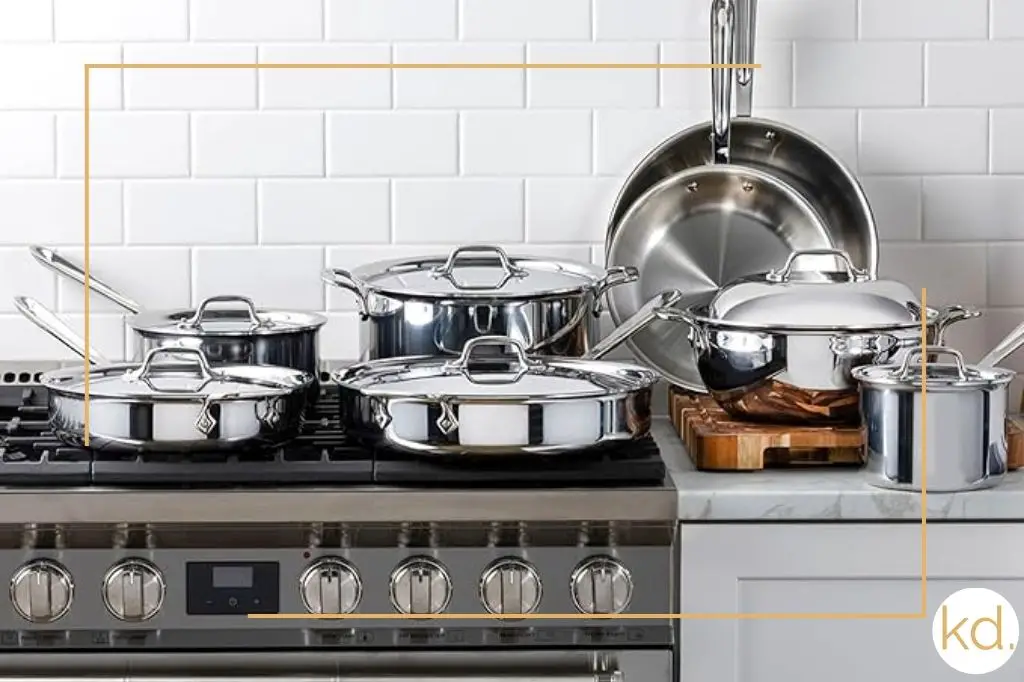
After cooking with each of the collections, our verdict is simple: All-Clad stainless steel earns its reputation. The fully clad construction delivers even heat that makes cooking more predictable, the 18/10 surface sears and deglazes like a champ, and the pans are tough enough to go from stovetop to oven to dishwasher without complaint.
If you want one place to start, go with the D3. It’s versatile, reliable, and the best all-around pick for most kitchens. If you love one-pot meals and sauces, D3 Everyday makes pouring and stirring a little easier. If you want extra stability and love slow-cooking and steady searing, D5 (polished or brushed) is a joy to use. And if you’re an enthusiast who wants lightning-fast control, Copper Core is the showpiece.
Whichever collection you choose, remember that the best cookware is the cookware you actually reach for. Start with the pieces you’ll use most, learn the preheat-and-patience technique, and build from there. If you want to round out your kitchen while you’re at it, our guide to the best kitchen knives is a natural next read.
Happy cooking!