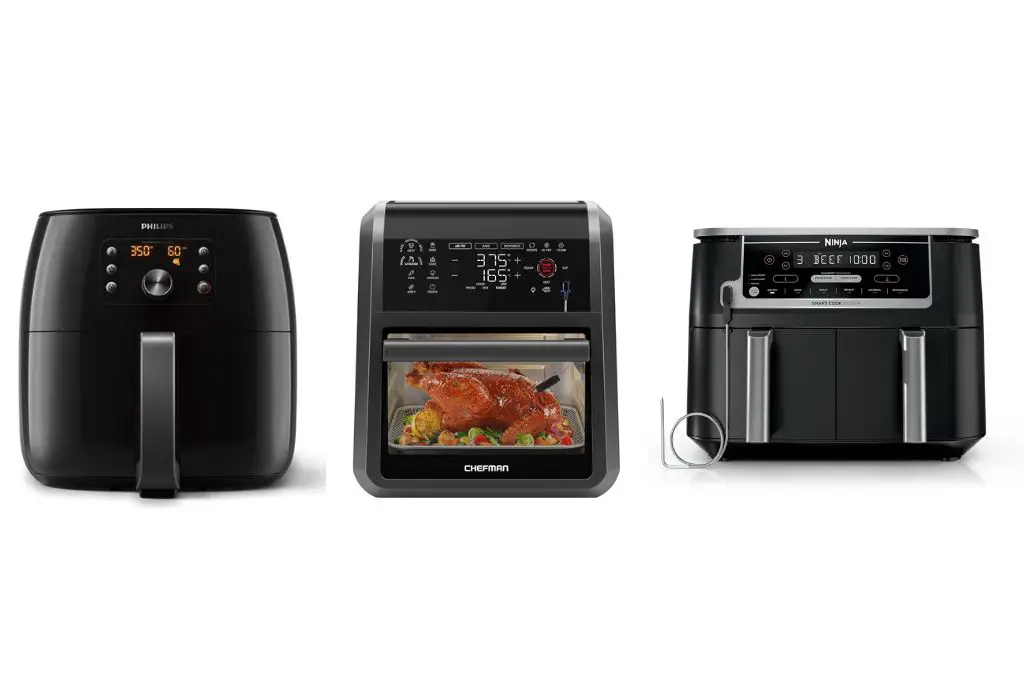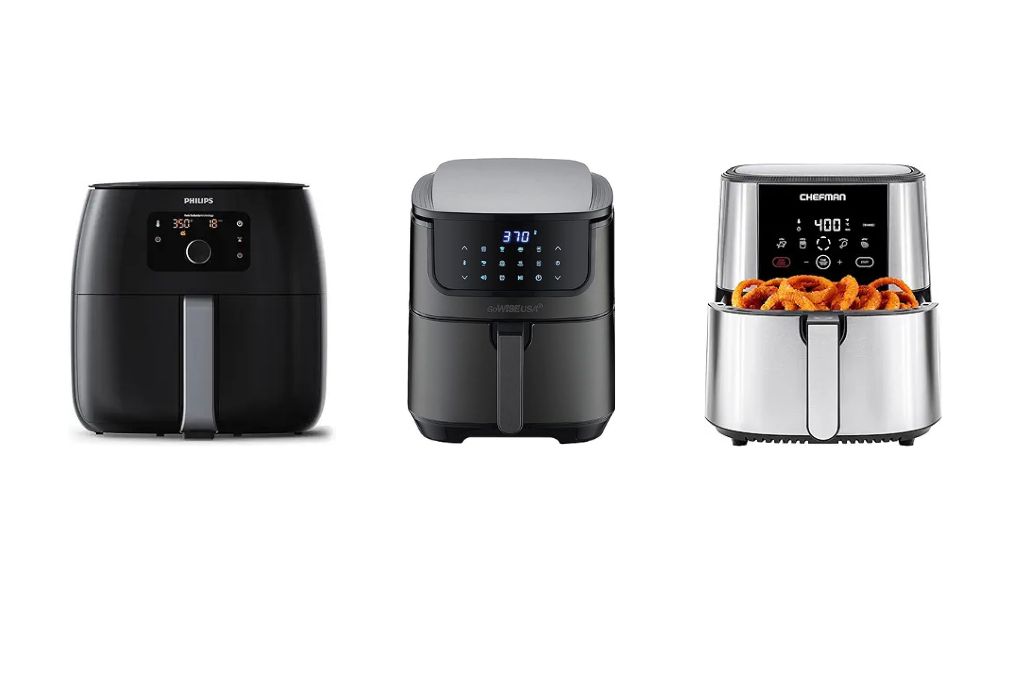
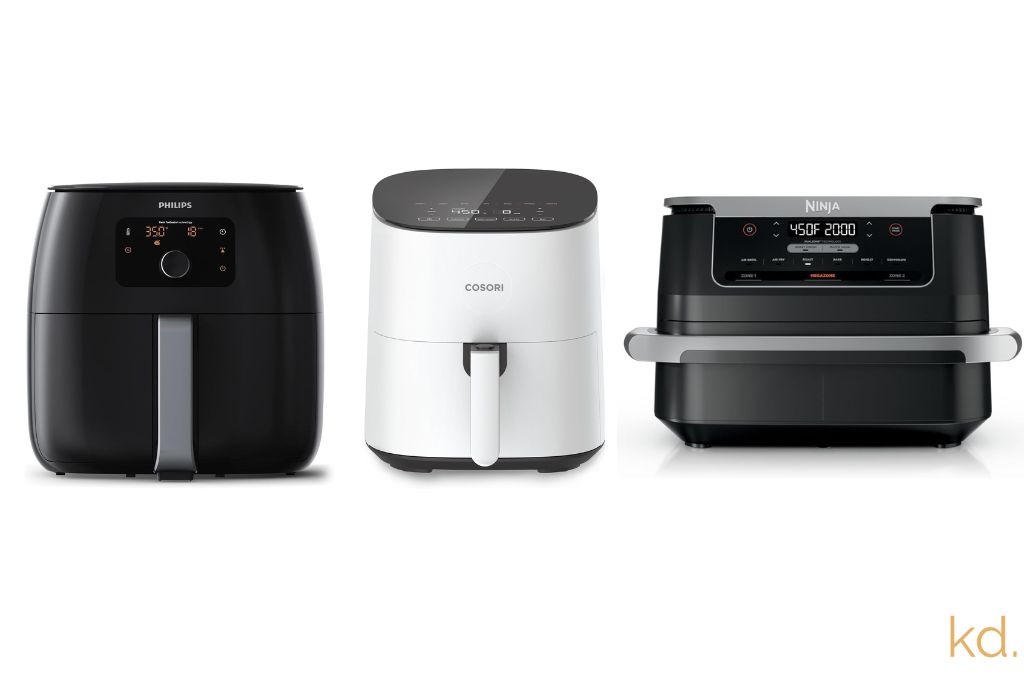
There’s something magical about perfectly cooked fish—that golden, crispy exterior giving way to tender, flaky flesh that practically melts in your mouth. But let’s be real: achieving that restaurant-quality result at home can feel like walking a tightrope. Too much heat and you’ve got a dried-out disaster. Too little and you’re left with a soggy mess that sticks to everything.
Enter the air fryer, your new best friend for cooking fish. These countertop wonders have revolutionized how we approach seafood at home, delivering that coveted crispy texture without drowning your fish in oil or heating up your entire kitchen. Whether you’re whipping up fish tacos on a Tuesday night or impressing guests with herb-crusted salmon, the right air fryer makes all the difference.
But here’s the thing: not all air fryers are created equal when it comes to fish. Some run too hot and blast your delicate fillets into oblivion. Others lack the precision needed for even cooking. And don’t even get me started on models with baskets so small you can barely fit a single portion.
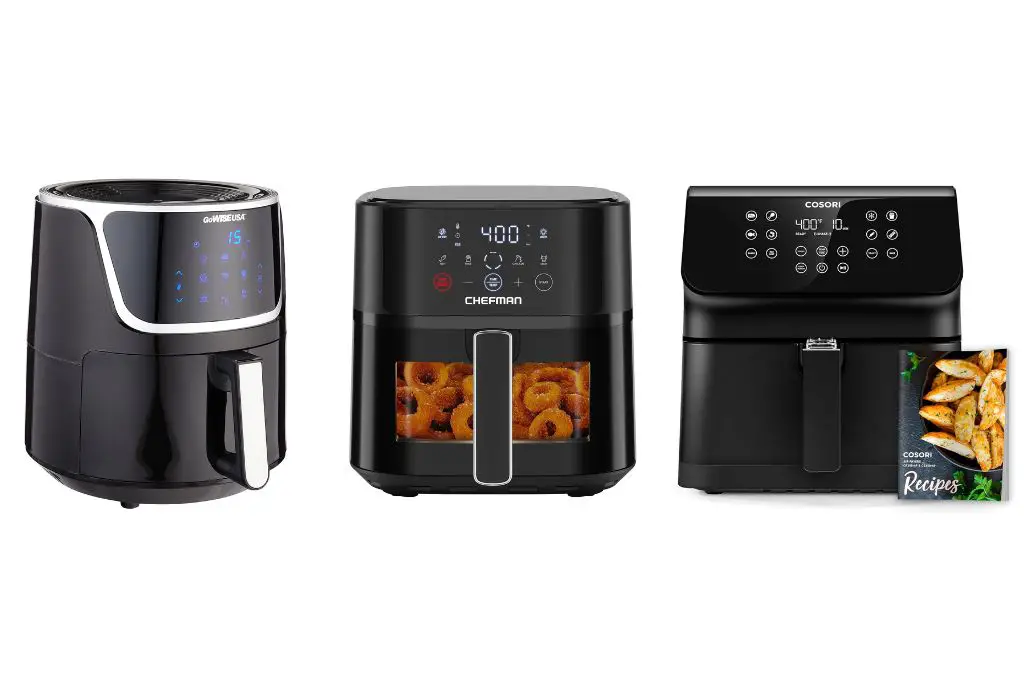
After extensive testing and research, I’ve rounded up the seven best air fryer for fish that consistently deliver flaky, perfectly cooked seafood without the guesswork. From compact models perfect for singles to family-sized beasts that can handle a whole salmon, there’s an option here for every fish lover and kitchen setup.
Quick Links for 7 Best Air Fryer for Fish
- Ninja Foodi 2-Basket Air Fryer – Best Overall for Fish
- Cosori Pro LE Air Fryer – Best for Even Cooking
- Instant Vortex Plus 6-Quart – Best Budget Option
- Philips Premium Airfryer XXL – Best for Delicate Fish
- Breville Smart Oven Air Fryer – Best for Whole Fish
- Gourmia Digital Air Fryer – Best Compact Option
- Ninja Foodi Flex Basket – Best for Versatility
1. Ninja Foodi 2-Basket Air Fryer – Best Overall for Fish
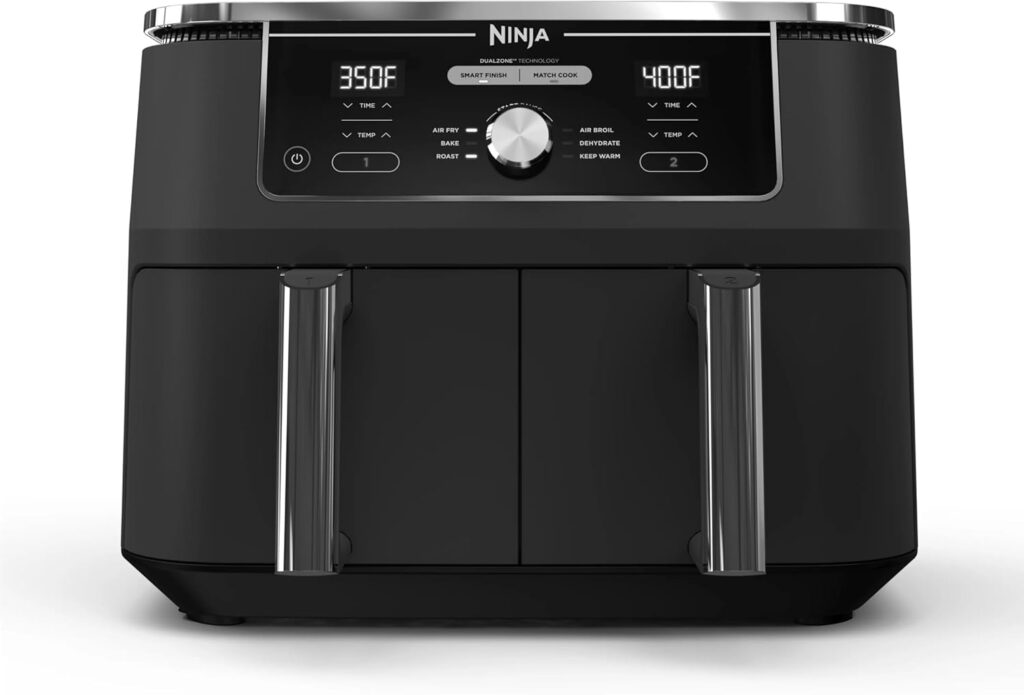
Let me start with what I genuinely believe is the holy grail for cooking fish in an air fryer. The Ninja Foodi 2-Basket Air Fryer isn’t just good—it’s the kind of good that makes you wonder how you ever lived without it.
Why It’s Perfect for Fish
The dual-basket design is an absolute game-changer when you’re cooking fish. Picture this: you’ve got salmon fillets crisping up in one basket while asparagus roasts in the other, both finishing at exactly the same time. The Smart Finish feature synchronizes cooking between the two baskets, so everything hits your plate hot and ready simultaneously. No more juggling cooking times or eating cold sides with your perfectly cooked fish.
Each basket holds 5 quarts, giving you plenty of room to spread out your fish without overcrowding. This matters more than you might think—when fish fillets are crammed together, they steam instead of getting that beautiful crispy exterior we’re after.
Temperature Control That Actually Works
Fish is unforgiving when it comes to temperature. A few degrees too high and you’ve got cardboard. The Ninja Foodi’s temperature range (105°F to 450°F) gives you the precision needed for everything from low-and-slow salmon at 275°F to quick-seared tuna steaks at 400°F. The temperature stays consistent throughout cooking, which is crucial for delicate proteins.
Pros
- Dual baskets let you cook fish and sides simultaneously
- Smart Finish technology ensures everything’s done at once
- Extra-large capacity handles whole fish or multiple fillets
- Precise temperature control prevents overcooking
- Easy-to-clean nonstick baskets
- Match Cook function copies settings to both baskets instantly
Cons
- Takes up significant counter space
- Higher price point than single-basket models
- Learning curve with dual-basket cooking
If you’re serious about cooking fish regularly and want the flexibility to prepare complete meals, this dual basket air fryer is worth every penny.
2. Cosori Pro LE Air Fryer – Best for Even Cooking
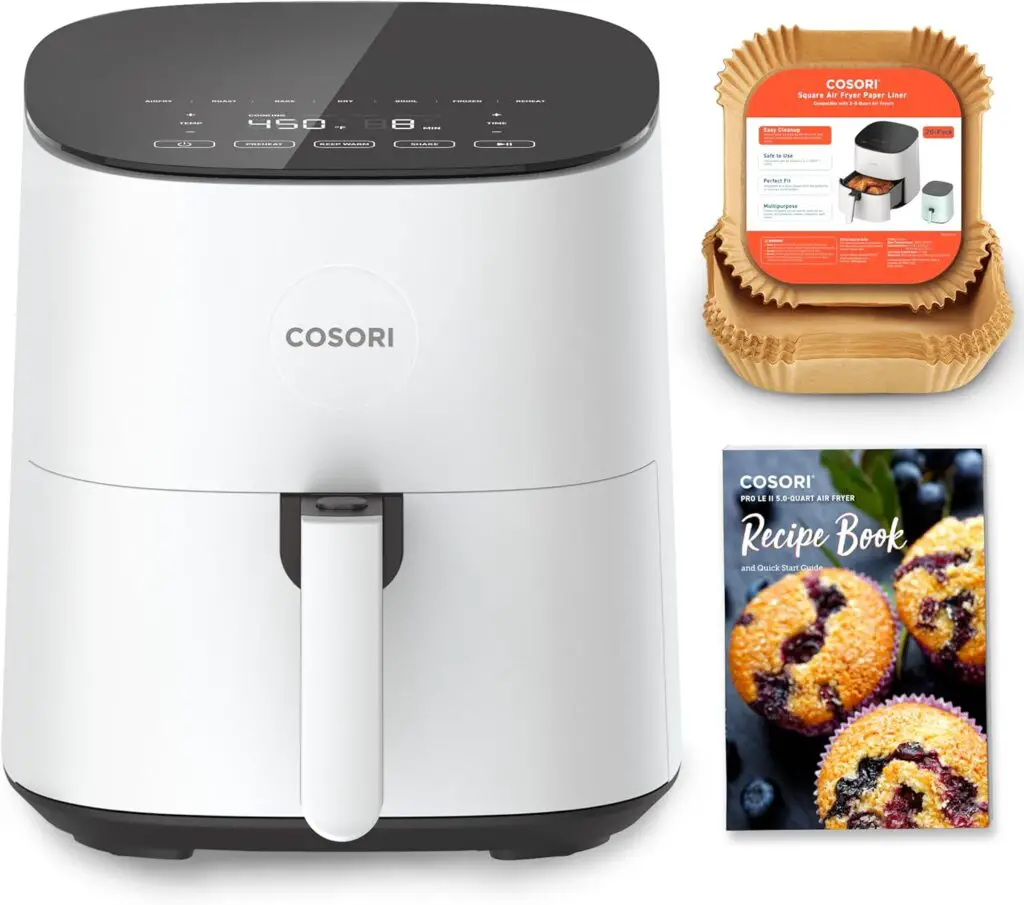
Nothing’s worse than cutting into a fish fillet to find one end perfectly done while the other is still translucent. The Cosori Pro LE solves this problem with what I’d call borderline obsessive attention to airflow design.
Engineering That Makes Sense
Cosori redesigned the heating element and fan positioning specifically to eliminate hot spots. The result? Fish that cooks evenly from edge to edge, with consistent browning across the entire surface. I’ve tested this with everything from thin tilapia fillets to thick cod loins, and the results are consistently impressive.
The 5.8-quart basket is the sweet spot for most households. It’s large enough to fit four decent-sized fish fillets without stacking, but not so massive that you’re heating up tons of empty space when cooking for one or two.
Smart Presets That Actually Help
Look, I’m usually skeptical about preset buttons on kitchen appliances. Most of them are gimmicky. But Cosori’s fish preset is legitimately useful—it’s calibrated for the typical thickness and composition of fish fillets, giving you a reliable starting point that works about 90% of the time.
The digital display is clear and responsive, and the shake reminder (yes, you should flip your fish halfway through) ensures you don’t forget that crucial step.
Pros
- Superior airflow eliminates hot spots
- Perfect capacity for most families
- Quiet operation compared to competitors
- Preheat function gets things started right
- Dishwasher-safe basket and components
- Compact footprint for the capacity
Cons
- Slightly longer cooking times than some competitors
- Preset functions can’t be customized
- Cord could be longer
For consistent results with minimal fussing, especially if you’re newer to air frying fish, the Cosori Pro LE is hard to beat. Learn more about different air fryer choices to find what works for your kitchen.
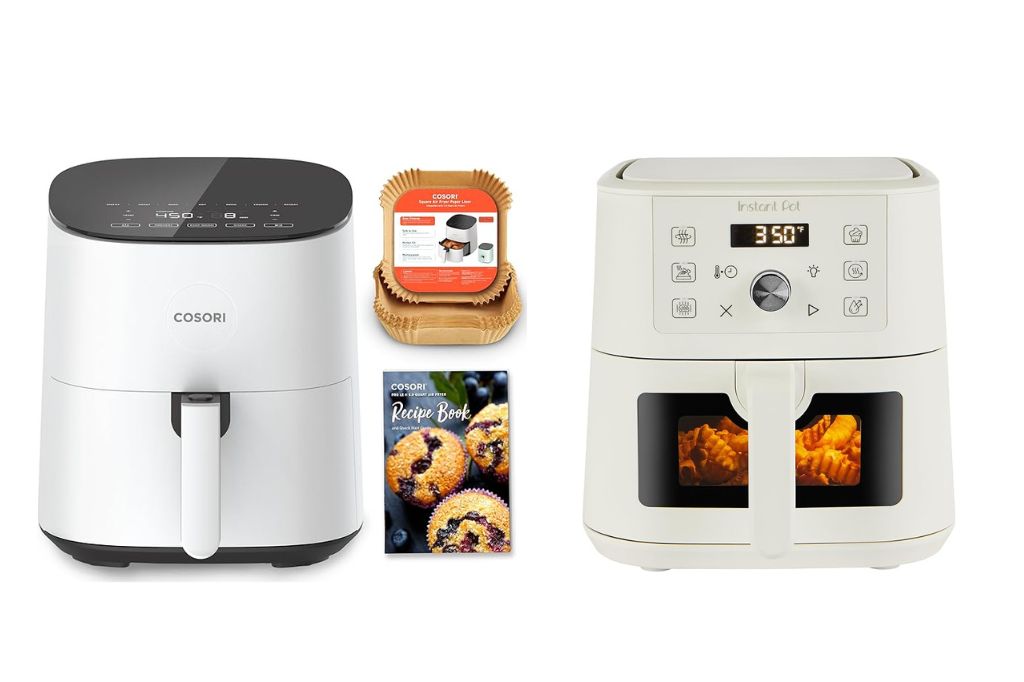
3. Instant Vortex Plus 6-Quart – Best Budget Option
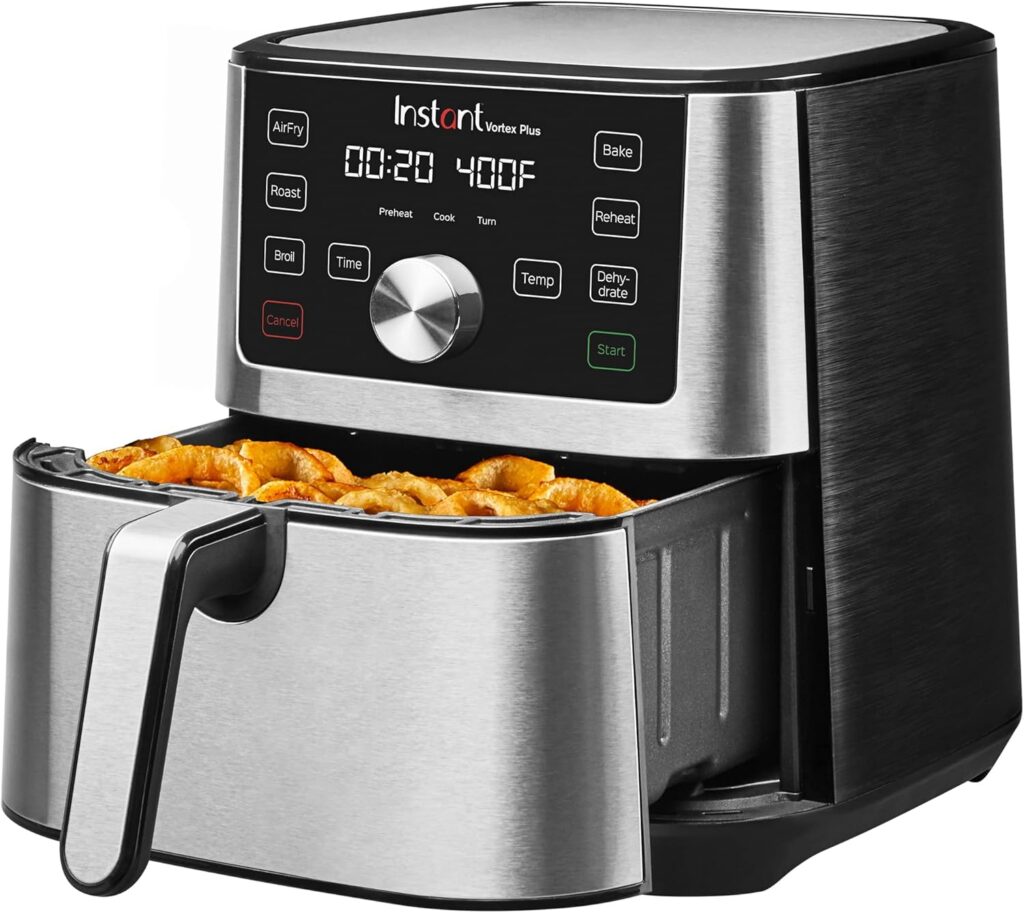
Just because you’re watching your budget doesn’t mean you should settle for subpar fish. The Instant Vortex Plus proves you can get excellent results without dropping a fortune.
Value Without Compromise
At its price point, the Instant Vortex Plus punches way above its weight class. The 6-quart capacity gives you more cooking space than the Cosori, and the build quality feels solid—not cheap or flimsy like some budget options.
The EvenCrisp technology (their term for optimized airflow) does a respectable job of crisping fish skin and breading without drying out the meat underneath. Is it quite as refined as the Ninja or Cosori? No. But it’s also a fraction of the cost, and the difference in results is minimal.
Versatility Beyond Fish
One of the things I appreciate about this model is how well it handles the full spectrum of air fryer tasks. The rotisserie function is a nice bonus, though admittedly not super relevant for fish. But the dehydrate and bake functions expand your options for meal prep—think fish jerky or delicate en papillote-style preparations.
Pros
- Excellent value for the capacity and features
- 6-in-1 functionality adds versatility
- Simple, intuitive controls
- Large viewing window to monitor cooking
- Relatively quiet operation
- Solid warranty support from Instant
Cons
- Not quite as precise as pricier models
- Basket handle can get hot
- Takes longer to preheat
- Build quality is good but not premium
If you’re just dipping your toes into air frying fish or want a capable machine without breaking the bank, this is your winner. Check out more air fryer options if you’re still exploring.
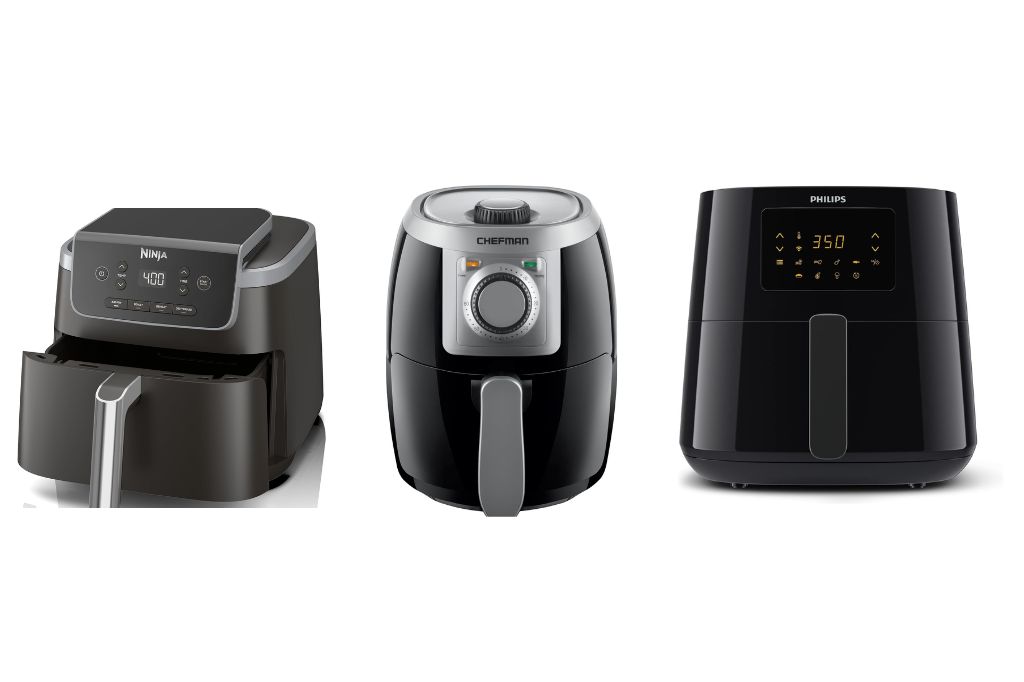
4. Philips Premium Airfryer XXL – Best Air Fryer for Delicate Fish
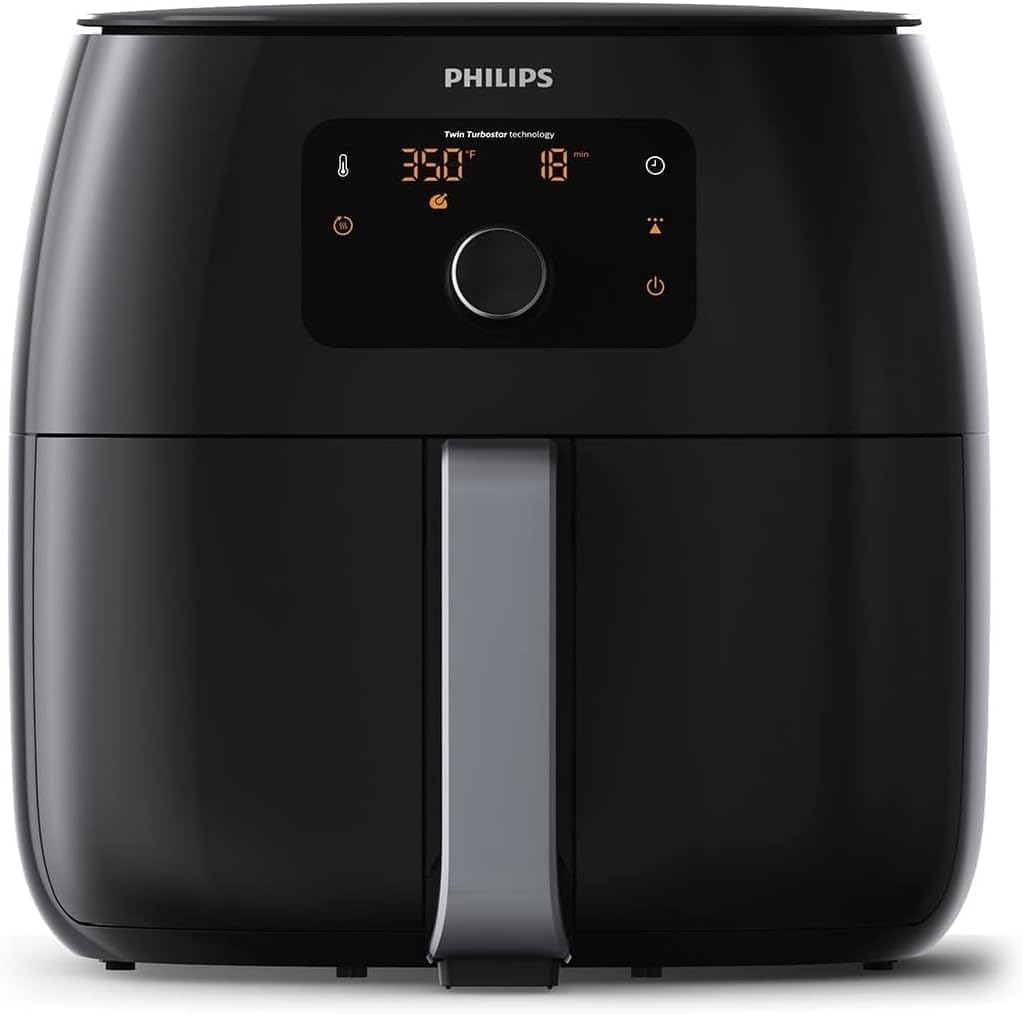
Some fish varieties demand a gentler touch. Sole, flounder, trout—these delicate beauties need an air fryer that won’t bully them. The Philips Premium Airfryer XXL is that air fryer.
The Gentler Approach
Philips essentially invented the modern air fryer, and that experience shows. Their “Fat Removal Technology” isn’t just marketing speak—the unique design with the removable insert at the bottom genuinely prevents fish from sitting in its own rendered fat, keeping the bottom from getting soggy.
The temperature control is remarkably gentle when you need it to be. Set it to 275°F for delicate fish, and it maintains that temperature without the aggressive blasts of super-heated air that can dry out thin fillets.
Size Matters
The XXL designation isn’t exaggerating. This thing is cavernous—you can easily fit a whole branzino or multiple large salmon fillets with room to spare. The basket design keeps fish elevated and allows air to circulate underneath, promoting even cooking and preventing sticking.
Pros
- Exceptional for delicate fish varieties
- Massive 7.3-quart capacity
- Industry-leading fat removal system
- Sturdy construction that’ll last years
- Precise low-temperature control
- Easy to clean with minimal sticking
Cons
- Premium price point
- Heavy and bulky
- Longer preheat time
- Limited preset options
For serious seafood enthusiasts who regularly cook delicate fish or want restaurant-quality results at home, the investment in a Philips air fryer pays dividends.
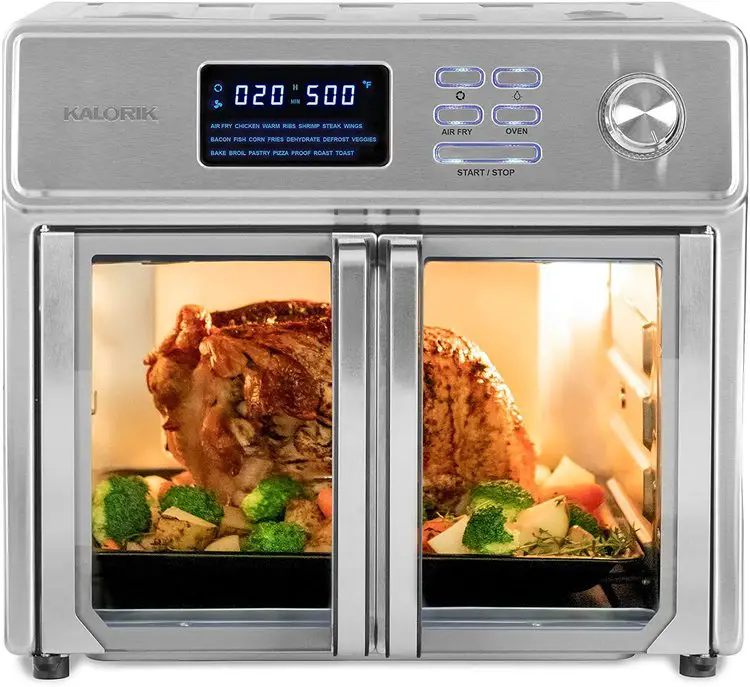
5. Breville Smart Oven Air Fryer – Best for Whole Fish
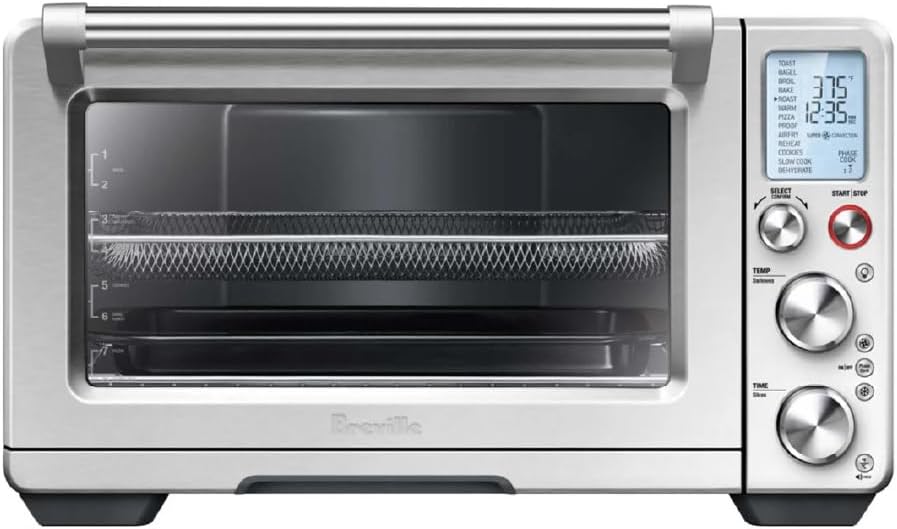
Sometimes you want to go big—literally. When you’re cooking a whole snapper, branzino, or even a small salmon, most air fryers simply can’t accommodate the length. The Breville Smart Oven Air Fryer can, and it does so brilliantly.
The Oven-Air Fryer Hybrid
This isn’t your typical basket-style air fryer. It’s a full convection oven with an air fry function, which means you get the best of both worlds. The spacious interior can handle a whole fish up to about 14 inches long, making it perfect for impressive dinner party presentations.
The Element iQ technology uses multiple heating elements that adjust power independently to create the ideal cooking environment. For fish, this means you can get crispy skin on top while ensuring the flesh cooks through evenly without drying out.
Beyond Just Air Frying
The 13 cooking functions give you insane flexibility. Slow-cook fish stew in the morning, air fry salmon for lunch, then bake a whole branzino for dinner—all in the same appliance. The interior light lets you monitor your fish without opening the door and releasing heat.
Pros
- Accommodates whole fish and large portions
- Multiple cooking functions beyond air frying
- Superior build quality and materials
- Precise temperature control
- Large viewing window with interior light
- Can replace multiple appliances
Cons
- Significant counter space requirement
- Higher learning curve
- Premium price tag
- Overkill for basic air frying needs
If you’ve got the counter space and budget for a Breville air fryer, this powerhouse does everything exceptionally well, including air frying fish.
6. Gourmia Digital Air Fryer – Best Compact Option
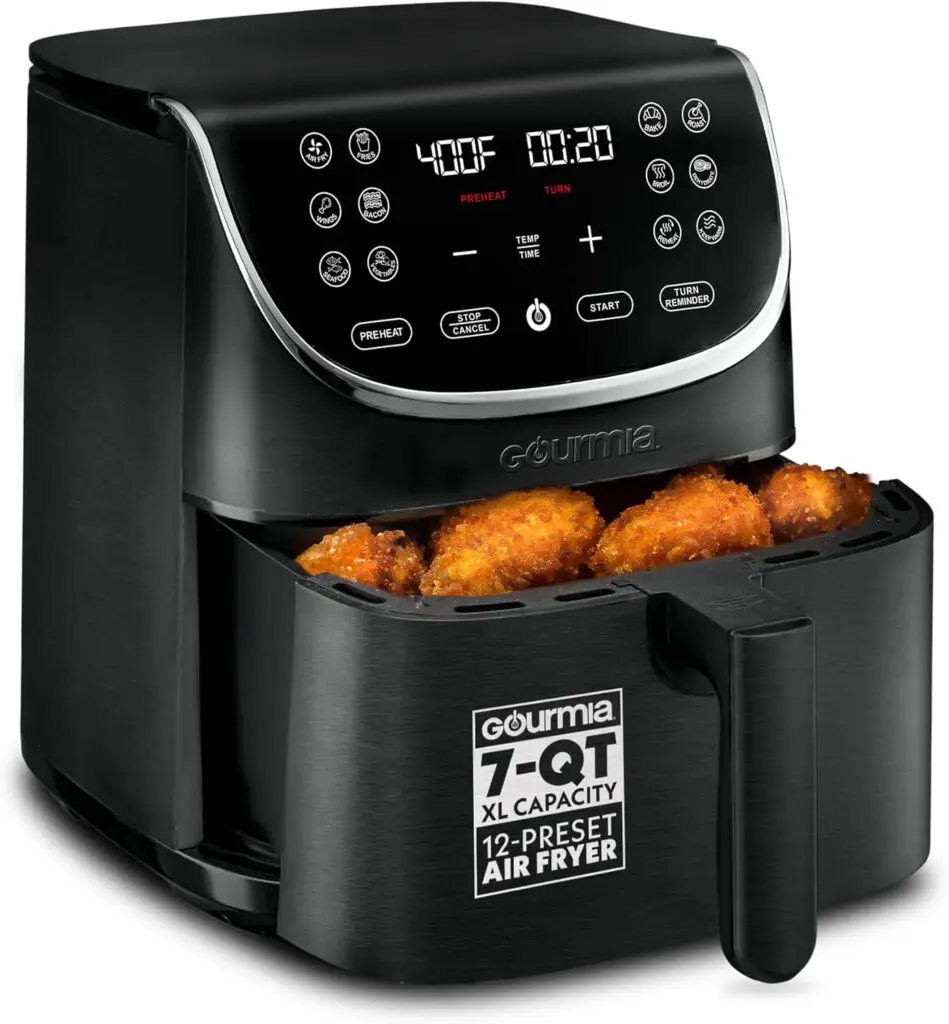
Not everyone has a sprawling kitchen or needs to feed a crowd. If you’re cooking for one or two, or working with limited counter space, the Gourmia Digital Air Fryer delivers impressive results in a pint-sized package.
Small but Mighty
Don’t let the 4.5-quart capacity fool you—this little guy packs a punch. It’s perfect for two standard fish fillets or a generous single serving. The compact footprint means you can actually leave it on your counter without it dominating the space.
The circular basket design promotes excellent air circulation despite the smaller size, and the crisping tray insert prevents fish from sitting flat on the bottom, which can lead to sogginess.
Straightforward and Effective
There’s no app, no Bluetooth, no unnecessary bells and whistles. Just a simple digital interface with temperature and time controls, plus a handful of useful presets. Sometimes simplicity is exactly what you need, especially when you’re tired after work and just want perfectly cooked fish without overthinking it.
Pros
- Ideal for small households or limited space
- Heats up quickly due to smaller capacity
- Budget-friendly pricing
- User-friendly interface
- Quiet operation
- Dishwasher-safe components
Cons
- Limited capacity for larger servings
- Fewer advanced features
- Build quality is functional but basic
- Short power cord
For apartment dwellers, college students, or anyone who values simplicity and space-saving design, this Gourmia air fryer is a smart choice.
7. Ninja Foodi Flex Basket – Best for Versatility
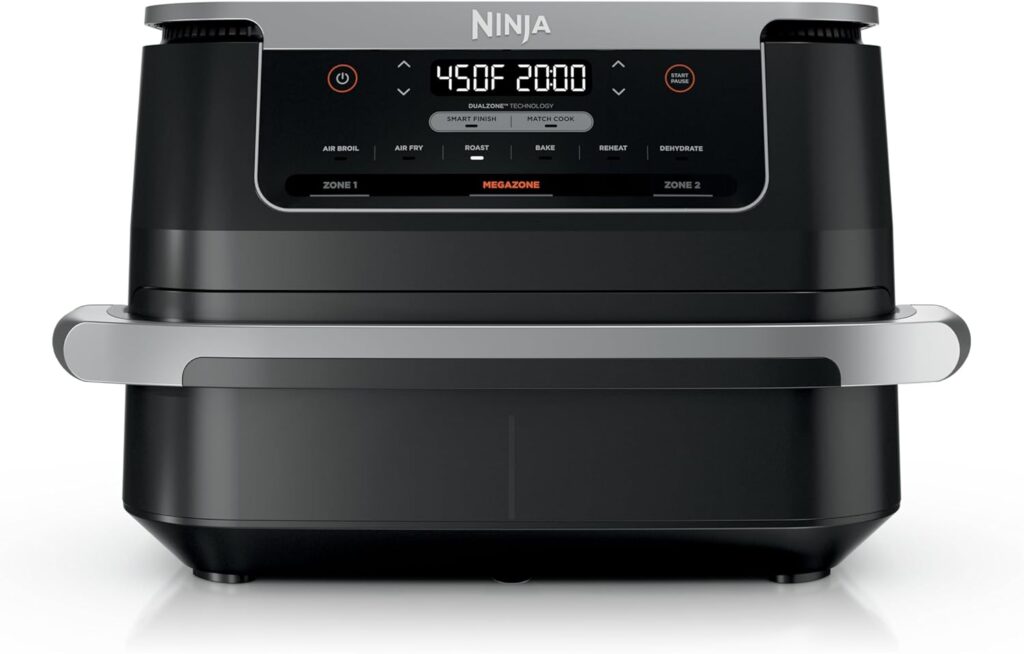
Last but definitely not least, the Ninja Foodi Flex Basket represents a genuinely innovative approach to air fryer design. It’s like having two air fryers that can transform into one when needed.
The Best of Both Worlds
Here’s what makes this special: you can use it as two separate 3.75-quart baskets (perfect for cooking different types of fish simultaneously) or remove the divider to create one large 7.5-quart basket (ideal for a whole side of salmon or a party platter of fish and chips).
This flexibility is killer for fish because different varieties often require different cooking temperatures and times. Cook delicate sole on one side at 300°F while crisping up thicker cod on the other at 375°F. Or remove the divider and roast a massive batch of fish tacos for your crew.
Smart Cooking Tech
The Smart Finish and Match Cook functions from Ninja’s dual-basket model carry over here, but the FlexDrawer takes it further with MegaZone technology. This optimizes heat distribution across the entire cooking space, whether you’re using one zone or two.
The temperature probe included with the FlexDrawer is genuinely useful for fish. Slide it into a thick salmon fillet, set your desired internal temperature, and the air fryer automatically shuts off when it’s perfectly done. No more guessing, no more overcooking.
Pros
- Ultimate flexibility with convertible basket
- Temperature probe ensures perfect doneness
- Generous capacity in both configurations
- Ninja’s proven air frying technology
- Easy to clean
- Sleek design looks premium
Cons
- Highest price point on this list
- Divider can be fiddly to install/remove
- Takes practice to maximize the dual-zone feature
- Large footprint when space is tight
For households with varying preferences and portion sizes, or for serious home cooks who want maximum flexibility, the Ninja air fryer FlexDrawer is tough to beat.
Comparison Table: Best Air Fryers for Fish
| Air Fryer Model | Capacity | Temperature Range | Key Feature | Best For | Weight |
|---|---|---|---|---|---|
| Ninja Foodi 2-Basket | 10 qt (5 qt x 2) | 105°F – 450°F | Dual independent baskets | Complete meals, multitasking | 21 lbs |
| Cosori Pro LE | 5.8 qt | 170°F – 450°F | Optimized airflow design | Even cooking, reliability | 11.4 lbs |
| Instant Vortex Plus | 6 qt | 120°F – 400°F | EvenCrisp technology | Budget-conscious buyers | 13 lbs |
| Philips Premium XXL | 7.3 qt | 140°F – 390°F | Fat removal technology | Delicate fish, health focus | 17.5 lbs |
| Breville Smart Oven | 21.5 qt | 80°F – 480°F | Oven-air fryer hybrid | Whole fish, versatility | 43.6 lbs |
| Gourmia Digital | 4.5 qt | 180°F – 400°F | Compact design | Small spaces, singles | 8.6 lbs |
| Ninja FlexDrawer | 7.5 qt | 105°F – 450°F | Convertible basket system | Flexibility, precision | 19 lbs |
The Ultimate Buying Guide for Air Fryers for Fish
Now that we’ve covered the top contenders, let’s dig into what you should actually consider when choosing the best air fryer for fish. Trust me, understanding these factors will save you from buyer’s remorse and ensure your fish turns out perfect every time.
Capacity: Size Really Does Matter
When it comes to air frying fish, capacity is about more than just fitting your food inside—it’s about giving it room to breathe. Here’s the thing: fish needs space around it for proper air circulation. Cramming four fillets into a basket designed for two will leave you with steamed, soggy fish instead of that crispy exterior you’re after.
For singles or couples: A 3-5 quart capacity is perfect. You can comfortably fit two generous fish fillets with enough space for proper crisping.
For families of 4: Look for 5-7 quarts. This sweet spot lets you cook enough fish for everyone without batching, which is crucial because fish is best served immediately.
For entertaining or meal prep: Go big with 7+ quarts or consider a dual-basket model. You’ll appreciate the extra room when you’re feeding a crowd or batch-cooking fish for the week.
One pro tip: measure your most commonly cooked fish pieces before buying. A whole branzino or thick salmon steak requires more length and height than typical basket air fryers provide—which is where oven-style models shine.
Temperature Control and Range
Fish is temperamental. Five degrees can make the difference between moist perfection and dried-out disaster. Here’s what to look for:
Low-end temperature matters: Delicate fish like sole or flounder benefit from gentler heat around 275-300°F. Models that only go down to 350°F limit your options and risk overcooking delicate varieties.
High-end capabilities: While you rarely need scorching heat for fish, having the option to hit 400°F+ is useful for getting crispy skin on salmon or quickly searing tuna steaks while keeping the interior rare.
Temperature accuracy: This is huge and often overlooked. Some budget air fryers can fluctuate 25-30 degrees from the set temperature, which wreaks havoc on fish. Look for models with precise digital controls and good reviews mentioning temperature consistency.
Adjustability: The ability to adjust temperature mid-cook is surprisingly useful. Start high to crisp the exterior, then drop down to gently finish cooking through—this technique works wonders for thick cuts.
Basket Design and Material
The basket might seem like a minor detail, but it dramatically affects your fish-cooking experience.
Nonstick coating quality: Fish skin and delicate flaky flesh love to stick. A high-quality nonstick coating is non-negotiable. PFOA-free coatings are healthier and still perform excellently. Some models use ceramic nonstick, which works well for fish though it may not last quite as long.
Basket vs. tray: Traditional basket-style air fryers work great for fillets and portions. Oven-style models with flat trays are better for whole fish or when you want to cook fish en papillote (wrapped in parchment).
Perforations: Look at the hole pattern in the basket. More, smaller holes generally mean better air circulation and more even cooking, but holes that are too large can cause thin fish pieces to break apart.
Removable components: For fish, cleanup is critical—nobody wants lingering fishy smells. Dishwasher-safe baskets and removable drip trays make cleanup painless. Some models have parts that pop right in the dishwasher, while others require hand washing.
Crisper plates: These raised inserts keep fish elevated above any rendered fat or moisture, preventing soggy bottoms. They’re especially important for fattier fish like salmon. Many come standard, but if not, they’re worth buying separately.
Power and Wattage
More watts generally mean faster heating and better crisping, but there are nuances specific to fish:
1400-1700 watts: This is the sweet spot for most household air fryers. Enough power for excellent results without tripping breakers or drawing excessive electricity.
1800+ watts: These powerhouses heat up faster and can maintain more consistent temperatures, which helps when opening the basket to check on delicate fish.
Under 1200 watts: These take longer to cook and may struggle with crisping. If you’re specifically buying for fish, I’d avoid this range unless you’re severely limited by your kitchen’s electrical capacity.
Remember that an air fryer doesn’t need to be a monster to cook fish well—sometimes gentler heating produces better results with delicate proteins.
Smart Features and Presets
I’m going to be honest: most preset buttons are marketing fluff. But a few genuinely useful features can make cooking fish easier:
Temperature probe: This is a game-changer for fish. Insert it into a thick fillet, set your desired internal temp (usually 125-145°F depending on the fish), and let the air fryer do the work. No more guessing, no more cutting into your fish to check doneness.
Shake reminders: Simple but effective. A beep halfway through reminds you to flip your fish for even cooking. Some models pause automatically until you resume.
Keep warm function: Fish waits for no one, but this feature buys you a few minutes if you’re coordinating multiple dishes.
Preheat function: Speeds up the initial heating and ensures consistent cooking from start to finish.
App connectivity: Cool but not essential. Some apps offer fish-specific recipes and guided cooking, which is helpful when you’re trying new varieties.
Fish preset: Only worth having if it’s actually calibrated correctly. Test it early with a cheap fillet before trusting it with expensive halibut.
Noise Level
Air fryers have fans, and fans make noise. While not a dealbreaker, if you’re sensitive to kitchen noise or have open-concept living, this matters.
Most air fryers run between 55-65 decibels—roughly the volume of normal conversation to background music. Oven-style models tend to be quieter than basket types. Cheaper models with less refined fans can be annoyingly loud.
If noise is a concern, read reviews specifically mentioning this aspect, or check YouTube videos where you can hear the actual operating sound.
Cleaning and Maintenance
Fish can be messy, and the last thing you want is yesterday’s salmon smell haunting your next batch of cookies. Here’s what makes cleanup easier:
Dishwasher-safe parts: Non-negotiable in my book. The basket, drip tray, and any racks should all be dishwasher-safe.
Removable heating element: Some models let you wipe down the heating element directly, which helps with odor removal.
Smooth surfaces: Fewer crevices mean fewer places for fish bits to hide and create smell.
Odor-resistant materials: Some newer models use materials specifically designed to resist absorbing food odors.
Easy disassembly: Can you take it apart and get into all the corners? This matters more than you’d think.
Pro tip: Run your air fryer at high heat with a bowl of water and lemon juice for 5 minutes after cooking fish. This steam-cleans the interior and neutralizes odors beautifully. Check out options for air fryers without Teflon if you’re concerned about coating safety.
Build Quality and Durability
You’re investing in an appliance you’ll hopefully use for years. Here’s how to spot quality:
Housing material: Stainless steel or high-quality plastic? Stainless looks better and lasts longer but costs more. Quality plastic is fine if it’s thick and well-constructed.
Button and dial quality: Do they feel solid or cheap? Press them in the store if possible—mushy buttons often indicate corner-cutting elsewhere.
Door hinges (for oven models): Should feel smooth and secure, not loose or wobbly.
Cord length and quality: A too-short cord is endlessly annoying, and a flimsy cord won’t last.
Warranty coverage: One year is standard, but better brands offer 2-3 years. This reflects their confidence in the product’s durability.
Brand reputation: Stick with established brands that have proven customer service. Random Amazon brands might be cheaper but often lack support when things go wrong.
Safety Features
Fish cooks relatively quickly, but safety should never be compromised:
Auto shut-off: Essential. If you forget about your fish (it happens), the air fryer should turn itself off.
Cool-touch exterior: The outside should stay relatively cool even when the inside is 400°F. Important if you have kids or pets.
Overheat protection: Prevents the unit from getting dangerously hot if something goes wrong.
Non-slip feet: Keeps the air fryer stable on your counter, especially important when pulling out hot baskets.
Cord storage: Not exactly safety, but prevents cords from dangling where they can be tripped over or pulled.
Budget Considerations
Air fryers for fish range from under $50 to over $400. Here’s how to think about budget:
Under $100: Expect basic functionality, smaller capacity, and simpler controls. Fine for occasional fish cooking or testing whether you’ll actually use an air fryer.
$100-$200: The sweet spot for most buyers. Good capacity, reliable performance, and some smart features without breaking the bank.
$200-$300: Premium features, better materials, larger capacity, or dual-basket functionality. Worth it if you cook fish frequently.
$300+: Professional-grade models, oven-style units, or top-of-the-line features. Only necessary if you’re a serious home cook or have specific requirements.
Remember: expensive doesn’t always mean better for your needs. A $300 air fryer with features you’ll never use is a worse value than a $150 model that does exactly what you need perfectly.
Energy Efficiency
Air fryers are generally energy-efficient compared to conventional ovens, but there are differences:
Smaller capacity = less energy: A compact 4-quart model uses less electricity than a 10-quart beast, assuming you’re not cooking at full capacity anyway.
Insulation quality: Better-insulated models retain heat more efficiently, using less energy to maintain temperature.
Preheat time: Faster preheating means less energy waste. This varies significantly between models.
For most households, the energy cost difference between air fryers is negligible—maybe a few dollars per year. Don’t make this your primary decision factor unless you’re extremely energy-conscious.
Special Considerations for Different Fish Types
Different fish have different needs. Here’s a quick guide:
Delicate fish (sole, flounder, tilapia): Need gentle heat (275-325°F) and shouldn’t be flipped aggressively. Models with precise low-temperature control and good airflow work best.
Medium fish (cod, haddock, sea bass): The sweet spot that works well in any decent air fryer. Standard settings around 350-375°F.
Oily fish (salmon, mackerel, sardines): Need excellent drainage to avoid sitting in rendered fat. Look for models with good drip tray systems.
Thick cuts and steaks (tuna, swordfish): Benefit from temperature probes and the ability to sear at high heat then finish at lower temperatures.
Whole fish: Require oven-style air fryers with sufficient height and length. Basket models simply won’t accommodate them.
Breaded fish: Need good air circulation and higher heat (375-400°F) for crispy coating without overcooking the fish inside.
Tips for Perfect Air Fryer Fish Every Time
Now that you know what to look for in an air fryer, here are some insider tips to ensure your fish turns out perfect:
Pat It Dry
This is probably the single most important step people skip. Moisture is the enemy of crispiness. Use paper towels to thoroughly pat your fish dry before seasoning. This applies whether you’re cooking naked fillets or breaded fish.
Don’t Skip the Oil
Yes, it’s an air fryer, but a light coating of oil (I use a spray bottle) makes a huge difference in texture and browning. It also helps seasonings adhere and prevents sticking.
Room Temperature Matters
Fish straight from the fridge can cook unevenly—cold centers, overcooked edges. Let your fish sit out for 15-20 minutes before air frying for more consistent results.
Resist the Urge to Overcrowd
Leave space between fillets. Air needs to circulate freely for that signature crispy texture. If you’re cooking for a crowd, work in batches—it’s worth it.
Flip Halfway Through
Most fish benefits from a mid-cook flip. This ensures even browning and crisping on both sides. For delicate fish, use a thin spatula and be gentle.
Check Early
Fish cooks fast, especially in an air fryer. Start checking a minute or two before the recommended time. It’s easier to add 30 seconds than to fix overcooked fish.
Use Parchment Liners for Delicate Fish
Parchment paper in your air fryer can prevent sticking with fragile fish. Just make sure it’s perforated for airflow and weighed down by the fish (not loose where it could blow into the heating element).
Season After Drying, Before Oil
The order matters: dry the fish, season generously, then add a light oil coating. This helps seasonings stick while the oil creates that golden crust.
Rest Your Fish
Let cooked fish rest for 2-3 minutes before serving. This allows juices to redistribute, keeping it moist and flavorful.
Frequently Asked Questions
What temperature is best for air frying fish?
Most fish cooks beautifully at 375-400°F for 8-12 minutes, depending on thickness. Delicate varieties like sole benefit from lower temps around 325°F, while thick cuts like tuna steaks can handle 400°F for a nice sear. The key is matching temperature to fish type and thickness.
Can I cook frozen fish in an air fryer?
Absolutely! Air fryers excel with frozen fish. Add 3-5 minutes to the cooking time and spray with a bit of extra oil. No need to thaw first, which makes weeknight dinners incredibly easy. Breaded frozen fish gets particularly crispy.
How do I prevent fish from sticking to the air fryer basket?
A light coating of oil spray on both the basket and the fish is your best defense. Make sure the fish is dry before adding oil. Using perforated parchment liners also helps, especially with delicate fish. A quality nonstick basket makes a huge difference too.
Why is my air fryer fish dry?
Usually it’s overcooking or too high temperature. Fish continues cooking after you remove it from heat, so pull it out when it’s just barely done. Using an instant-read thermometer helps—fish is done at 125-145°F depending on the variety. Also, don’t skip the oil spray.
Can I use regular aluminum foil in my air fryer for fish?
Yes, but use it carefully. Heavy-duty foil works better than thin stuff, and make sure it doesn’t block airflow vents. Create small holes in the foil or use it as a sling to lift delicate fish rather than lining the entire basket. Learn more about using foil in air fryers.
How long does fish take to cook in an air fryer?
Thin fillets (1/2 inch): 6-8 minutes at 375°F Medium fillets (3/4-1 inch): 10-12 minutes at 375°F Thick steaks (1.5 inches): 12-15 minutes at 375°F Always check a few minutes early since thickness varies.
Is air fried fish healthier than deep fried?
Significantly. Air frying uses 70-80% less oil than deep frying while achieving similar texture. You get that crispy exterior without all the excess fat and calories. Plus, air frying is cleaner, safer, and doesn’t leave your kitchen smelling like a fish shack.
What’s the best way to reheat fish in an air fryer?
Set your air fryer to 350°F and reheat for 3-4 minutes. Don’t go longer or you’ll dry it out. A light spray of oil helps restore some crispiness. Honestly though, fish is best enjoyed fresh—leftovers rarely match the original quality.
Can I cook battered fish in an air fryer?
Wet batters don’t work well—they drip through the basket and make a mess. But breaded fish (either homemade with egg wash and breadcrumbs or store-bought frozen) works fantastically. The air fryer gets breading incredibly crispy without deep frying.
Do I need to preheat my air fryer for fish?
It depends on the model, but generally yes. Preheating for 3-5 minutes ensures even cooking from the start and helps achieve better texture. Some newer air fryers have built-in preheat functions that make this automatic.
Final Thoughts
Choosing the best air fryer for fish comes down to understanding your specific needs and cooking style. If you’re feeding a family and value flexibility, the Ninja Foodi 2-Basket or FlexDrawer models offer unmatched versatility. For solo cooks or those with limited space, the compact Gourmia delivers solid results without taking over your counter. And if precision matters most, the Philips Premium XXL or Cosori Pro LE won’t let you down.
The beauty of air frying fish is how it democratizes restaurant-quality results. No more intimidation, no more dried-out disasters, no more kitchen covered in oil splatter. With the right air fryer and a bit of practice, perfectly crispy, flaky fish becomes just another Tuesday night dinner option.
Remember, even the best air fryer for fish won’t do the work for you—but it’ll make getting consistent, delicious results so much easier that you’ll wonder why you didn’t make the switch sooner. Whether you’re a seafood enthusiast or just trying to eat healthier, investing in a quality air fryer designed to handle fish will transform your cooking routine.
For more guidance on choosing kitchen equipment, check out reviews of other air fryer options and non-toxic cookware to create a healthier kitchen environment overall. External resources like the Seafood Nutrition Partnership can provide additional information about incorporating more fish into your diet.
Happy air frying, and may your fish always be perfectly crispy on the outside and tender on the inside!