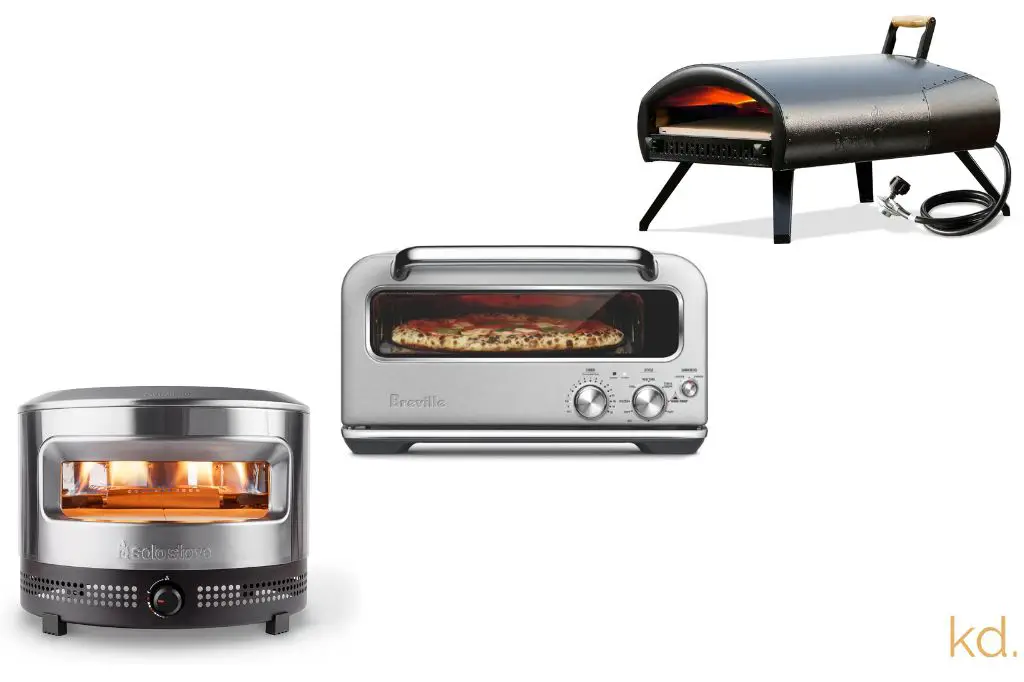
There’s something magical about a perfectly charred, wood-fired pizza with that signature crispy crust and bubbling cheese. But you don’t need a massive brick oven taking up half your backyard to achieve pizza perfection anymore. Enter the portable pizza oven—a game-changing appliance that’s transforming outdoor cooking and bringing restaurant-quality results right to your patio, balcony, or campsite.
Whether you’re a weekend warrior looking to upgrade your grilling game or a serious pizza enthusiast who dreams of opening a pop-up pizzeria, portable pizza ovens have evolved into incredibly versatile cooking machines. And if you’re exploring outdoor cooking options, you might also want to check out our guide on pizza ovens for a broader perspective on what’s available in the market.
The beauty of these compact powerhouses? They heat up in minutes, reach temperatures that would make a professional pizzaiolo jealous (we’re talking 800-900°F), and many can cook a perfect Neapolitan-style pizza in just 60-90 seconds. From gas-powered models to wood-fired traditionalists and even electric options for apartment dwellers, there’s a Portable Pizza Oven designed for every cooking style and living situation.
Quick Links for Best Portable Pizza Ovens
- Ooni Koda 16 – Best Overall Gas-Powered
- Gozney Roccbox – Premium Multi-Fuel Champion
- Solo Stove Pi – Best Wood-Fired Experience
- Ooni Fyra 12 – Budget-Friendly Wood Pellet Option
- Bertello Grande – Most Versatile Multi-Fuel
- Breville Smart Oven Pizzaiolo – Best Indoor Electric
- Gozney Dome – Professional-Grade Backyard Beast
What Makes Portable Pizza Ovens Special?
Before we dive into specific models, let’s talk about what separates these specialized ovens from your standard home oven or grill. Traditional kitchen ovens typically max out around 500-550°F, which is fine for many dishes but falls short for authentic Neapolitan pizza that demands 800-900°F for that characteristic leopard-spotted crust.
Portable pizza ovens use focused heat retention, ceramic or cordierite baking stones, and strategic airflow to create an environment that mimics professional pizza ovens found in Italian pizzerias. The dome or arch design reflects heat downward while the stone absorbs and radiates heat upward, cooking your pizza from both sides simultaneously—the secret to that perfect crispy-yet-chewy texture.
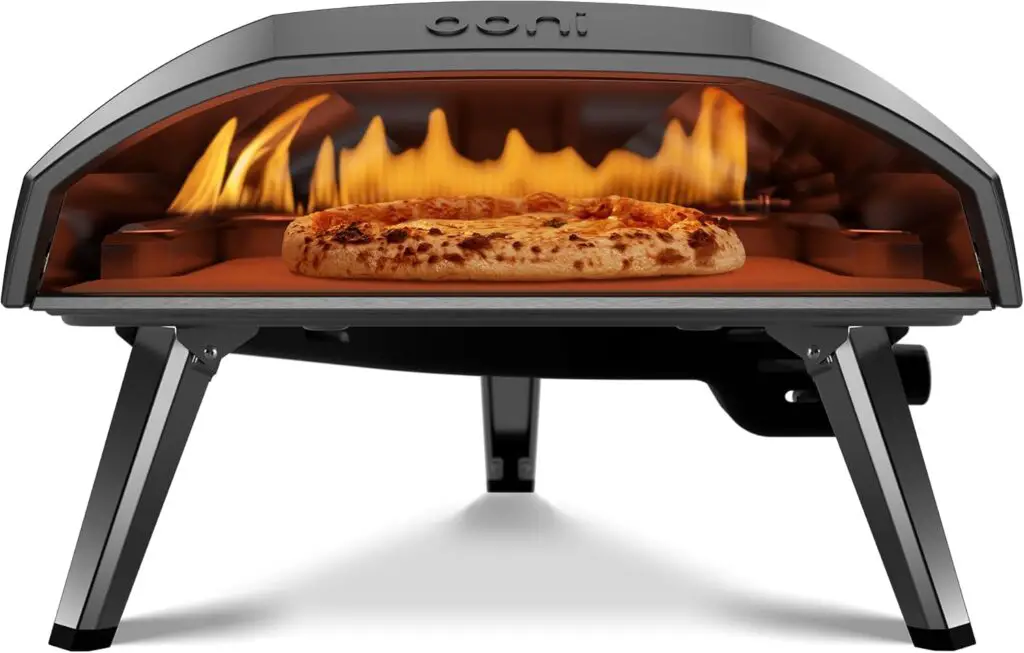
1. Ooni Koda 16 – Best Overall Gas-Powered Portable Pizza Oven
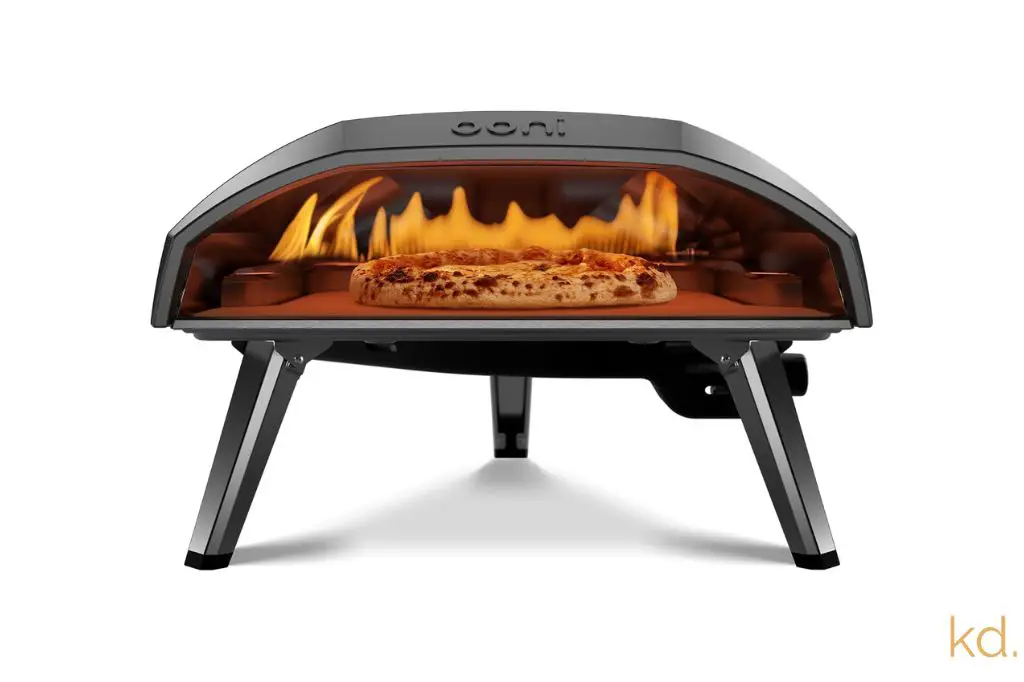
The Ooni Koda 16 represents the sweet spot between performance, convenience, and value. This gas-powered beast has become the darling of backyard pizza makers for good reason—it’s ridiculously easy to use and produces consistently excellent results.
Key Features
- 16-inch cooking surface for larger pizzas
- Reaches 950°F in just 15 minutes
- Instant gas ignition (no preheating hassle)
- L-shaped flame for even heat distribution
- Weighs 40 lbs (portable but substantial)
Pros
✓ Lightning-fast heat-up time – From cold to cooking in 15 minutes means spontaneous pizza parties are totally feasible ✓ Consistent temperature control – The gas dial gives you precise heat management ✓ Large cooking area – 16-inch capacity means you can make proper family-sized pizzas ✓ Minimal learning curve – If you can use a gas grill, you can master this ✓ Low maintenance – No ash cleanup like wood-fired models
Cons
✗ Requires propane tank connection (not as portable as smaller models) ✗ Higher initial investment than entry-level options ✗ No wood-fired flavor (if that’s important to you) ✗ Gas flame can be sensitive to wind without wind guard accessory
Best For: Home cooks who prioritize convenience and consistency over portability and don’t mind missing the wood-fired flavor profile.
| Property | Specification |
|---|---|
| Fuel Type | Propane Gas |
| Cooking Surface | 16 inches |
| Max Temperature | 950°F |
| Heat-up Time | 15 minutes |
| Pizza Cook Time | 60 seconds |
| Weight | 40 lbs |
| Dimensions | 25 x 14.6 x 12.2 inches |
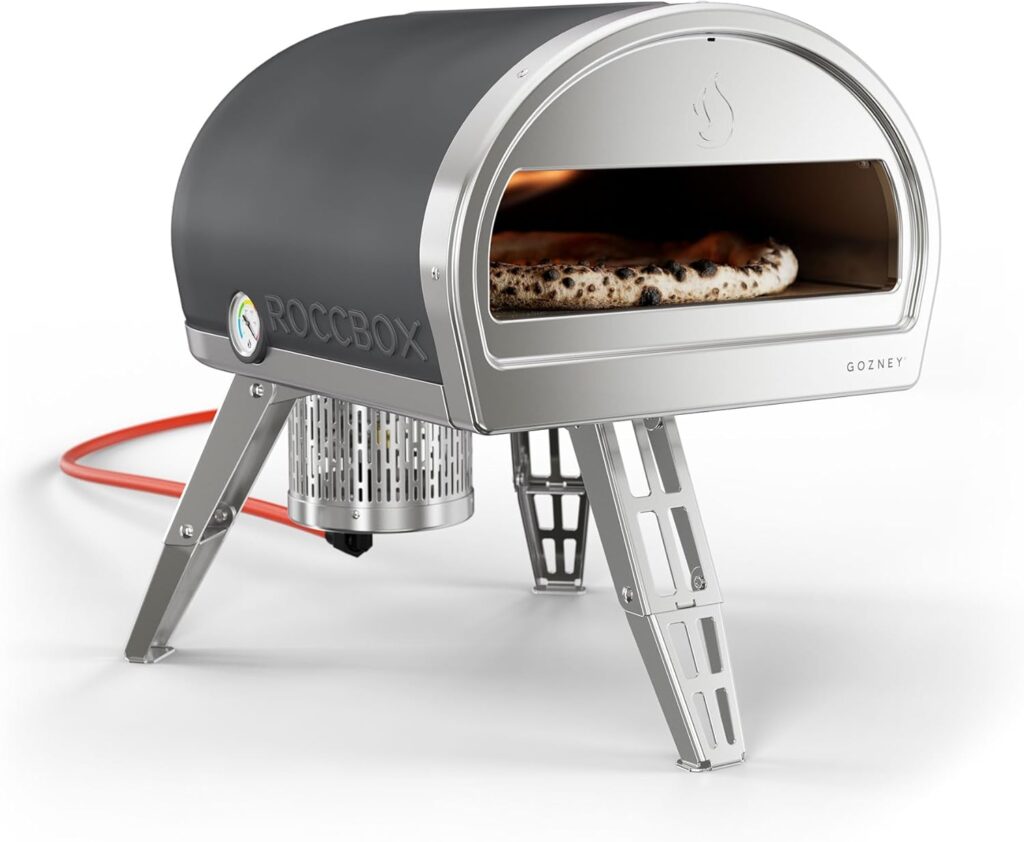
2. Gozney Roccbox – Premium Multi-Fuel Champion
If you want the flexibility to switch between gas and wood while getting professional-grade results, the Gozney Roccbox deserves serious consideration. This British-designed oven punches well above its compact size.
Key Features
- Dual fuel capability (gas or wood/charcoal)
- Thick stone floor and silicone-jacketed body for heat retention
- Integrated thermometer on the door
- Rolling flame and unique “Trapezoidal” shape
- Built-in legs that fold for transport
Pros
✓ Exceptional build quality – Feels like the tank of pizza ovens ✓ Fuel flexibility – Start with gas for convenience, experiment with wood when you’re feeling adventurous ✓ Superior insulation – Maintains temperature better than most competitors ✓ Thoughtful design details – Removable stone, built-in thermometer, detachable legs ✓ Professional results – Consistently produces restaurant-quality pizza
Cons
✗ Smaller 12-inch cooking surface limits pizza size ✗ Premium price point ✗ Heavier than comparable models at 44 lbs ✗ Wood attachment sold separately
Best For: Serious home cooks who want professional results and appreciate premium engineering, plus the option to experiment with different fuel sources.
| Property | Specification |
|---|---|
| Fuel Type | Gas + Wood/Charcoal |
| Cooking Surface | 12 inches |
| Max Temperature | 950°F |
| Heat-up Time | 15-20 minutes |
| Pizza Cook Time | 60-90 seconds |
| Weight | 44 lbs |
| Dimensions | 18.1 x 17.9 x 18.5 inches |
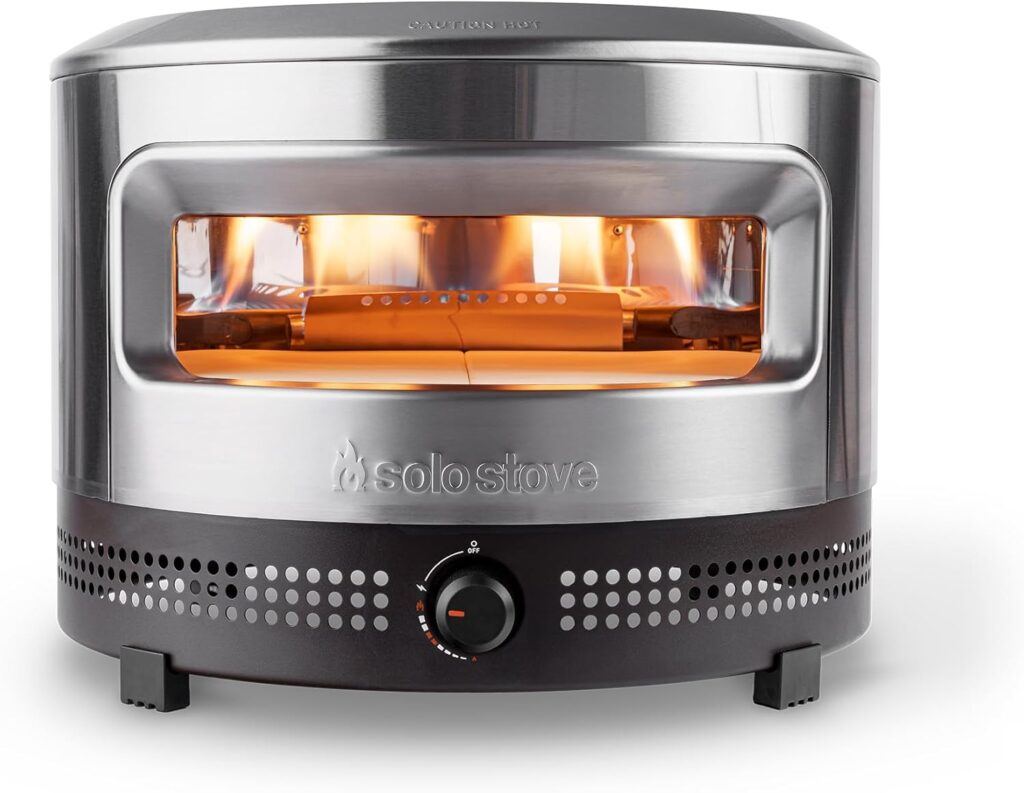
3. Solo Stove Pi – Best Wood-Fired Experience
For purists who believe authentic pizza requires real wood fire, the Solo Stove Pi delivers that traditional experience with modern engineering. Solo Stove brought their signature airflow technology from their popular fire pits to create a wood-fired pizza oven that’s surprisingly efficient.
Key Features
- Wood or charcoal fueled (gas burner available separately)
- Signature 360° Airflow technology
- Cordierite stone floor
- Built-in shell that protects and insulates
- Removable chimney for easier storage
Pros
✓ Authentic wood-fired flavor – Nothing beats real wood for taste ✓ Efficient fuel consumption – Uses less wood than traditional designs ✓ Versatile cooking – Great for more than just pizza (steaks, vegetables, bread) ✓ Solid construction – Durable stainless steel that should last for years ✓ Company reputation – Solo Stove’s customer service is excellent
Cons
✗ Requires more hands-on management than gas models ✗ Wood/charcoal means ash cleanup after each use ✗ Longer heat-up time (20-25 minutes) ✗ Learning curve for maintaining optimal temperature
Best For: Pizza enthusiasts who value authentic wood-fired flavor and enjoy the ritual of fire management, similar to traditional charcoal grilling.
| Property | Specification |
|---|---|
| Fuel Type | Wood/Charcoal |
| Cooking Surface | 13 inches |
| Max Temperature | 850°F |
| Heat-up Time | 20-25 minutes |
| Pizza Cook Time | 90 seconds |
| Weight | 31 lbs |
| Dimensions | 23.5 x 18.6 x 17.8 inches |
4. Ooni Fyra 12 – Budget-Friendly Wood Pellet Option
The Ooni Fyra 12 is the entry point for many first-time pizza oven buyers, and for good reason—it’s affordable, lightweight, and produces genuinely impressive results for the price point. Using wood pellets instead of logs or gas gives you that wood-fired flavor with more convenience.
Key Features
- Wood pellet fueled with hopper feed system
- Ultra-portable at just 22 lbs
- Reaches 950°F in 15 minutes
- Gravity-fed pellet hopper (no electricity needed)
- Compact 12-inch cooking surface
Pros
✓ Most affordable quality option – Gateway to outdoor pizza making ✓ Incredibly portable – Easy to take camping, to the beach, or tailgating ✓ Wood-fired flavor – Get that authentic taste without managing logs ✓ Simple pellet system – Easier than traditional wood firing ✓ Quick heat-up – Faster than most wood-fired alternatives
Cons
✗ Smaller 12-inch capacity limits pizza size ✗ Pellet hopper can be finicky in windy conditions ✗ Requires specific hardwood pellets (not all wood pellets work) ✗ Less temperature control precision than gas models
Best For: Budget-conscious buyers, first-time pizza oven owners, and anyone who prioritizes portability for camping or RV adventures.
| Property | Specification |
|---|---|
| Fuel Type | Wood Pellets |
| Cooking Surface | 12 inches |
| Max Temperature | 950°F |
| Heat-up Time | 15 minutes |
| Pizza Cook Time | 60-90 seconds |
| Weight | 22 lbs |
| Dimensions | 29.1 x 15.4 x 28.3 inches |
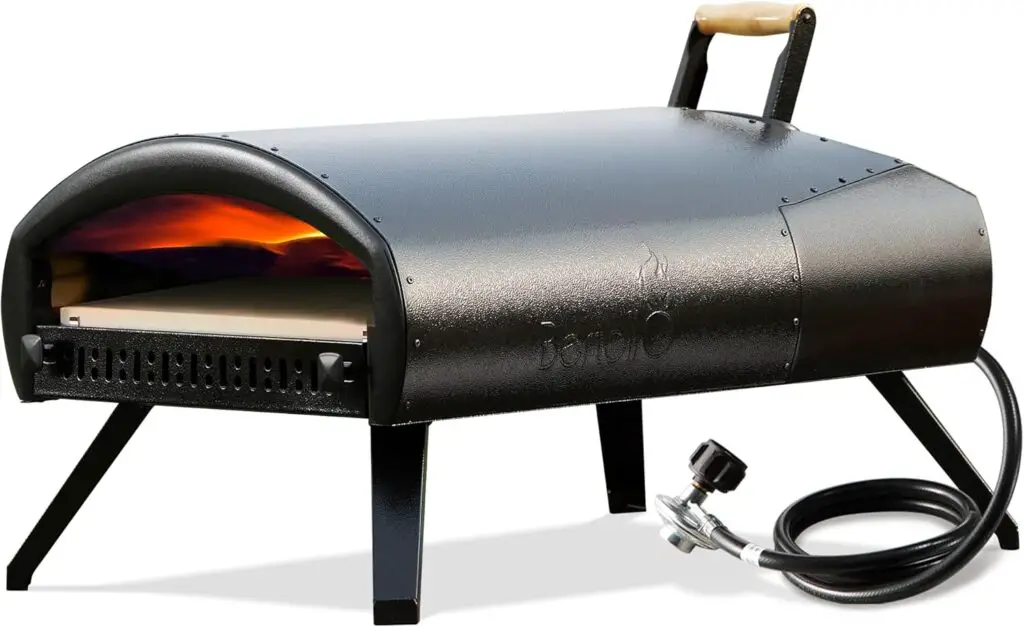
5. Bertello Grande – Most Versatile Multi-Fuel
The Bertello Grande takes the “do it all” approach seriously. This oven accepts gas, wood, charcoal, or wood pellets, making it the ultimate experimenter’s platform. If you can’t decide which fuel type appeals to you, Bertello lets you try them all.
Key Features
- Quad fuel capability (gas, wood, charcoal, pellets)
- Large 16-inch cooking surface
- Thick cordierite stone
- Adjustable flame settings
- Modular fuel attachments
Pros
✓ Ultimate flexibility – Try every fuel type and find your favorite ✓ Generous cooking space – 16-inch capacity for bigger pies ✓ Quick conversion – Switch fuel types in minutes ✓ Great for experimentation – Perfect for testing different techniques ✓ Good value – Considering the multi-fuel capability
Cons
✗ Build quality doesn’t match premium brands ✗ Additional fuel attachments increase overall cost ✗ Slightly longer heat-up times than specialized models ✗ More parts to manage and store
Best For: Tinkerers and experimenters who want maximum flexibility to explore different fuel sources and cooking techniques.
| Property | Specification |
|---|---|
| Fuel Type | Gas/Wood/Charcoal/Pellets |
| Cooking Surface | 16 inches |
| Max Temperature | 930°F |
| Heat-up Time | 20 minutes |
| Pizza Cook Time | 60-90 seconds |
| Weight | 52 lbs |
| Dimensions | 24 x 24 x 14 inches |
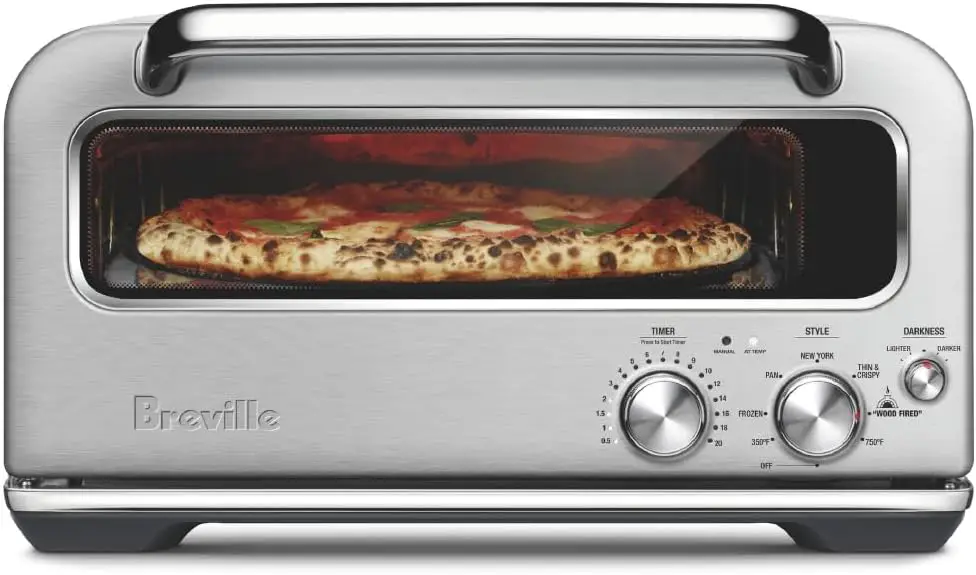
6. Breville Smart Oven Pizzaiolo – Best Indoor Electric
Not everyone has outdoor space for a gas or wood-fired oven. The Breville Pizzaiolo brings legitimate pizza oven performance indoors with a plug-in electric design that actually reaches pizza-worthy temperatures—a rarity for electric models.
Key Features
- Reaches 750°F (highest for countertop electric)
- Element IQ technology for intelligent heat distribution
- Pre-programmed settings for different pizza styles
- Integrated timer and heat indicator
- Indoor/countertop safe
Pros
✓ Indoor convenience – No outdoor space required ✓ Consistent results – Automated settings take guesswork out ✓ Year-round use – Weather doesn’t matter ✓ Easy cleanup – Indoor appliance convenience ✓ Multiple cooking modes – Beyond just pizza
Cons
✗ Significantly more expensive than outdoor models ✗ Lower max temperature than outdoor ovens ✗ Requires substantial counter space ✗ Heavy at 63 lbs (not portable)
Best For: Apartment dwellers, condo owners, or anyone without outdoor cooking space who still wants better-than-conventional-oven pizza results. If you’re interested in other indoor cooking options, check out our portable oven guide.
| Property | Specification |
|---|---|
| Fuel Type | Electric (1800W) |
| Cooking Surface | 12 inches |
| Max Temperature | 750°F |
| Heat-up Time | 15 minutes |
| Pizza Cook Time | 2 minutes |
| Weight | 63 lbs |
| Dimensions | 18.5 x 18.1 x 12.6 inches |
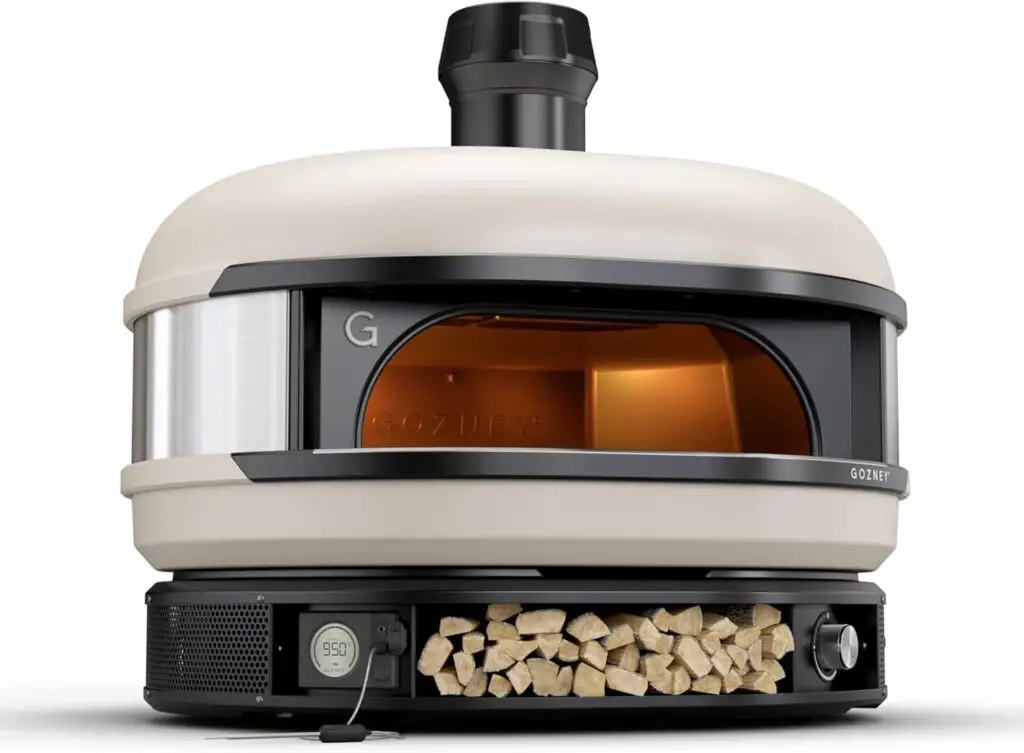
7. Gozney Dome – Professional-Grade Backyard Beast
If you’re ready to make a serious investment in outdoor cooking and want the absolute best portable pizza oven experience, the Gozney Dome is the pinnacle. This is less “portable” in the camping sense and more “you can move it around your backyard if needed.”
Key Features
- Massive dual-zone cooking area
- Digital thermometer with Bluetooth connectivity
- Dual fuel (gas + wood)
- Steam injector for bread baking
- Professional-grade insulation and construction
Pros
✓ Restaurant-quality performance – Matches commercial pizza ovens ✓ Huge cooking capacity – Can handle multiple pizzas simultaneously ✓ Incredibly versatile – Excellent for roasting, bread baking, and more ✓ Built to last – Premium materials and construction ✓ Smart features – App connectivity and precise monitoring
Cons
✗ Very expensive (investment-level pricing) ✗ Heavy at 132 lbs (requires permanent or semi-permanent placement) ✗ Overkill for casual users ✗ Longer learning curve due to advanced features
Best For: Serious outdoor cooking enthusiasts, aspiring professional pizza makers, or anyone building an outdoor kitchen who wants the absolute best and has the budget to match.
| Property | Specification |
|---|---|
| Fuel Type | Gas + Wood |
| Cooking Surface | 20+ inches (dual zone) |
| Max Temperature | 950°F+ |
| Heat-up Time | 20-30 minutes |
| Pizza Cook Time | 60 seconds |
| Weight | 132 lbs |
| Dimensions | 29.5 x 27.6 x 20.5 inches |
Complete Buying Guide: Choosing Your Perfect Portable Pizza Oven
Fuel Type Considerations
Gas-Powered Pizza Ovens Gas models offer unmatched convenience—turn a knob, and you’re cooking. They’re ideal if you value consistent temperature control and minimal cleanup. However, you sacrifice the authentic wood-fired flavor that traditional pizza lovers crave. For those exploring various oven options, our guide on gas pizza ovens provides additional insights.
Wood-Fired Models Nothing delivers that authentic, smoky flavor like real wood. You’ll get beautiful charred spots and complex flavor notes impossible to replicate with gas. The tradeoff? More hands-on management, ash cleanup, and a steeper learning curve. Think of it like the difference between gas and charcoal grilling—each has its devoted fans.
Wood Pellet Systems These represent a middle ground—you get wood-fired flavor with more convenience than traditional logs. Pellets burn cleaner and more consistently, though you’re limited to specific hardwood pellet varieties designed for pizza ovens (not the same as smoking pellets).
Electric Options Perfect for indoor use or areas with fire restrictions. Modern electric pizza ovens like the Breville can reach respectable temperatures, though they typically max out around 750°F versus 900°F+ for outdoor models. Consider these if you’re in an apartment or condo without outdoor cooking space. You might also want to explore electric pizza oven options for more indoor alternatives.
Multi-Fuel Flexibility Some ovens accept multiple fuel types with add-on attachments. This flexibility lets you experiment—use gas for weeknight pizzas when you want convenience, then switch to wood on weekends when you have more time to play pitmaster.
Size and Portability
Cooking Surface
- 12-13 inches: Personal pizzas or smaller Neapolitan pies (feeds 1-2)
- 14-16 inches: Standard large pizza size (feeds 2-4)
- 17+ inches: Extra-large or multiple pizzas (commercial or entertaining)
Weight Classes
- Under 25 lbs: True portability for camping, tailgating, beach trips
- 25-50 lbs: Backyard portable, moveable but not packable
- 50+ lbs: Semi-permanent outdoor placement, requires two people to move
Consider where you’ll use your oven most. A 22-lb Ooni Fyra makes sense for RV adventures, while a 130-lb Gozney Dome is perfect for your permanent outdoor kitchen setup.
Temperature Performance
Heat-Up Time Gas models typically heat fastest (10-15 minutes), while wood-fired ovens need 20-30 minutes. If you want spontaneous pizza making, faster heat-up is crucial. For planned pizza parties, longer preheating is no big deal.
Maximum Temperature
- 750-800°F: Acceptable for basic pizza, will take 2-3 minutes per pie
- 850-900°F: Ideal range for authentic Neapolitan style (60-90 seconds)
- 900°F+: Professional territory, enables sub-60-second cooking
Heat Retention Look for thick ceramic or cordierite stones and well-insulated bodies. Better insulation means less fuel consumption and more consistent temperatures. Cheaper ovens often have thin stones that lose heat rapidly when you insert a cold pizza.
Build Quality and Materials
Stone Quality Cordierite pizza stones are industry standard—they’re thermal shock resistant and retain heat exceptionally well. Some premium ovens use thicker stones (15mm+) for even better performance. Avoid thin ceramic stones that crack easily.
Body Construction Stainless steel bodies dominate the premium market for good reason—they’re durable, weather-resistant, and age gracefully. Powder-coated steel saves money but may show wear faster. Avoid lightweight aluminum constructions on the cheapest models.
Insulation Quality insulation (often ceramic fiber blankets or silicone jackets) makes a huge difference in fuel efficiency and temperature consistency. Better insulation also means safer exterior temperatures—important if you have curious kids or pets.
Essential Features to Consider
Built-in Thermometer Some ovens include door-mounted thermometers or probes. These are invaluable for learning proper temperature management. Without one, you’re guessing (though infrared thermometers work as add-ons).
Chimney Design Removable chimneys make storage easier but must seal properly during use. Fixed chimneys are sturdier but take more storage space.
Fuel Hopper/Feed System For pellet models, gravity-fed hoppers are simpler and more reliable than complex auger systems. Larger hoppers mean less frequent refilling during cooking sessions.
Legs and Portability Folding or removable legs improve portability and storage. Some models include carrying bags or cases—essential if you’ll transport regularly.
Accessories Included Premium ovens often include pizza peels, covers, and turning tools. Budget models make you buy everything separately. Factor total system cost, not just oven price.
Budget Breakdown
Under $400: Entry-level options like Ooni Fyra, basic pellet models $400-$700: Quality gas models, better multi-fuel options $700-$1,200: Premium dual-fuel, larger capacity, better build quality $1,200+: Professional-grade, smart features, exceptional build quality
Remember that fuel, accessories, and ingredients add ongoing costs. Wood pellets run $15-25 per 20-lb bag, propane about $15-20 per tank. Budget $100-200 for essential accessories (peels, thermometers, covers).
Learning Curve Reality Check
Gas Ovens: Easiest learning curve—turn it on, let it heat, start cooking. Most people make decent pizzas from day one.
Wood-Fired: Expect several sessions before achieving consistent results. Managing fire, monitoring temperature, and timing take practice. It’s part of the fun for enthusiasts but frustrating for instant-gratification seekers.
Pellet Systems: Middle ground—easier than traditional wood but still requires attention to hopper levels and airflow.
Electric: Most forgiving—automated controls remove much guesswork. Best for beginners who want consistent results immediately.
Maintenance and Care
Post-Cooking Cleanup
- Gas ovens: Wipe stone, clean drip tray (10 minutes)
- Wood/pellet: Remove ash, clean stone, empty hopper (15-20 minutes)
- Electric: Similar to conventional ovens, removable parts (15 minutes)
Long-Term Maintenance All portable pizza ovens benefit from covers during storage. Check and clean burner ports on gas models annually. Replace stones if they crack (typically every 2-5 years depending on use).
Common Mistakes First-Time Buyers Make
- Buying Too Small: A 12-inch oven sounds adequate until you realize it means personal-sized pizzas only. Most families are happier with 14-16 inch capacity.
- Ignoring Fuel Availability: Wood pellet ovens require specific hardwood pellets, not any pellets. Make sure your fuel source is readily available locally.
- Underestimating Space Needs: These ovens get HOT. You need clearance above (away from trees, awnings) and around all sides. Check dimensions carefully.
- Skipping Essential Accessories: You absolutely need a proper pizza peel (or two—one for launching, one for turning). Budget for these from the start.
- Expecting Instant Mastery: Even with gas ovens, pizza making has a learning curve. Your first few attempts might not be Instagram-worthy, and that’s okay.
Special Considerations for Different Living Situations
Apartment Balconies Check building rules—many prohibit open flames. Electric models or small gas ovens (with permission) may be your only options. Consider neighbors and smoke.
RV and Camping Prioritize lightweight (under 25 lbs), compact storage, and fuel availability. Pellet models work great since pellets are sold at most camping stores.
Permanent Outdoor Kitchens Go bigger and heavier—you’re not moving it anyway. Consider built-in gas lines instead of propane tanks. Look at ovens with rotisserie or multi-cooking capabilities.
Small Yards Compact gas models that heat quickly make sense—less preheating time means less ambient heat in tight spaces during summer.
Pairing with Other Kitchen Equipment
Pizza ovens complement your outdoor cooking setup beautifully. They work alongside traditional grills and complement other cooking methods. Many pizza oven owners also use them for roasting vegetables, cooking steaks, or baking bread—think of them as outdoor kitchen multi-tools. For indoor options, you might explore our guide on convection oven ranges that can also handle pizza baking.
Frequently Asked Questions
Can you use a portable pizza oven indoors? Most portable pizza ovens are designed for outdoor use only due to combustion byproducts and heat output. The exception is dedicated indoor electric models like the Breville Pizzaiolo. Never use gas or wood-fired ovens indoors—carbon monoxide buildup is deadly.
How long do portable pizza ovens last? Quality models should provide 5-10+ years of service with proper care. Stainless steel construction typically outlasts powder-coated alternatives. Pizza stones may need replacement every 2-5 years depending on use intensity.
What’s the best temperature for pizza? Authentic Neapolitan pizza cooks at 800-900°F in 60-90 seconds. New York style works at 650-700°F for 4-5 minutes. Lower temperatures (500-600°F) take longer and produce different crust characteristics but can still make tasty pizza.
Can you cook other foods besides pizza? Absolutely! Portable pizza ovens excel at roasting vegetables, searing steaks, cooking flatbreads, baking artisan bread, and even making desserts. Many owners report using them as much for non-pizza cooking as pizza. Similar to ovens for baking, these specialized units can handle diverse recipes.
Do I need special flour or dough? High-protein “00” Italian flour produces the best Neapolitan results, but bread flour works well too. The key is proper hydration (60-65%) and fermentation time. Many beginners succeed with store-bought dough while learning technique.
How much do wood pellets or propane cost per pizza? Pellets cost about $0.25-0.50 per pizza depending on cooking time and oven efficiency. Propane runs approximately $0.30-0.60 per pizza. Gas is slightly more expensive per pizza but offers better temperature control.
Are portable pizza ovens safe for kids? With proper supervision, yes. The exterior gets hot (though quality models have better insulation). Teach kids the “three-foot rule”—stay three feet away while it’s operating. Never let children operate the oven unsupervised.
Final Thoughts: Which Portable Pizza Oven is Right for You?
After exploring these options, here’s my quick-pick guidance based on different priorities:
Best Overall Value: Ooni Koda 16 offers the sweet spot of performance, ease of use, and reasonable pricing. It’s the oven I recommend to most people starting their pizza journey.
For Wood-Fired Purists: Solo Stove Pi brings authentic flavor with modern efficiency. If you love the ritual of fire management and want that genuine wood taste, this is your oven.
Maximum Portability: Ooni Fyra 12 weighs just 22 lbs and delivers legitimate wood-fired results. Perfect for camping, tailgating, or frequent transport.
Indoor Champions: Breville Pizzaiolo is the only electric option that approaches outdoor performance. Essential for apartment dwellers or anyone without outdoor space.
Professional Quality: Gozney Dome costs more than some used cars, but if you’re building a serious outdoor kitchen and want the absolute best, it’s worth every penny.
Budget-Conscious Starter: Ooni Fyra 12 again—it’s affordable enough to test whether you’ll actually use a pizza oven without breaking the bank, yet quality enough that you won’t immediately outgrow it.
The portable pizza oven market has matured beautifully. Whether you spend $300 or $3,000, today’s options deliver genuinely impressive results that would’ve required a $10,000+ built-in installation just a decade ago. The question isn’t whether these ovens work—they absolutely do—but rather which fuel type, size, and feature set matches your cooking style and living situation.
My advice? Start by honestly assessing how you’ll use it. If convenience matters most, go gas. If authenticity calls to you, embrace wood. If you’re testing the waters, start smaller and less expensive. You can always upgrade later—and trust me, once you taste your first perfectly charred, homemade pizza with that ethereal crust and blistered cheese, you’ll understand why portable pizza ovens have created such a devoted following.
For more information on different types of cooking equipment, explore our comprehensive guides on various oven types and find the perfect match for your culinary adventures. Happy pizza making! 🍕