If you’re serious about making restaurant-quality pizza at home, investing in a dedicated pizza oven can transform your cooking game entirely. Home pizza ovens have evolved from expensive, bulky equipment into accessible appliances that deliver authentic results without requiring a culinary degree or a professional kitchen setup.
Whether you’re dreaming of Neapolitan-style pies with leopard-spotted crusts or perfectly crispy New York slices, the right home pizza oven makes all the difference. After extensive testing and research, I’ve compiled this comprehensive guide to help you navigate the world of Home Pizza Ovens and find the perfect match for your culinary ambitions.
Quick Links for Best Home Pizza Ovens
- Ooni Koda 16 – Best Overall Home Pizza Oven
- Breville Smart Oven Pizzaiolo – Best Electric Indoor Pizza Oven
- Gozney Roccbox – Best Portable Gas Pizza Oven
- Ooni Fyra 12 – Best Budget Wood-Fired Pizza Oven
- Bertello Outdoor Pizza Oven – Best Multi-Fuel Pizza Oven
- Ninja Woodfire Outdoor Oven – Best for Versatility
- Solo Stove Pi – Best for Beginners
- Ooni Karu – Best Large Multi-Fuel Oven
- BakerStone Pizza Oven Box – Best Grill-Top Pizza Oven
- Presto Pizzazz Plus – Best Countertop Electric Option
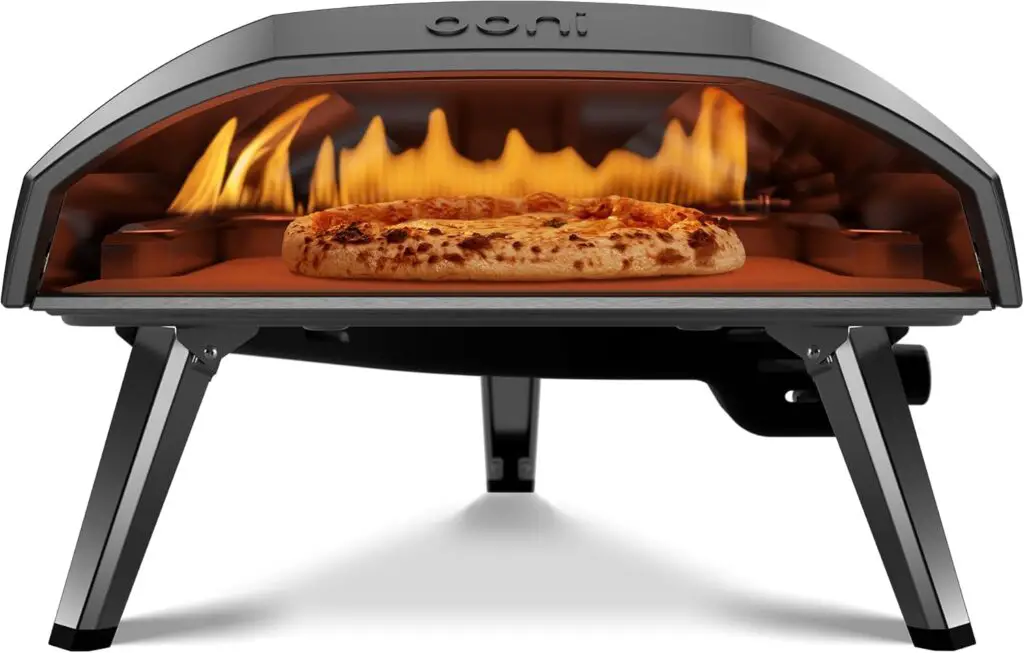
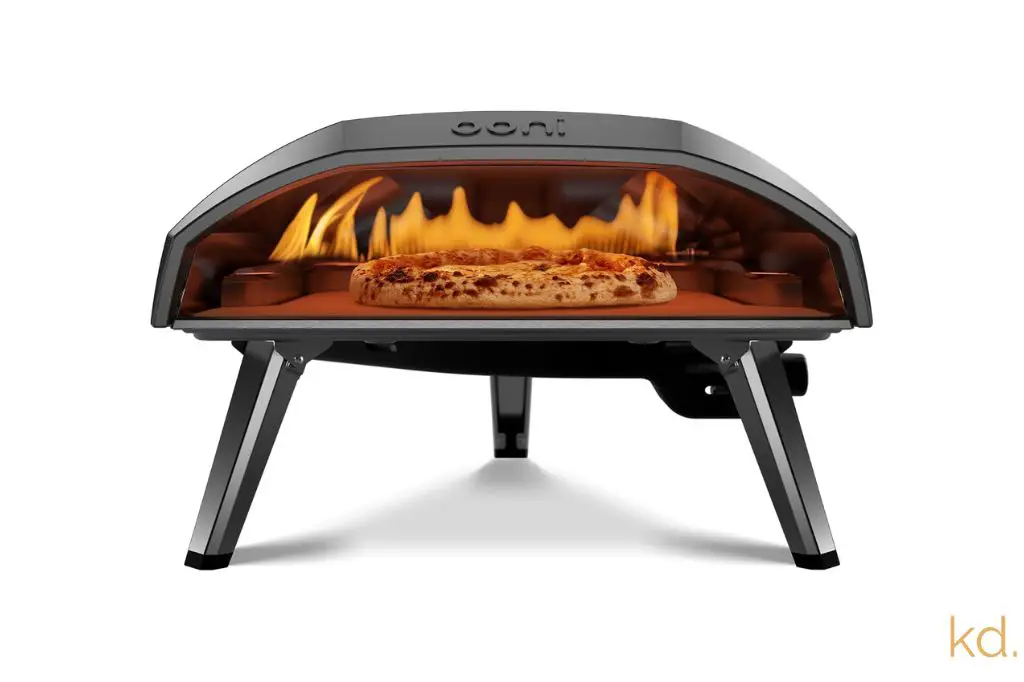
1. Ooni Koda 16 – Best Overall Home Pizza Oven
The Ooni Koda 16 represents the sweet spot between performance, convenience, and value in the home pizza oven market. This gas-powered beast heats up to 950°F in just 20 minutes and cooks a 16-inch pizza in about 60 seconds.
Key Features:
- L-shaped flame for even heat distribution
- Instant gas ignition (no wood prep needed)
- Large 16-inch cooking surface
- Built-in thermometer for temperature monitoring
- Powder-coated carbon steel construction
Pros:
- Incredibly fast cooking times
- Consistent, reliable heat
- Easy to use—just turn the dial
- Large enough for family-sized pizzas
- Minimal maintenance required
- Professional results every time
Cons:
- Requires propane tank (not included)
- Takes up considerable outdoor space
- Pricier than smaller models
- Not suitable for indoor use
- Gas adds ongoing operational costs
Best For: Home cooks who want professional results without the hassle of wood fire management, and those who frequently cook for families or gatherings.
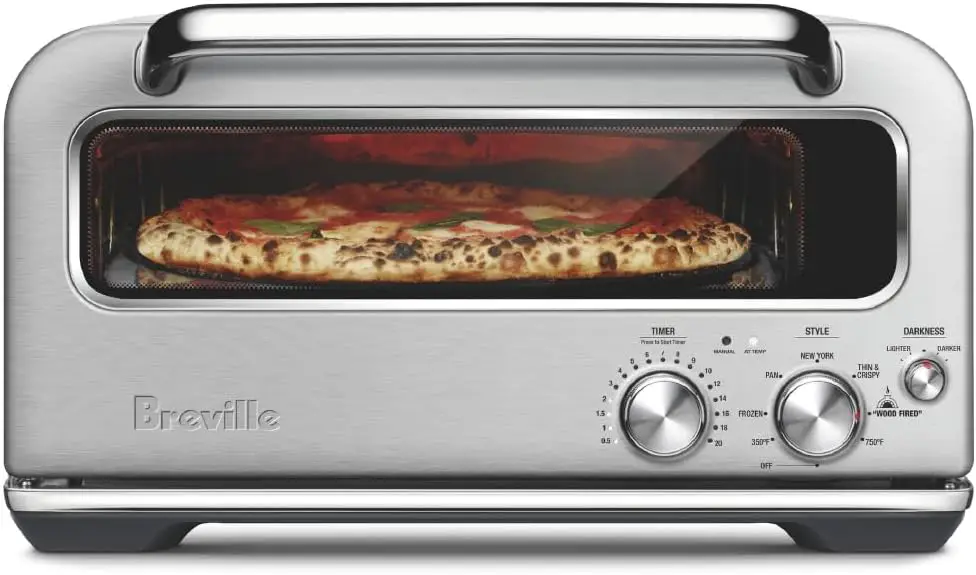
2. Breville Smart Oven Pizzaiolo – Best Electric Indoor Pizza Oven
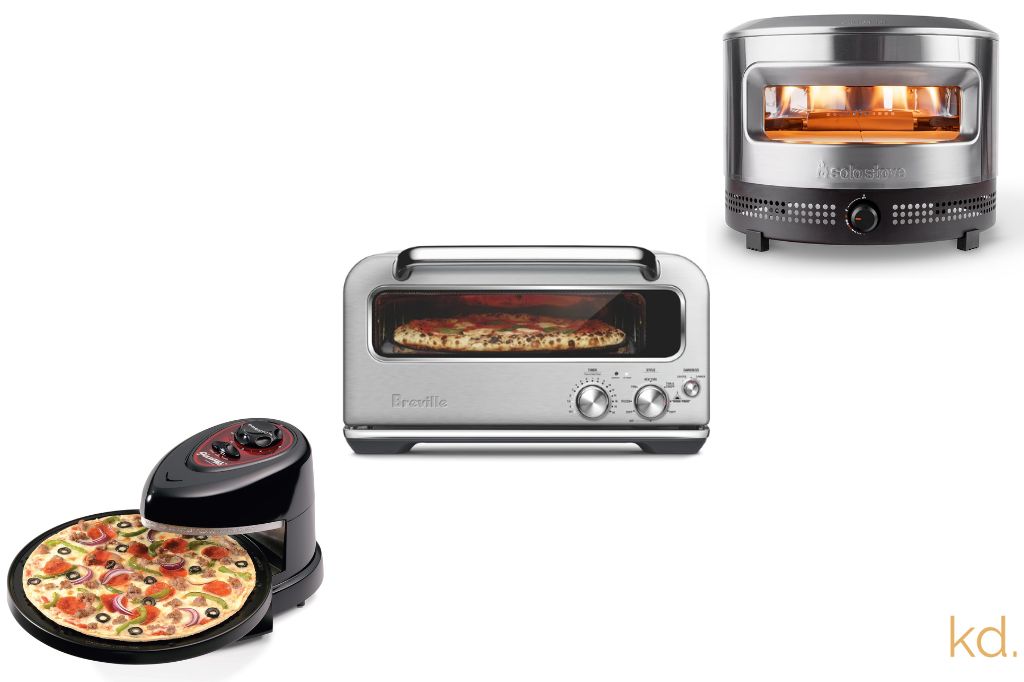
For those who want authentic pizza but lack outdoor space, the Breville Pizzaiolo is an absolute game-changer. This countertop electric oven reaches temperatures up to 750°F—the highest of any indoor electric pizza oven.
Key Features:
- Reaches 750°F in 15 minutes
- Element IQ heat distribution technology
- Seven preset cooking functions
- 12-inch capacity
- Includes pizza pan and serving board
Pros:
- Indoor convenience (no outdoor space needed)
- Consistent electric heating
- Multiple cooking presets for different styles
- High-quality construction
- No smoke or gas required
- Easy temperature control
Cons:
- Expensive for an electric model
- Smaller cooking surface (12-inch max)
- Can’t achieve true wood-fired flavor
- Requires significant counter space
- Heavy and not portable
Best For: Apartment dwellers, those without outdoor cooking areas, and pizza enthusiasts who prioritize convenience over traditional cooking methods.
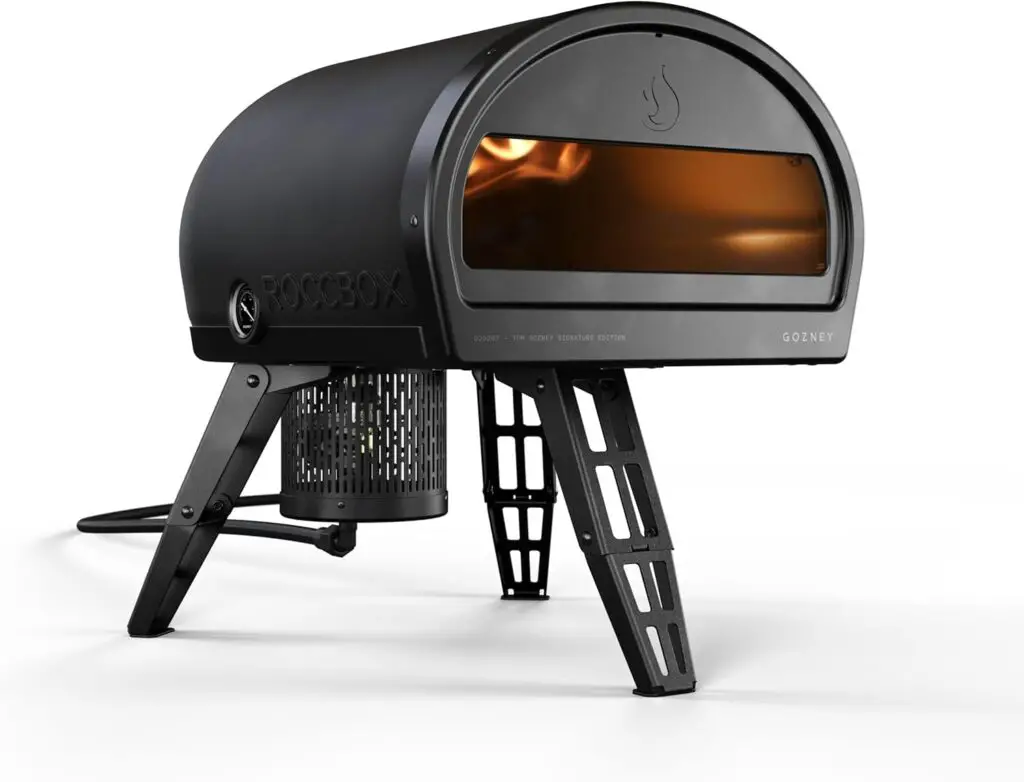
3. Gozney Roccbox – Best Portable Gas Pizza Oven
The Roccbox from Gozney combines portability with professional-grade performance. This compact oven heats to 950°F and features a unique silicone-jacketed exterior that stays cool to the touch—a significant safety advantage.
Key Features:
- Dual-fuel capability (gas or wood)
- Rolling flame technology for even cooking
- Integrated thermometer
- Built-in legs with optional carry cover
- Silicone exterior shell
Pros:
- Extremely portable design
- Safe cool-touch exterior
- Professional-quality results
- Option to use gas or wood pellets
- Durable construction
- Built-in stone retains heat well
Cons:
- Smaller 12-inch capacity
- Premium price point
- Wood burner sold separately
- Learning curve for temperature management
- Compact size limits pizza quantity
Best For: Pizza lovers who want portability without sacrificing quality, campers, tailgaters, and those who want fuel flexibility.
4. Ooni Fyra 12 – Best Budget Wood-Fired Pizza Oven
The Ooni Fyra 12 offers authentic wood-fired pizza at an accessible price point. This pellet-powered oven delivers that sought-after smoky flavor and reaches temps up to 950°F in just 15 minutes.
Key Features:
- Wood pellet fuel hopper
- Lightweight portable design (22 lbs)
- Powder-coated carbon steel body
- 12-inch cooking capacity
- Gravity-fed fuel system
Pros:
- Affordable entry into wood-fired cooking
- Authentic wood-fired flavor
- Very portable and lightweight
- Quick heat-up time
- Minimal setup required
- Creates beautiful leopard-spotted crusts
Cons:
- Requires constant pellet feeding
- Smaller cooking surface
- Temperature can fluctuate
- Not suitable for beginners
- Wood pellets add ongoing costs
- More cleanup than gas models
Best For: Budget-conscious pizza enthusiasts who want authentic wood-fired flavor and don’t mind the learning curve that comes with managing wood fuel.
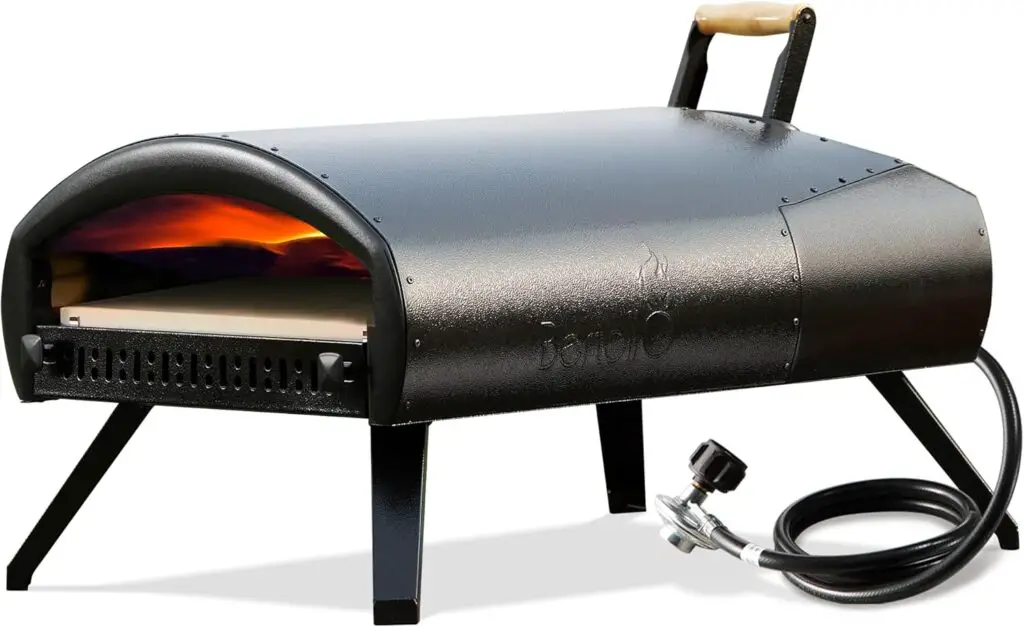
5. Bertello Outdoor Pizza Oven – Best Multi-Fuel Pizza Oven
The Bertello stands out for its impressive fuel flexibility. This oven works with wood, charcoal, gas, or pellets, giving you maximum cooking options depending on your mood and available resources.
Key Features:
- Four fuel options (wood, charcoal, gas, pellets)
- Reaches 930°F
- 12-inch cordierite stone
- Arch design for heat retention
- Detachable legs for easy storage
Pros:
- Ultimate fuel flexibility
- More affordable than competitors
- Portable and relatively lightweight
- Good heat retention
- Easy to assemble
- Includes pizza peel
Cons:
- Gas burner sold separately
- Smaller cooking surface
- Requires more skill for wood/charcoal
- Build quality not as premium as some rivals
- Temperature monitoring can be tricky
Best For: Versatile cooks who want to experiment with different fuel types and flavors without committing to a single cooking method.
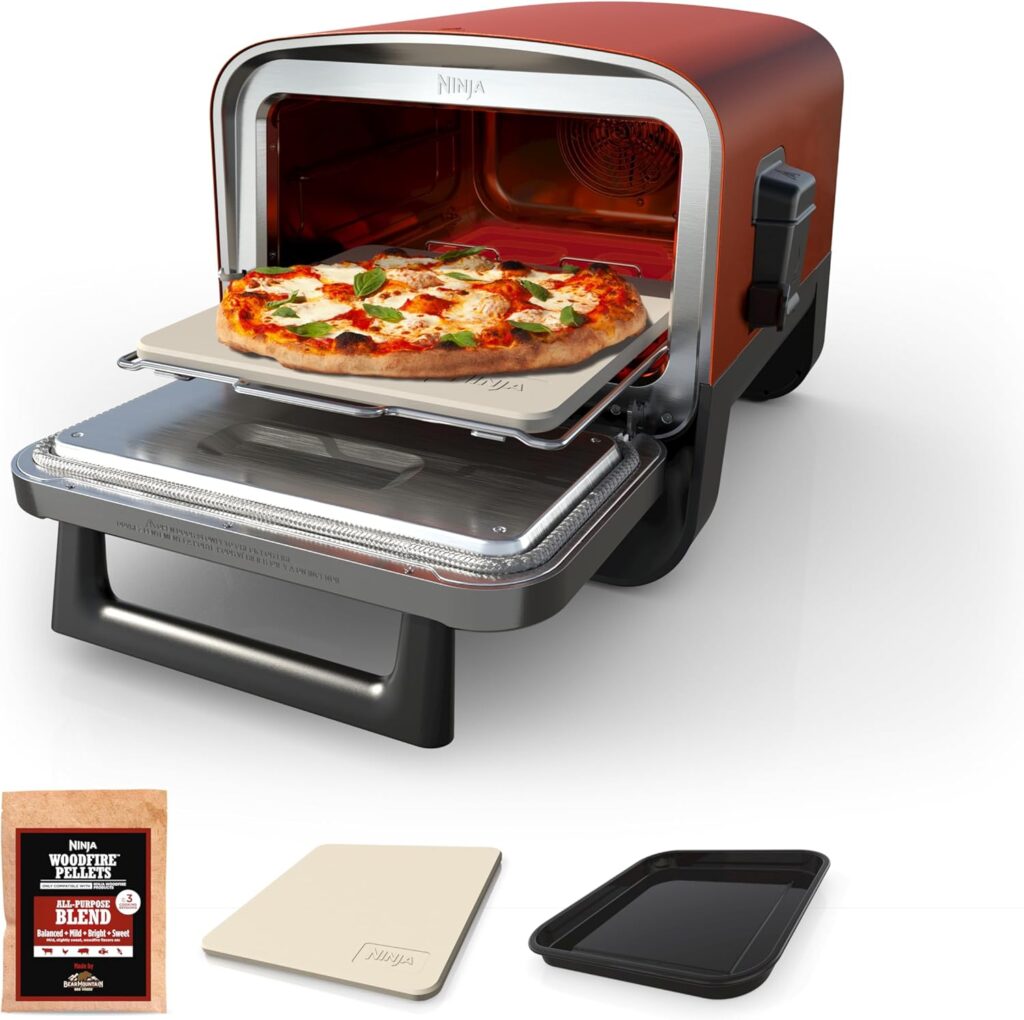
6. Ninja Woodfire Outdoor Oven – Best for Versatility
Ninja’s entry into the pizza oven market brings their signature multi-functionality. This electric outdoor oven doesn’t just make pizza—it grills, smokes, roasts, and air fries, all while adding authentic woodfire flavor.
Key Features:
- 8-in-1 functionality
- Electric powered with wood pellet flavor infusion
- Reaches 700°F
- 13-inch pizza capacity
- Weatherproof design
Pros:
- Incredible versatility beyond pizza
- Electric convenience with wood flavor
- Consistent temperature control
- Weatherproof construction
- Multiple cooking modes
- No open flame safety concerns
Cons:
- Requires electrical outlet outdoors
- Lower max temperature than dedicated ovens
- Bulky design
- Pricier than single-function models
- Wood flavor less intense than true wood fire
Best For: Outdoor cooking enthusiasts who want one appliance that handles multiple cooking methods, perfect for those with limited space or budget for multiple devices.
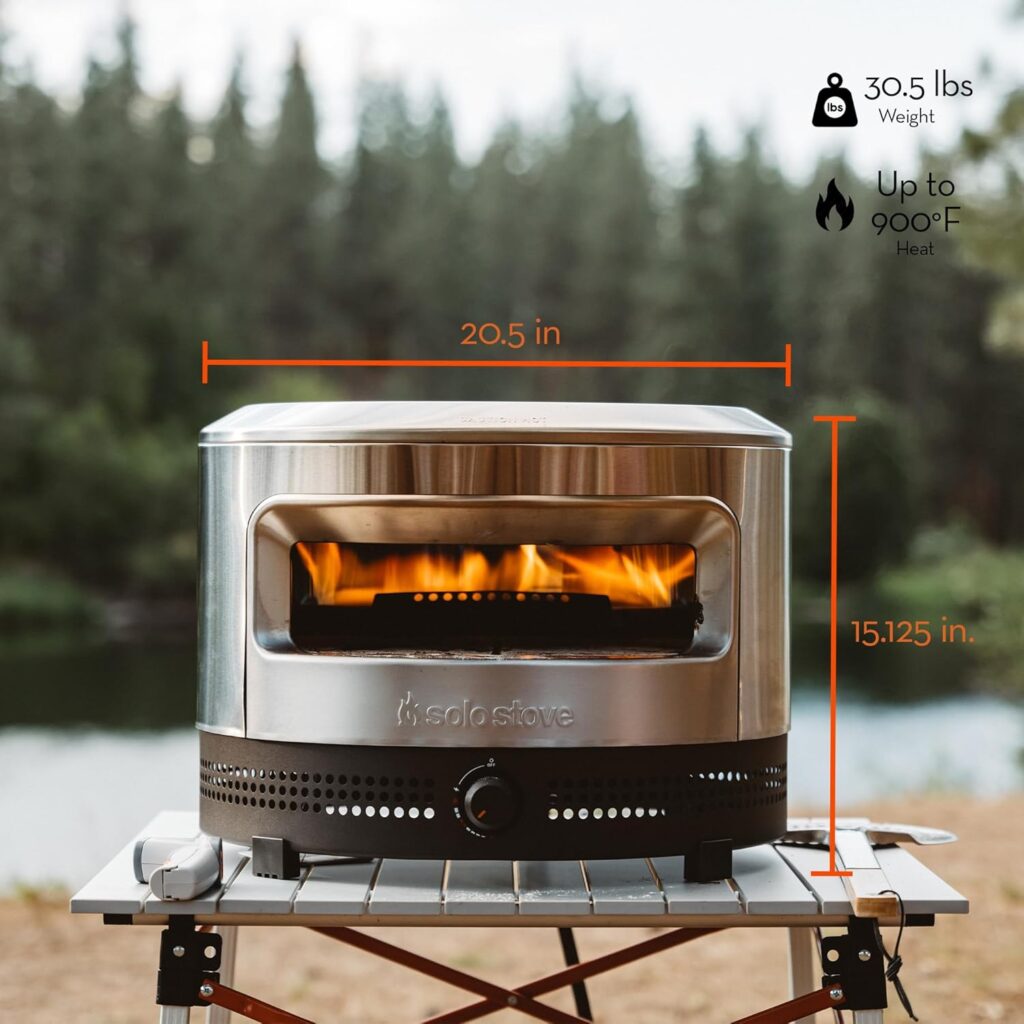
7. Solo Stove Pi – Best for Beginners
Solo Stove’s Pi pizza oven prioritizes user-friendliness without sacrificing performance. This gas-powered oven features excellent heat retention and comes with genuinely helpful instructional materials.
Key Features:
- Patented flame control technology
- Reaches 850°F in 15 minutes
- Built-in thermometer
- Shell that directs heat efficiently
- 12-inch capacity
Pros:
- Very beginner-friendly design
- Excellent build quality
- Great heat distribution
- Comes with comprehensive guide
- Stable and safe base
- Easy temperature management
Cons:
- Smaller cooking area
- Premium pricing
- Gas-only (no fuel alternatives)
- Heavier than comparable models
- Limited to outdoor use
Best For: First-time pizza oven buyers who want reliable results without extensive trial and error, and those who value quality construction and support.
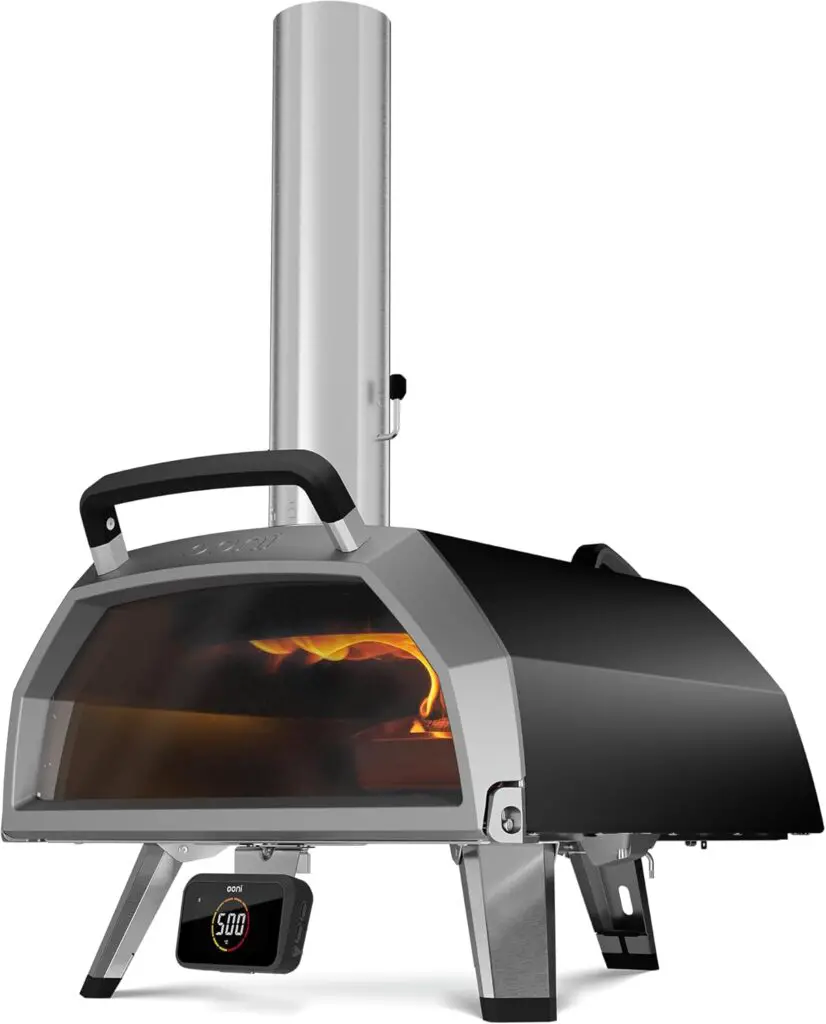
8. Ooni Karu – Best Large Multi-Fuel Oven
The Ooni Karu is the ultimate choice for serious pizza makers. This multi-fuel beast offers the largest cooking surface in the Ooni lineup and delivers professional results with wood, charcoal, or gas.
Key Features:
- 16-inch cooking capacity
- Multi-fuel capability (wood, charcoal, gas)
- Reaches 950°F
- ViewFlame technology for monitoring
- Stainless steel construction
Pros:
- Largest cooking surface for big pizzas
- Fuel flexibility
- Professional-grade construction
- Excellent heat retention
- Can cook multiple small pizzas at once
- ClearView door for monitoring
Cons:
- Highest price point in lineup
- Gas burner attachment sold separately
- Heavy and less portable (62 lbs)
- Requires significant storage space
- Intimidating for beginners
Best For: Serious home pizza makers, those who entertain frequently, and cooks who want professional capabilities with maximum flexibility.
9. BakerStone Pizza Oven Box – Best Grill-Top Pizza Oven
The BakerStone offers a unique approach—it converts your existing gas grill into a pizza oven. This ingenious box design reaches high temperatures using your grill’s burners and costs significantly less than standalone ovens.
Key Features:
- Fits most 3+ burner grills
- Reaches 800°F
- Includes rotating pizza stone
- Stainless steel construction
- 12-inch capacity
Pros:
- Very affordable solution
- Uses existing grill (no extra appliance)
- Rotating stone for even cooking
- Easy setup and storage
- No additional fuel source needed
- Good heat retention
Cons:
- Requires compatible gas grill
- Not truly portable
- Lower max temperature than dedicated ovens
- Takes longer to heat up
- Limits grill use during cooking
- Build quality varies
Best For: Budget-conscious buyers who already own a gas grill and want to experiment with pizza making without major investment.
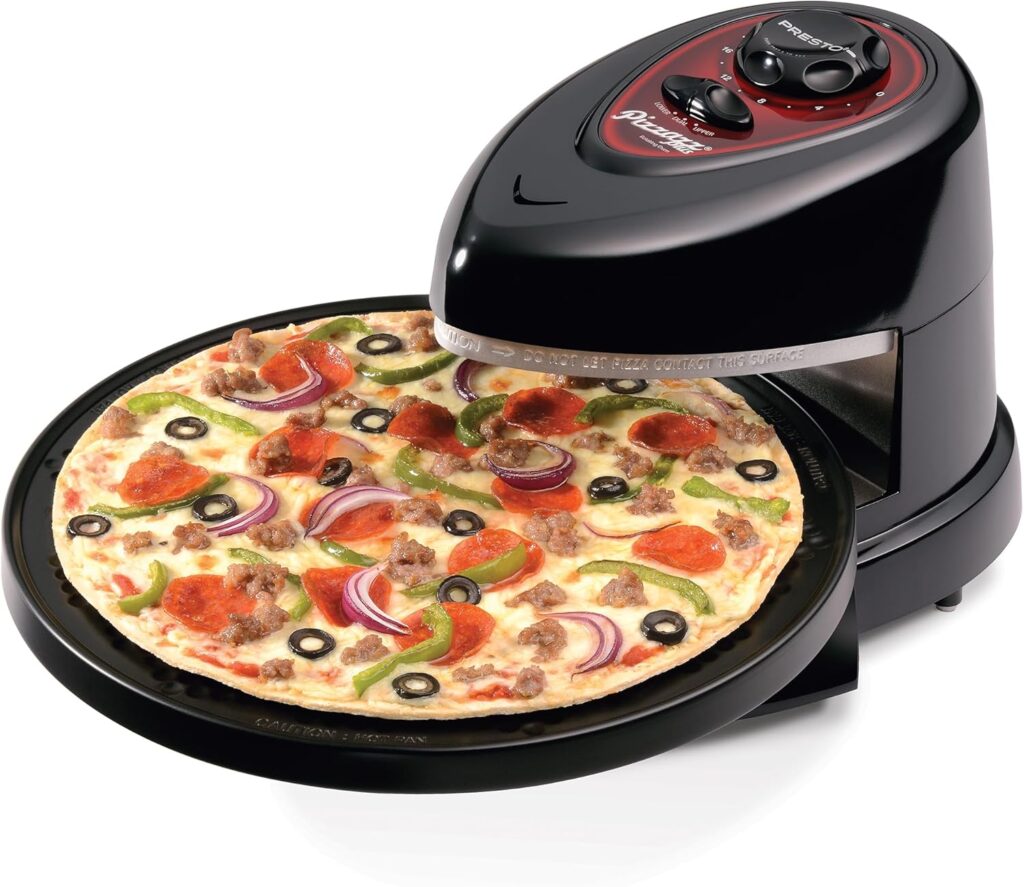
10. Presto Pizzazz Plus – Best Countertop Electric Option
For ultra-convenience and budget-friendly indoor pizza making, the Presto Pizzazz delivers surprising results. This rotating countertop appliance won’t replicate wood-fired perfection, but it makes consistently decent pizza with zero learning curve.
Key Features:
- Rotating heating element
- Top and bottom independent heating
- 12-inch capacity
- Countdown timer
- Affordable price point
Pros:
- Extremely affordable
- Simple operation (anyone can use it)
- Countertop convenience
- No preheating required
- Good for frozen pizzas too
- Easy cleanup
Cons:
- Cannot achieve high temperatures
- No wood-fired flavor possible
- Build quality is basic
- Limited to simpler pizza styles
- Not for serious pizza enthusiasts
- Results are adequate, not amazing
Best For: Casual pizza makers, dorm rooms, small kitchens, those on tight budgets, or families who primarily reheat frozen pizzas but want better results than a traditional oven.
Comparison Table: Best Home Pizza Ovens
| Model | Type | Max Temp | Size | Fuel Type | Heat-Up Time | Weight | Indoor/Outdoor |
|---|---|---|---|---|---|---|---|
| Ooni Koda 16 | Gas | 950°F | 16″ | Propane | 20 min | 40 lbs | Outdoor |
| Breville Pizzaiolo | Electric | 750°F | 12″ | Electric | 15 min | 45 lbs | Indoor |
| Gozney Roccbox | Multi-fuel | 950°F | 12″ | Gas/Wood | 20 min | 44 lbs | Outdoor |
| Ooni Fyra 12 | Wood | 950°F | 12″ | Wood Pellets | 15 min | 22 lbs | Outdoor |
| Bertello | Multi-fuel | 930°F | 12″ | Multi | 20 min | 28 lbs | Outdoor |
| Ninja Woodfire | Electric | 700°F | 13″ | Electric+Pellets | 24 min | 50 lbs | Outdoor |
| Solo Stove Pi | Gas | 850°F | 12″ | Propane | 15 min | 35 lbs | Outdoor |
| Ooni Karu 16 | Multi-fuel | 950°F | 16″ | Multi | 15 min | 62 lbs | Outdoor |
| BakerStone Box | Grill-Top | 800°F | 12″ | Gas (via grill) | 30 min | 15 lbs | Outdoor |
| Presto Pizzazz | Electric | 425°F | 12″ | Electric | 0 min | 8 lbs | Indoor |
Complete Buying Guide: How to Choose Your Perfect Home Pizza Oven
Understanding Pizza Oven Types
Wood-Fired Ovens Traditional wood-fired ovens deliver that authentic, smoky flavor that pizza purists crave. They create a unique taste profile that’s impossible to replicate with other fuel sources. However, they require more skill to operate, need constant attention during cooking, and involve more cleanup. Wood or pellet fuel adds ongoing costs, but many argue the flavor payoff is worth it.
Gas Pizza Ovens Gas-powered ovens offer the best balance of convenience and performance for most home cooks. They heat quickly, maintain consistent temperatures, and require minimal skill to operate. Similar to a conventional oven but reaching much higher temperatures, gas ovens eliminate the need for wood management while still achieving authentic results. The trade-off is you miss out on that subtle wood smoke flavor.
Electric Pizza Ovens Electric pizza ovens provide indoor convenience and consistent results. They’re perfect for apartments or homes without outdoor cooking space. While they typically can’t reach the extreme temperatures of outdoor models, modern electric ovens like the Breville Pizzaiolo come surprisingly close. They’re also the safest option and require zero outdoor space.
Multi-Fuel Ovens These versatile options let you experiment with different fuel sources—wood, gas, charcoal, or pellets. They offer maximum flexibility but often come at a premium price. Multi-fuel capability is ideal if you enjoy the ritual of wood-fired cooking but want gas backup for convenience.
Temperature Capabilities
Temperature is arguably the most critical factor in pizza oven performance. Here’s why it matters:
700-800°F Range This temperature range works for most pizza styles and is typical of quality electric models. You’ll get good crust browning and melted cheese, though cooking times will be slightly longer (3-5 minutes).
850-950°F Range This is the sweet spot for Neapolitan-style pizza. At these temperatures, you achieve the coveted leopard spotting on the crust and can cook pizzas in 90 seconds or less. Most serious outdoor pizza ovens reach this range.
Above 950°F Some ovens exceed 950°F, but this isn’t necessarily better. Extremely high temperatures require expert technique to avoid burning, and most pizza styles don’t require temperatures this extreme.
Size and Cooking Surface
Small (12-inch capacity) Perfect for couples or small families. Most pizzas for 2-3 people fall in this range. These ovens are more portable and typically less expensive. However, you’ll need to cook multiple pizzas for larger gatherings.
Medium (13-14 inch capacity) A nice middle ground that accommodates most homemade pizzas comfortably. Suitable for families of 4-5. Offers more flexibility without significantly increasing footprint or cost.
Large (16-inch capacity) Ideal for entertaining or large families. You can cook bigger pizzas or multiple smaller ones simultaneously. These models cost more and take up more space but offer maximum versatility. If you’re serious about home ovens and cooking for groups, the larger size pays off.
Indoor vs. Outdoor Use
Indoor Considerations
- Must use electric models only (no combustion indoors)
- Requires adequate counter space
- Consider ventilation needs
- Perfect for year-round use regardless of weather
- Safer around children and pets
- Limited to lower temperatures generally
Outdoor Considerations
- Access to higher temperatures with gas/wood models
- Requires outdoor space (patio, deck, yard)
- Weather-dependent cooking
- May need storage solution
- More authentic cooking experience
- Requires propane tanks or fuel storage
Portability Needs
If you plan to take your pizza oven camping, tailgating, or to different locations:
- Look for models under 30 lbs
- Consider compact designs with carrying cases
- Gas models are generally easier to transport than wood-fired
- Check if legs detach for easier packing
- Battery-powered models exist but are rare
Budget Considerations
Entry Level ($100-$300) Electric countertop models and basic outdoor ovens. Good for experimentation and casual use. Don’t expect professional results, but adequate for beginners.
Mid-Range ($300-$600) Quality outdoor ovens with good temperature ranges. This sweet spot offers serious performance without extreme costs. Best value for enthusiastic home cooks.
Premium ($600-$1,000) High-end models with superior construction, better heat retention, and advanced features. Justified for frequent use and serious pizza enthusiasts.
Professional Grade ($1,000+) Top-tier performance, maximum durability, largest cooking surfaces. Only worth it if you’re extremely serious about pizza making or entertain frequently.
Fuel Source and Ongoing Costs
Propane Gas
- 20 lb tank lasts 20-25 hours of cooking
- Refills cost $15-$20
- Most convenient option
- Consistent performance
Wood Pellets
- About $1-2 per cooking session
- Authentic flavor
- Requires restocking during cooking
- Storage considerations
Firewood
- Can be free if you source it yourself
- Most traditional experience
- Requires splitting and seasoning
- Takes up storage space
Electric
- Lowest per-use cost (just electricity)
- No refills or restocking
- Limited to indoor or covered outdoor areas with outlets
Learning Curve and Skill Level
Beginner-Friendly Features:
- Built-in thermometers
- Gas fuel for consistent heat
- Larger cooking surfaces (more forgiving)
- Clear viewing windows
- Comprehensive instruction manuals
- Temperature preset options
Advanced Features for Experienced Cooks:
- Multi-fuel capabilities
- Manual temperature control
- Larger capacities for quantity cooking
- High max temperatures for Neapolitan style
- Accessories for advanced techniques
Build Quality and Durability
Look for these quality indicators:
- Stainless steel or powder-coated carbon steel construction
- Thick cordierite or ceramic pizza stones
- Double-walled insulation
- Weather-resistant materials for outdoor models
- Solid legs and stable base
- Quality door mechanisms
- Warranty coverage (1-3 years typical)
Essential Features to Consider
Must-Have Features:
- Built-in thermometer or temperature gauge
- Stable base or legs
- Heat-resistant handles
- Quality pizza stone included
- Clear operating instructions
Nice-to-Have Features:
- Viewing window or door
- Carrying cover or case
- Multiple fuel options
- Adjustable flame control
- Additional cooking accessories
- Timer functions
- Weather protection
Safety Considerations
For Gas Models:
- Check for gas leak detection
- Ensure proper ventilation
- Keep away from structures
- Use on stable, level surfaces
- Never leave unattended while hot
For Wood Models:
- Consider spark guards
- Have fire extinguisher nearby
- Respect clearance requirements
- Dispose of ashes safely
- Monitor constantly during use
For Electric Models:
- GFCI protection for outdoor use
- Adequate counter clearance for heat
- Cool-touch exteriors preferred
- Automatic shut-off features valuable
Accessories Worth Considering
- Pizza Peel: Essential for launching and retrieving pizzas (most ovens include one, but backups are useful)
- Infrared Thermometer: More accurate than built-in gauges for surface temperature
- Pizza Stone Cover: Protects stone during storage
- Protective Cover: Weather protection for outdoor models
- Fuel Storage: Containers for pellets or wood
- Turning Peel: For rotating pizza during cooking
- Extra Pizza Stones: Allows immediate consecutive cooking
Maintenance Requirements
Regular Cleaning (After Each Use):
- Brush out pizza stone while warm
- Wipe exterior surfaces
- Clean viewing windows
- Empty ash trays (wood models)
- Check gas connections
Periodic Maintenance:
- Deep clean pizza stone (burn-off method)
- Inspect and clean burners
- Check and replace worn parts
- Season cooking surfaces as needed
- Verify structural integrity
Long-Term Care:
- Store covered when not in use
- Protect from weather exposure
- Replace pizza stones when cracked
- Service gas components annually
- Keep instruction manual for reference
Common Mistakes to Avoid
- Buying Too Small: Choosing a 10-inch oven when you regularly cook for more than two people leads to frustration. Size up if uncertain.
- Underestimating Learning Curve: Wood-fired ovens require practice. Start with gas if you’re a beginner.
- Ignoring Clearance Requirements: Outdoor ovens need proper spacing from structures. Read safety requirements carefully.
- Skipping the Preheat: Insufficient preheating results in soggy crusts. Always reach target temperature fully.
- Neglecting Fuel Costs: Factor in ongoing costs for gas, pellets, or wood when budgeting.
- Forgetting Storage Needs: Large outdoor ovens require storage space. Plan ahead for off-season storage.
Pizza Styles and Oven Requirements
Neapolitan Style: Requires: 850-950°F, quick cooking (60-90 seconds), wood or gas oven Best Ovens: Ooni Koda 16, Gozney Roccbox, Ooni Karu 16
New York Style: Requires: 600-700°F, medium cooking time (4-6 minutes), any fuel type Best Ovens: Breville Pizzaiolo, Solo Stove Pi, Ninja Woodfire
Detroit Style: Requires: 500-600°F, longer cooking (10-15 minutes), rectangular pan Best Ovens: Electric models with sufficient space, Breville Pizzaiolo
Chicago Deep Dish: Requires: 400-500°F, long cooking time (25-35 minutes), deep pan Best Ovens: Standard outdoor models on low heat, electric ovens
Artisan/Gourmet: Requires: Flexible temperature control, viewing window helpful Best Ovens: Multi-fuel models, Ooni Karu, Bertello
According to Wikipedia, traditional pizza ovens have been used for centuries, with Neapolitan pizza being baked in wood-fired ovens that reach extremely high temperatures. Modern home pizza ovens attempt to replicate these traditional methods in a more accessible format.
Environmental Considerations
Most Eco-Friendly Options:
- Electric ovens powered by renewable energy
- Wood-burning models using sustainably sourced fuel
- Gas models (cleaner burning than traditional wood)
Least Eco-Friendly:
- Propane gas (fossil fuel source)
- Non-sustainable wood sources
- High-energy consumption electric models
Space Planning
Indoor Setup:
- Minimum 6 inches clearance on all sides
- Heat-resistant surface underneath
- Near electrical outlet (no extension cords)
- Adequate ventilation
- Away from smoke detectors
Outdoor Setup:
- Level, stable surface required
- Protection from wind (affects heat consistency)
- Near fuel source for gas models
- Under cover or with weather protection
- Adequate working space around oven
Testing and Breaking In Your Oven
When you first get your pizza oven:
- Initial Seasoning:
- Run empty at maximum temperature for 30 minutes
- Allows manufacturing residues to burn off
- Seasons cooking surfaces properly
- Test Runs:
- Make several practice pizzas before important occasions
- Learn your oven’s hot spots
- Adjust technique based on results
- Practice launching and retrieving
- Temperature Calibration:
- Verify built-in thermometer accuracy
- Test with infrared thermometer
- Note actual performance vs. specifications
- Adjust cooking times accordingly
When to Choose Each Type
Choose Wood-Fired If:
- You prioritize authentic flavor above all
- You enjoy the ritual and process of fire management
- You have outdoor space and good ventilation
- You’re willing to invest time in learning
- You don’t mind extra cleanup
Choose Gas If:
- You want convenience with great results
- You cook pizza frequently
- You’re new to pizza making
- You want consistent, predictable performance
- You have limited time for setup and management
Choose Electric If:
- You lack outdoor cooking space
- You live in an apartment or condo
- You want year-round indoor cooking
- You prioritize safety and ease of use
- You’re willing to accept slightly lower temperatures
Choose Multi-Fuel If:
- You want maximum experimentation options
- You’re an experienced cook
- You have storage for multiple fuel types
- Budget allows for premium models
- You value versatility over specialization
Frequently Asked Questions
Q: Can I use a pizza oven indoors? A: Only electric pizza ovens are safe for indoor use. Gas and wood-fired models produce combustion gases that require outdoor ventilation. Never use outdoor ovens indoors, even with windows open.
Q: How long does it take to cook a pizza? A: It depends on temperature. At 900°F+ (Neapolitan style), pizzas cook in 60-90 seconds. At 700°F, expect 3-5 minutes. Lower temperatures take 8-15 minutes. The hotter the oven, the faster the cook.
Q: Do I need special dough for pizza ovens? A: Not necessarily, but high-heat ovens work best with high-hydration Neapolitan-style dough. Lower-temperature ovens work fine with standard pizza dough. Match your dough style to your oven’s temperature capabilities.
Q: How much does it cost to operate a pizza oven? A: Gas models cost about $1-2 per cooking session. Wood pellets run similar costs. Electric ovens cost just the electricity used (typically under $0.50 per session). Firewood can be free if sourced yourself.
Q: Can I cook things other than pizza? A: Absolutely! Pizza ovens excel at roasting meats, vegetables, bread, and even desserts. Their high heat and excellent retention make them versatile cooking tools. The Ninja Woodfire specifically offers multiple cooking modes beyond pizza.
Q: How do I clean my pizza oven? A: For the stone, let it cool completely, then brush off debris. Never use soap or water on pizza stones. For the exterior, wipe with a damp cloth. For gas burners, periodically remove and clean with a wire brush. Wood ovens need ash removal after each use.
Q: What’s the best fuel type for beginners? A: Gas is the most beginner-friendly fuel. It’s easy to control, consistent, and requires no learning curve. Electric is even easier but limits you to indoor models with lower max temperatures.
Q: Do pizza ovens work in winter? A: Outdoor pizza ovens work year-round, though they take longer to preheat in cold weather. You’ll use more fuel in winter months. Indoor electric ovens aren’t affected by outdoor temperatures.
Q: Why are some pizza ovens so expensive? A: Premium models feature better insulation, more durable materials, larger cooking surfaces, and superior heat retention. They’re built to last decades rather than seasons. The quality of results typically justifies the investment for serious pizza makers. You can learn more about choosing an oven that fits your budget and needs.
Q: Can I leave my pizza oven outside? A: Most outdoor pizza ovens are weather-resistant but benefit from protective covers when not in use. Prolonged exposure to elements can reduce lifespan. Store indoors during extended periods of non-use or harsh weather.
Final Thoughts: Making Your Decision
Choosing the best home pizza oven ultimately comes down to your specific needs, space constraints, and commitment level. For most home cooks seeking the best balance of performance and convenience, the Ooni Koda 16 delivers restaurant-quality results with minimal hassle. Its gas-powered design eliminates the learning curve while still reaching those crucial high temperatures.
If you’re limited to indoor cooking, the Breville Pizzaiolo stands alone as the premium electric option, bringing impressive heat to your countertop. Sure, you won’t get wood-fired flavor, but you’ll get consistently excellent pizza without stepping outside.
Budget-conscious buyers should seriously consider the Ooni Fyra 12—it proves you don’t need to spend a fortune to achieve authentic wood-fired results. Yes, there’s a learning curve, but the reward is genuine wood-fire flavor at a fraction of premium oven costs.
For maximum versatility, the Ninja Woodfire Outdoor Oven does more than just pizza, making it ideal for those who want one appliance that handles multiple outdoor cooking tasks. It’s perfect if you’re space-limited or can’t justify multiple specialized appliances.
Whatever oven you choose, remember that perfecting pizza takes practice. Your first few attempts might not rival your favorite pizzeria, but with each cook, you’ll better understand your oven’s personality and how to achieve the results you’re after. The beauty of owning a dedicated pizza oven is the journey as much as the destination—and the incredible pizza along the way.
Don’t forget to explore other cooking options like air fryers for complementary cooking methods, or check out oven brands if you’re considering upgrading your entire kitchen setup.
Now get out there, fire up that oven, and start making some seriously good pizza. Your kitchen (and your stomach) will thank you.