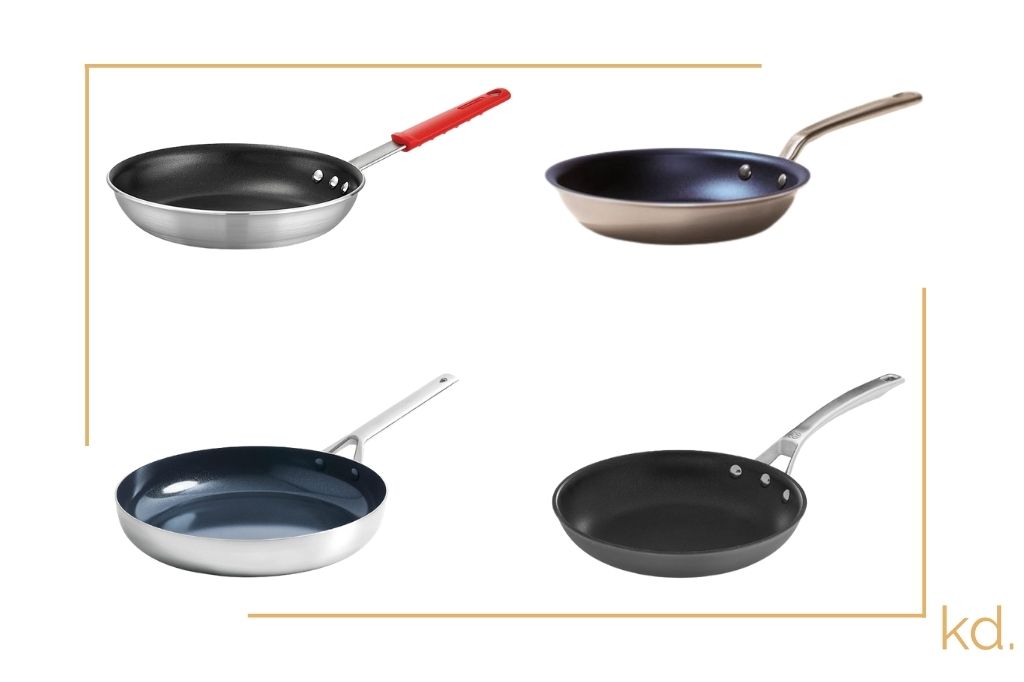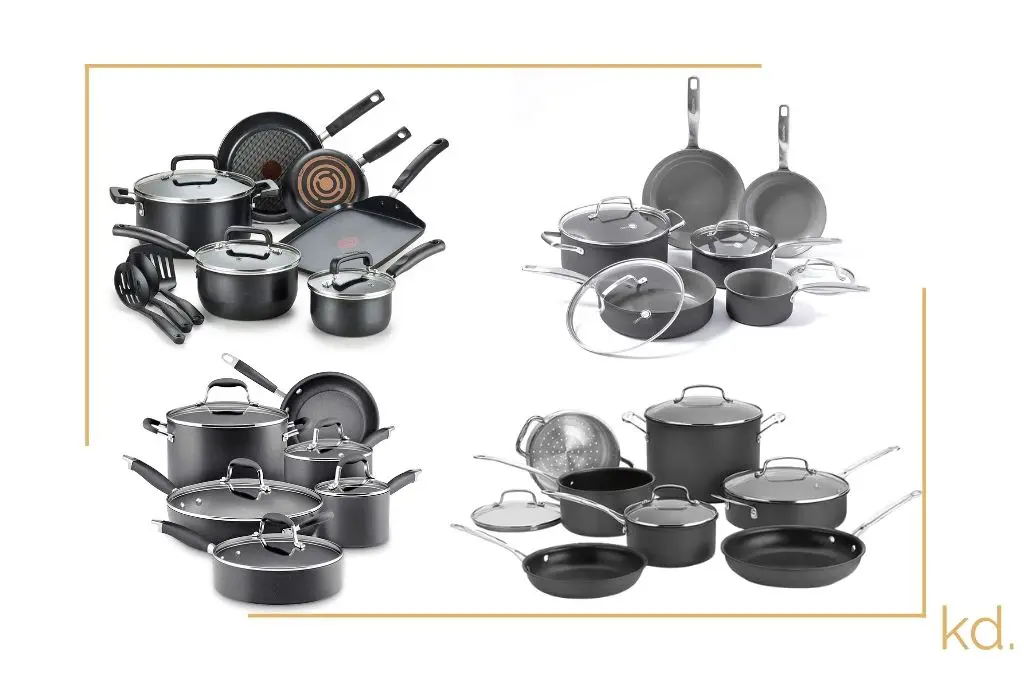
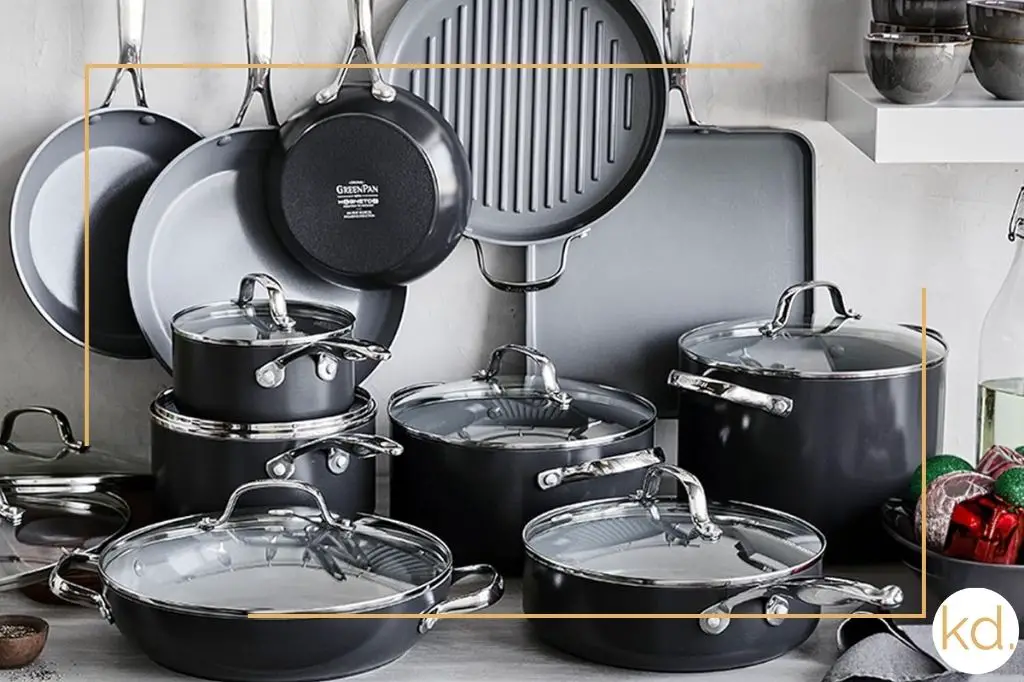
If you’ve been scrolling through cookware options online, chances are you’ve stumbled across GreenPan. Maybe you’ve heard friends raving about their ceramic non-stick pans, or perhaps you’re just tired of your current cookware flaking, sticking, or making you wonder what exactly you’re cooking with. Either way, you’re in the right place.
Let’s cut through the marketing hype and get real about GreenPan non-stick cookware. We’re talking about what makes these pans different, whether they’re actually worth the investment, and everything you need to know to make a smart buying decision.
Quick Links for GreenPan Non-stick Cookware Set
GreenPan Rio Cookware Set
GreenPan Paris Pro Cookware Set
GreenPan Valencia Pro Nonstick Cookware Set
GreenPan x Bobby Flay Cookware Set
GreenPan Chatham Cookware Set
Table of Contents
What Makes GreenPan Different?
Here’s the thing about GreenPan—they basically pioneered the healthy ceramic non-stick movement back in 2007. Before that, most non-stick cookware relied on PTFE (you know it as Teflon), which releases harmful fumes when overheated. Not exactly appetizing.
GreenPan took a different approach with their Thermolon ceramic non-stick coating. This coating is derived from sand (yes, actual sand) and doesn’t contain PFAS, PFOA, lead, or cadmium. No toxic fumes when you accidentally crank up the heat too high while you’re distracted by your phone.
The ceramic coating is applied through a process called Sol-Gel, which is basically a fancy way of saying the coating is cured at lower temperatures than traditional non-stick coatings. This manufacturing process produces up to 60% less CO2 compared to conventional PTFE coatings. Pretty cool if you’re trying to make more eco-conscious choices.
Understanding the GreenPan Cookware Collections
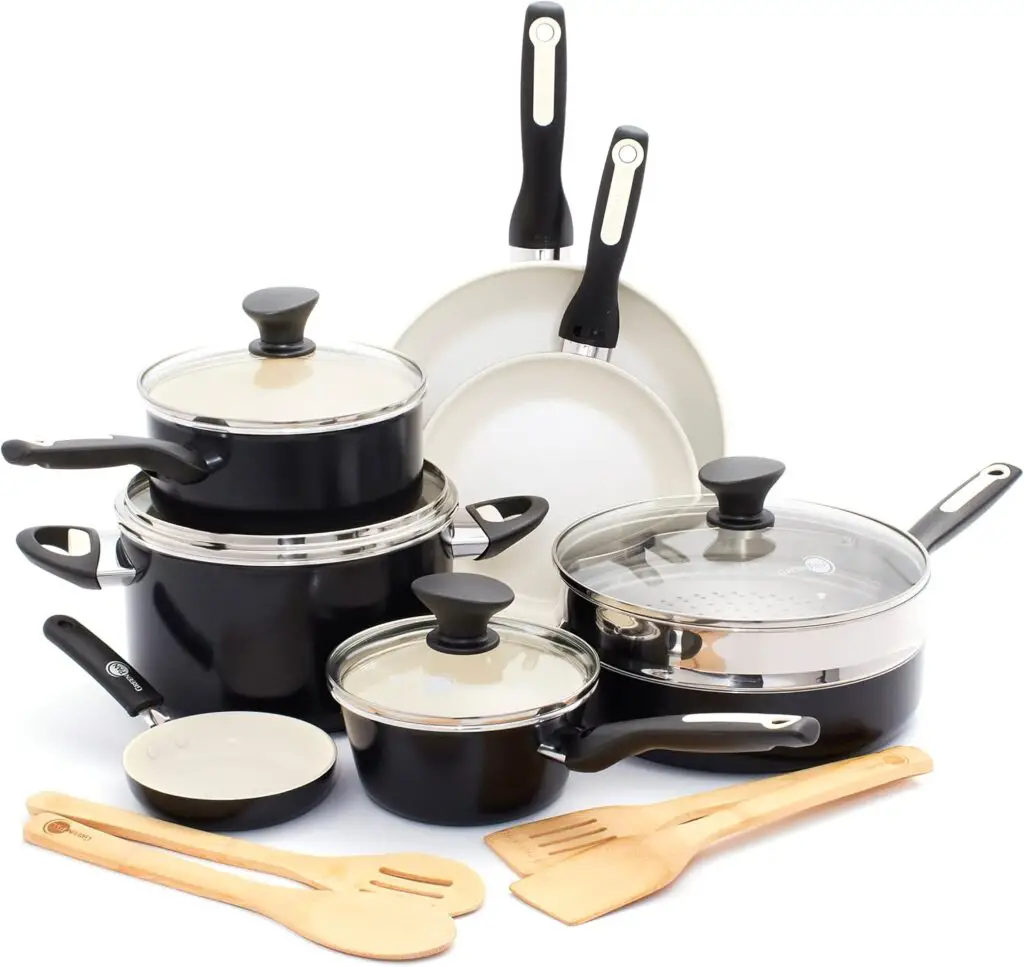
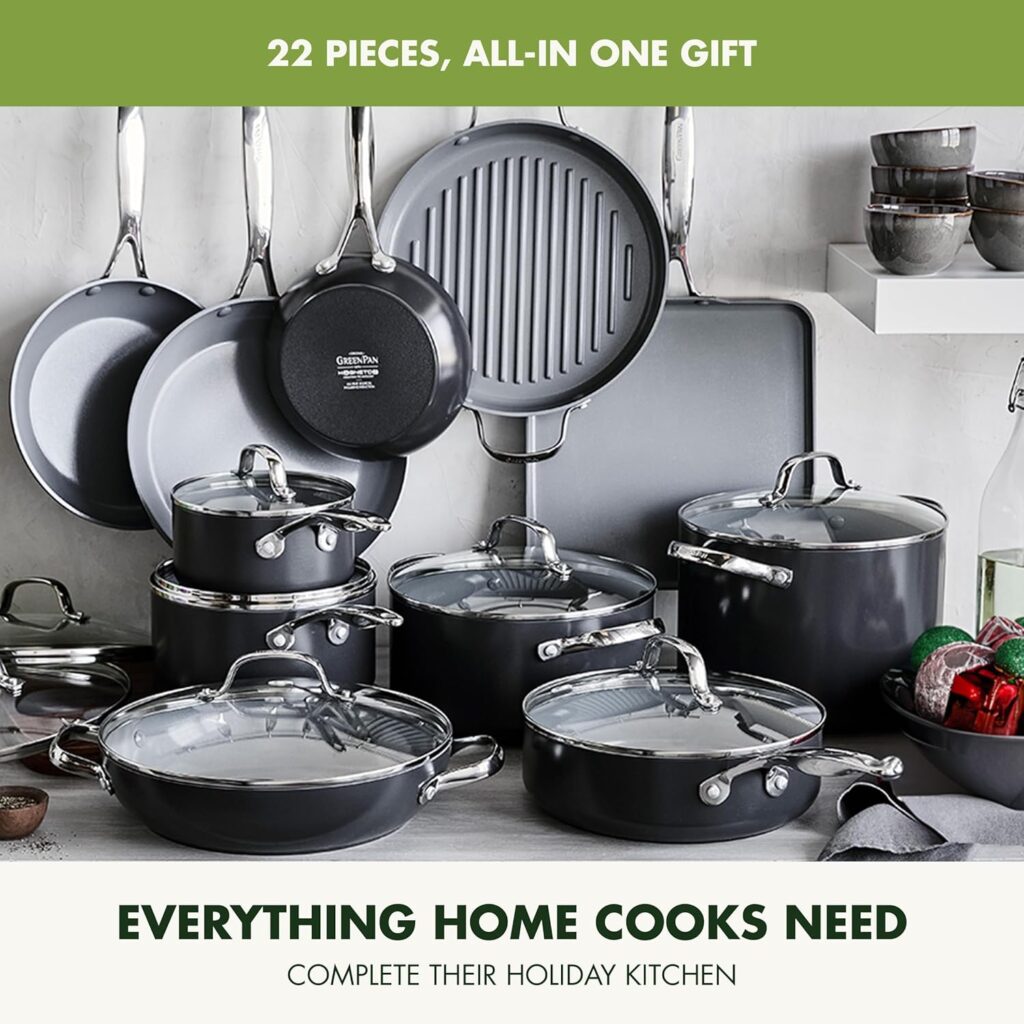
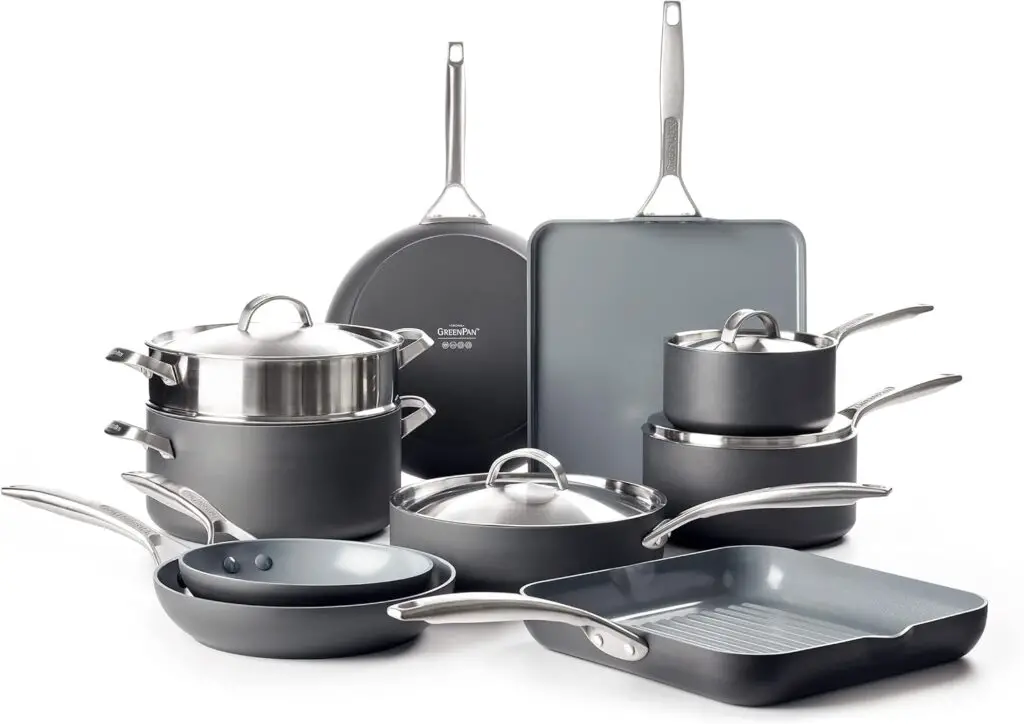
GreenPan isn’t just one type of pan—they’ve got multiple collections designed for different cooking styles, budgets, and preferences. Let’s break down what’s out there.
The Entry-Level Collections
If you’re dipping your toes into the GreenPan world, collections like the Rio and Essentials lines offer solid performance without breaking the bank. These typically feature aluminum bodies with the signature Thermolon coating. They’re lightweight, heat up quickly, and work on most stovetops (though not induction unless specified).
Mid-Range Options
The Valencia Pro, Paris Pro, and Reserve collections step things up with features like stainless steel handles, thicker construction, and enhanced durability. Many of these are oven-safe to higher temperatures and some work on induction cooktops. The Venice Pro collection adds a nice touch with its hammered texture that’s both functional and aesthetically pleasing.
Premium Performance
At the top tier, you’ve got collections like the Levels and Premiere. These bad boys feature extra-thick bases for superior heat distribution, scratch-resistant coatings, and often come with additional layers of diamond-infused ceramic for next-level durability. The Premiere collection even includes a stainless steel exterior that works beautifully on induction cooktops.
The Technology Behind Thermolon
Let’s geek out for a minute about what’s actually happening with that ceramic coating, because understanding the technology helps you use and care for your pans properly.
Thermolon starts as a liquid solution that gets applied to the pan and then cured. During this curing process, the liquid transforms into a solid ceramic layer that’s bonded to the cookware surface. The result is a naturally slippery surface that doesn’t need harsh chemicals to release your food.
The newer Thermolon formulations (like Thermolon Minerals and Thermolon Diamond) incorporate additional materials—either minerals or diamond particles—into the ceramic matrix. These additions make the surface harder and more resistant to scratching and abrasion. Think of it like reinforcing concrete with steel bars.
One key thing to understand: ceramic non-stick coatings work differently than PTFE. They’re more temperature-tolerant (Thermolon can handle up to 450°F/230°C on the stovetop without degrading), but they’re also more sensitive to thermal shock. That means you shouldn’t run a hot pan under cold water—let it cool down first.
Real-World Performance: What to Expect
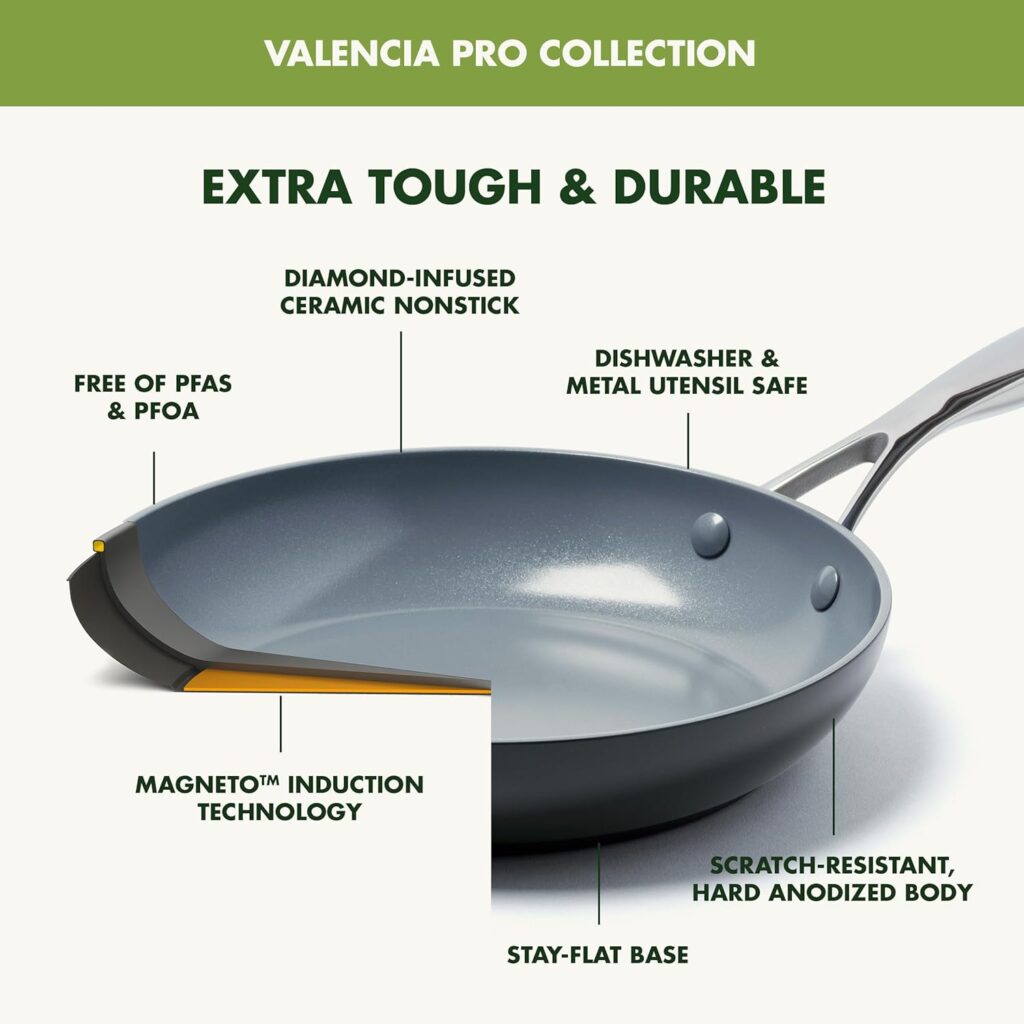
Alright, let’s talk about how these pans actually perform in everyday cooking situations.
The Non-Stick Performance
When your GreenPan cookware is new, the non-stick performance is genuinely impressive. Eggs slide around like they’re on ice, pancakes flip with zero resistance, and cleanup is a breeze. You’ll use way less oil or butter than you would with stainless steel or cast iron.
However—and this is important—ceramic non-stick coatings don’t last forever. Most users report that the truly effortless non-stick properties last anywhere from 1 to 3 years, depending on how well you care for the pans and how often you use them. After that, they’re still non-stick, just not as non-stick. You might need a bit more fat, and delicate items like eggs require a gentler touch.
Heat Distribution and Responsiveness
The thicker the pan base, the better the heat distribution. The entry-level GreenPan collections heat up quickly but can develop hot spots, especially on gas burners. The premium collections with thicker bases and multi-layer construction distribute heat much more evenly.
One thing users consistently praise is how responsive GreenPan cookware is to temperature changes. Crank up the heat and they respond quickly. Lower the temperature and they cool down fast. This makes them great for recipes that require precise temperature control.
Durability Considerations
Here’s where things get real. GreenPan cookware is durable, but it requires proper care. The ceramic coating can chip if you drop the pan or bang it against hard surfaces. Metal utensils, especially sharp ones, can scratch the surface over time even though GreenPan claims some collections are metal utensil safe.
The handles stay cool on most collections during stovetop cooking, which is a huge plus. But those rivets that attach the handles? Food can get stuck there, and they require some attention during cleaning.
The Honest Pros and Cons
Let’s lay out the good, the bad, and the “it depends” factors of GreenPan non-stick cookware.
The Advantages
The health and safety factor is the biggest draw for most people. Cooking without PFAS, PFOA, and PTFE means you’re not worrying about toxic fumes or chemical exposure. If you’ve got birds (which are extremely sensitive to PTFE fumes) or you’re just health-conscious, this is huge.
The eco-friendly manufacturing process genuinely does reduce environmental impact compared to traditional non-stick coatings. The materials are also free from heavy metals, which matters if you’re trying to reduce your toxic load.
Ceramic coatings handle high heat better than PTFE. You can preheat a GreenPan without worrying about degrading the coating, and if you accidentally leave it on high heat for a bit, it’s not going to release toxic fumes. The worst that happens is you might shorten the lifespan of the non-stick properties.
The variety of collections means there’s something for every budget and cooking style. Whether you need induction-compatible cookware, oven-safe pieces, or just a basic frying pan, GreenPan has options.
Aesthetically, these pans look great. The colored exteriors and modern designs mean you won’t be embarrassed to have them visible in your kitchen.
The Downsides
The non-stick coating doesn’t last as long as some users expect. While GreenPan positions itself as durable, ceramic coatings inherently have a shorter lifespan than PTFE coatings. If you’re comparing it to a cheap Teflon pan that you replace every year anyway, GreenPan comes out ahead. But if you’re comparing it to a premium PTFE pan, the longevity isn’t quite there.
The price point is higher than basic non-stick cookware. You’re paying a premium for the healthy coating technology and better construction. Whether that’s worth it depends on your priorities and budget.
Some collections aren’t dishwasher-safe even though they’re advertised as such. Users report that repeated dishwasher cycles can degrade the non-stick properties faster. Hand washing extends the life significantly.
The coating performance can be inconsistent between collections. A Valencia Pro pan might perform beautifully while an Essentials pan from the same company might show wear much faster. Quality control seems to vary.
Ceramic coatings require more care than PTFE. You need to avoid thermal shock, use appropriate utensils, and properly season the pan occasionally to maintain peak performance. If you’re someone who tosses pans in the dishwasher and doesn’t think twice about care, these might frustrate you.
GreenPan Non-Stick Cookware Properties at a Glance
| Property | Details |
|---|---|
| Coating Type | Thermolon ceramic non-stick (PTFE-free, PFAS-free, PFOA-free) |
| Base Material | Aluminum or hard-anodized aluminum (collection dependent) |
| Heat Tolerance | Up to 450°F/230°C without coating degradation |
| Oven Safe | Varies by collection: 320°F to 600°F |
| Induction Compatible | Select collections only (Premiere, Reserve, some Valencia Pro) |
| Dishwasher Safe | Manufacturer claims yes, but hand washing recommended |
| Metal Utensil Safe | Select premium collections only |
| Handle Material | Bakelite, stainless steel, or silicone-wrapped (collection dependent) |
| Handle Heat Resistance | Stays cool on stovetop for most collections |
| Manufacturing | Sol-Gel process produces 60% less CO2 than traditional coatings |
| Coating Derivation | Sand-derived ceramic (silicon dioxide based) |
| Toxin-Free | No lead, cadmium, PFAS, PFOA, or PTFE |
| Weight | Lightweight to medium (depending on collection and size) |
| Maintenance Level | Medium (requires proper care for longevity) |
| Expected Coating Lifespan | 1-3 years with proper care |
| Exterior Finish | Colored ceramic, stainless steel, or anodized (collection dependent) |
| Scratch Resistance | Good with proper utensils; premium lines more resistant |
| Stain Resistance | Good when new; may discolor over time with high heat |
| Warranty | Limited lifetime warranty (varies by collection and retailer) |
Caring for Your GreenPan Cookware: Getting the Most Life Out of Your Investment
If you’re going to spend decent money on GreenPan non stick cookware, you want it to last. Here’s how to maximize the lifespan and performance of your green pan cookware set.
Before First Use
When you first unbox your new GreenPan, wash it with warm soapy water, rinse thoroughly, and dry it completely. Then, before cooking anything, rub a small amount of cooking oil over the interior surface with a paper towel. This initial seasoning helps establish the non-stick properties.
Daily Use Best Practices
Always use low to medium heat. Ceramic non-stick coatings perform best at lower temperatures, and most home cooking doesn’t require high heat anyway. Plus, lower heat means the non-stick properties last longer.
Let the pan preheat for about a minute before adding food. Adding a small amount of oil or butter not only enhances flavor but also helps maintain the coating’s performance over time.
Use silicone, wooden, or nylon utensils. Yes, some GreenPan collections claim to be metal utensil safe, but why risk it? Softer utensils extend the life of any non-stick surface.
Don’t use cooking sprays. This seems counterintuitive, but aerosol cooking sprays contain additives that create a sticky buildup on ceramic coatings that’s really hard to remove. Use actual oil or butter instead.
Cleaning and Maintenance
After cooking, let the pan cool completely before washing. Running a hot pan under cold water causes thermal shock that can damage the ceramic coating and warp the base.
Hand wash with warm water, mild dish soap, and a soft sponge or cloth. Skip the abrasive scrubbers. If you’ve got stuck-on food, fill the pan with warm soapy water and let it soak for 15-20 minutes before washing.
For stubborn residue, make a paste with baking soda and water, apply it to the affected area, and gently scrub with a soft cloth. This removes buildup without damaging the coating.
Dry the pan completely before storing to prevent water spots and potential corrosion of the base material.
Restoration Tips
If your GreenPan’s non-stick properties seem to be fading, try this restoration technique: wash the pan thoroughly, dry it completely, then rub a thin layer of vegetable oil over the entire cooking surface. Heat the pan on low for a few minutes, let it cool, then wipe out the excess oil. This re-seasoning can bring back some of the slipperiness.
Storage Suggestions
If you’re stacking pans, place a soft cloth, paper towel, or pan protector between them to prevent scratching. Hanging storage is even better if you’ve got the space.
Comparing GreenPan to Other Non-Stick Options
You’re not just choosing GreenPan—you’re choosing between different non-stick technologies. Let’s see how green pan cookware stacks up against the competition.
GreenPan vs. Traditional Teflon
Traditional PTFE (Teflon) coatings offer slightly better non-stick performance and typically last longer than ceramic coatings. However, they release toxic fumes if overheated above 500°F, which can happen accidentally on a hot burner.
GreenPan wins on health and safety. There’s no toxic fume risk, and the manufacturing process is more environmentally friendly. The trade-off is that you’ll likely replace GreenPan cookware more frequently.
If your main concern is avoiding PFAS and PTFE, GreenPan is the clear winner. If you want the longest-lasting non-stick coating and you’re confident you’ll never overheat your pans, traditional non-stick might last longer.
GreenPan vs. Other Ceramic Brands
Competitors like Caraway, Our Place, and Gotham Steel also offer ceramic non-stick cookware. What sets GreenPan apart is that they pioneered the technology—they’ve been refining Thermolon for over 15 years.
In terms of performance, the differences are often minimal. Some users find GreenPan slightly more durable, while others prefer the aesthetics or specific features of competing brands. The choice often comes down to which collection fits your needs and aesthetic preferences.
GreenPan vs. Stainless Steel
Stainless steel cookware lasts forever if properly maintained, but it requires more skill to cook with and much more fat to prevent sticking. Cleanup can be more involved, especially with sticky or delicate foods.
GreenPan non-stick cookware is more beginner-friendly and requires less fat for cooking. However, stainless steel can achieve better searing and browning, and it’s the choice of most professional chefs for good reason.
The smart move? Own both. Use your green pan cookware set for eggs, pancakes, fish, and delicate items. Use stainless steel for searing meats, making pan sauces, and dishes where you want serious browning.
GreenPan vs. Cast Iron
Cast iron, when properly seasoned, offers natural non-stick properties and lasts generations. It also adds iron to your food and can go from stovetop to oven to campfire.
But cast iron is heavy, requires seasoning maintenance, and doesn’t work well with acidic foods. It also heats unevenly and takes time to come to temperature.
GreenPan is lighter, easier to care for, and better for quick cooking and delicate foods. Cast iron is better for high-heat cooking, baking, and long-lived cookware you can pass down to your kids.
The Complete Buying Guide: How to Choose Your GreenPan Cookware Set
Ready to pull the trigger on some GreenPan non stick cookware? Here’s how to make the smartest choice for your specific situation.
Assess Your Cooking Style
Think honestly about how you cook. If you’re making eggs and omelets every morning, a good frying pan should be your first purchase. If you’re cooking pasta dishes and sauces regularly, a sauté pan or saucepan makes sense. If you’re cooking for a family, you’ll need larger pieces.
Consider what type of cooktop you have. Got an induction stove? You’ll need one of the induction-compatible collections like Premiere or Reserve. Standard electric or gas? You’ve got more options.
How much do you cook? If you’re cooking multiple times a day, investing in a premium collection makes sense because better construction equals better durability. If you cook occasionally, an entry-level collection might be perfectly adequate.
Decide Between Individual Pieces or a Set
Green pan cookware sets offer better value per piece, but you might end up with items you don’t need. If you know exactly what you’ll use, buying individual pieces costs more upfront but ensures you’re not paying for cookware that sits unused.
A typical starter set includes a frying pan (usually 10″), a saucepan with lid (usually 2-quart), and maybe a sauté pan or additional frying pan. This covers most basic cooking needs.
If you’re outfitting a kitchen from scratch, a comprehensive set makes sense. If you’re replacing specific pieces or adding to existing cookware, buy individually.
Choose the Right Collection for Your Budget
Entry-level collections work great if you’re on a tight budget or if you’re not sure about committing to ceramic non-stick cookware. They offer the core benefits of Thermolon coating at a more accessible price point.
Mid-range collections provide better durability and features like higher oven-safe temperatures and sometimes induction compatibility. These are the sweet spot for most home cooks who want quality without going all-in on premium cookware.
Premium collections are worth the investment if you cook frequently, want the best heat distribution, need maximum durability, or if you just want cookware that looks as good as it performs.
Consider These Collection-Specific Features
Look for hard-anodized construction if you want extra durability. The anodizing process creates a harder surface that resists scratching and wear better than standard aluminum.
Check the oven-safe temperature rating. Some collections max out at 320°F while others go up to 600°F. If you frequently start dishes on the stovetop and finish them in the oven, higher ratings give you more flexibility.
Think about handle comfort. Some GreenPan collections have stainless steel handles that can get hot, while others have Bakelite or silicone-wrapped handles that stay cooler. If you’ve got hand sensitivity or arthritis, handle design matters.
Consider whether you want glass lids. Being able to see your food without lifting the lid is convenient for certain cooking techniques and helps maintain temperature and moisture.
Size Matters
For frying pans, an 10″ is the most versatile size for 1-2 people. An 12″ is better for families or if you’re cooking larger quantities. An 8″ pan is perfect for single eggs or small tasks.
For saucepans, a 2-quart is good for small batches and side dishes. A 3-quart is more versatile for most households. If you’re making soups or cooking pasta, consider adding a 4-5 quart pot to your collection.
Sauté pans typically come in 3-5 quart sizes. The 5-quart size is incredibly versatile—big enough for family meals but not so large that it’s awkward to handle.
Read the Fine Print
Check the warranty details. GreenPan offers limited lifetime warranties on many collections, but the terms vary. Understand what’s covered and what voids the warranty.
Look at the retailer’s return policy. Some online retailers offer generous return windows, which is helpful when you’re buying cookware sight unseen.
Read actual customer reviews, not just the ones on the manufacturer’s website. Sites like Amazon and Williams Sonoma show verified purchase reviews that give you real-world insights into performance and durability.
Where to Buy
GreenPan non-stick cookware is available through multiple channels. The official GreenPan website often has the full range of collections and exclusive sets. Major retailers like Amazon, Target, and Bed Bath & Beyond carry popular collections. Specialty kitchen stores like Williams Sonoma and Sur La Table stock premium collections.
Each retailer has pros and cons. Amazon offers convenience and often competitive pricing, plus easy returns. Specialty kitchen stores provide expert advice and the ability to handle the cookware before buying. The official GreenPan site sometimes has sales and bundles not available elsewhere.
Watch for seasonal sales. Black Friday, Cyber Monday, and post-holiday sales often feature significant discounts on cookware sets. Prime Day on Amazon frequently includes deals on GreenPan products.
Common Questions and Concerns Addressed
Let’s tackle the questions that come up most often when people are considering GreenPan non stick cookware.
Is the ceramic coating really safe?
Yes, the Thermolon coating is genuinely free from PFAS, PFOA, PTFE, lead, and cadmium. Unlike traditional non-stick coatings, it doesn’t release toxic fumes even when accidentally overheated. The coating is derived from sand (silicon dioxide) and cured at lower temperatures than conventional coatings. For people with chemical sensitivities, pets, or anyone concerned about cooking surface safety, this is legitimate peace of mind.
Why does the coating seem to lose its non-stick properties?
Ceramic coatings naturally degrade over time with use. High heat, improper cleaning, using cooking sprays, and metal utensils all accelerate this process. Even with perfect care, ceramic non-stick surfaces typically last 1-3 years before they’re noticeably less slippery. This isn’t a defect—it’s the nature of ceramic technology. The good news is the coating doesn’t become unsafe as it wears; it just becomes less non-stick.
Can I really use metal utensils on some collections?
GreenPan claims certain premium collections are metal utensil safe, but user experiences vary. The coating can withstand careful use of metal utensils, but aggressive scraping or cutting in the pan will damage any non-stick surface. If you want your cookware to last as long as possible, stick with softer utensils regardless of what the marketing says.
Are GreenPan products truly eco-friendly?
The manufacturing process does produce significantly less CO2 than traditional non-stick coatings—about 60% less. The coating itself doesn’t contain harsh chemicals or heavy metals. However, the cookware still needs to be manufactured, shipped, and eventually disposed of. It’s more eco-friendly than many alternatives, but it’s not zero-impact. If you’re concerned about the environment, focus on buying quality pieces that you’ll keep for years rather than cheap cookware you’ll replace frequently.
What’s the deal with induction compatibility?
Only specific GreenPan collections work with induction cooktops. These collections have a magnetic base layer, usually stainless steel, integrated into the construction. Check the product specifications carefully—if it doesn’t explicitly say “induction compatible,” it won’t work on an induction stove. The magnetic base adds weight and cost but is necessary for induction cooking.
Can I put GreenPan cookware in the dishwasher?
Technically, many collections are dishwasher-safe. Practically, hand washing extends the life of the non-stick coating significantly. The harsh detergents and high heat in dishwashers can gradually degrade the ceramic surface. If you want your green pan cookware to last as long as possible, wash by hand with mild soap and a soft sponge.
What if my food starts sticking?
First, try the re-seasoning technique mentioned earlier. Wash the pan thoroughly, dry it completely, rub a thin layer of oil over the surface, heat gently, let cool, and wipe out excess oil. This often restores some slipperiness. Also evaluate your cooking technique—are you using enough fat? Is your heat too high? Sometimes what seems like coating failure is actually a technique issue. If the pan is truly worn out, ceramic coatings can’t be recoated like cast iron can be re-seasoned.
Making the Final Decision: Is GreenPan Right for You?
After everything we’ve covered, let’s get down to the crucial question: should you actually buy GreenPan non-stick cookware?
You’re a great candidate for GreenPan if:
You prioritize health and safety in your cooking tools and want to avoid PFAS, PFOA, and PTFE. You’re looking for cookware that’s more environmentally friendly in its manufacturing process. You cook frequently with delicate foods like eggs, fish, and pancakes that benefit from non-stick surfaces. You’re willing to properly care for your cookware to maximize its lifespan. You appreciate cookware that looks good and performs well for everyday cooking tasks.
You might want to look elsewhere if:
You want non-stick cookware that will last 5-10 years with the same performance throughout. You’re on an extremely tight budget and need the absolute cheapest option. You’re rough on your cookware and don’t want to think about proper care and maintenance. You primarily do high-heat searing and want cookware that can handle serious browning and caramelization. You expect ceramic non-stick to perform identically to traditional PTFE coatings indefinitely.
The Middle Ground Approach
Consider starting with one or two pieces of GreenPan cookware rather than committing to an entire set. Buy a 10″ frying pan and see how you like cooking with it and caring for it. If it fits your cooking style and you’re happy with the performance, expand your collection over time.
This approach lets you test the water without a significant financial commitment. You’ll learn whether ceramic non-stick works for your cooking habits and whether the care requirements fit your lifestyle.
The Bigger Picture: GreenPan in Your Kitchen Arsenal
Here’s a perspective that doesn’t get mentioned enough: no single type of cookware does everything perfectly. Professional chefs and serious home cooks own multiple types of cookware because different tools excel at different tasks.
Green pan cookware set pieces are fantastic for gentle cooking techniques, foods that tend to stick, and everyday meals where you want easy cleanup. They’re your go-to for breakfast foods, fish, vegetables, and quick weeknight dinners.
But you’ll still want stainless steel or cast iron for tasks that require serious heat and browning. You might want enameled cast iron for slow-cooked braises. Maybe you need a stockpot for making soup or cooking pasta.
Thinking of GreenPan as part of a comprehensive kitchen setup rather than your only cookware helps set realistic expectations. You’re not choosing between GreenPan and other cookware—you’re choosing which tasks you want GreenPan to handle.
Final Thoughts: The Verdict on GreenPan Non-Stick Cookware
After diving deep into everything GreenPan offers, here’s the bottom line: this is solid cookware that delivers on its core promise of healthier non-stick cooking.
The Thermolon ceramic coating genuinely avoids the harsh chemicals found in traditional non-stick coatings. The manufacturing process is measurably more environmentally friendly. The performance, especially when new, is excellent for a wide range of cooking tasks.
However, these pans aren’t miracle workers. The ceramic coating will eventually wear down, usually faster than premium PTFE alternatives. They require more careful use and maintenance than stainless steel or cast iron. The price point is higher than basic non-stick options.
But for many home cooks, especially those who prioritize health, environmental impact, and everyday cooking convenience, GreenPan non stick cookware hits a sweet spot. You’re getting legitimately safer cookware that performs well for its intended uses and looks good in your kitchen.
The key to satisfaction with GreenPan is having realistic expectations and committing to proper care. If you understand that ceramic non-stick is a different technology than PTFE, that it requires gentler treatment, and that it won’t last forever—and you’re okay with those trade-offs—then GreenPan can be an excellent addition to your kitchen.
Start with a piece or two in the mid-range collections. Learn how they work in your cooking routine. If they fit your style, expand from there. And remember: the best cookware is the cookware you’ll actually use and enjoy using.
Your perfect omelet, perfectly browned pancakes, and stress-free fish fillets are waiting. Just remember to use medium heat, soft utensils, and hand wash when you’re done. Happy cooking!